
Questions and Answers regarding How to Make Mobiles
Following are some of the questions that I receive via email regarding making mobiles and my answers:
Topics on this page:
- Swivels & Hanging Hardware
- Balance & Alignment
- Wire Choice, Gauge & Handling
- Rods & Large-Scale Mobiles
- Sheet Metal, Shapes & Finishing
- Materials & Calder
- Working, Prefab, Shipping & Business
- More Q&A, Examples & Resources
Swivels & Hanging Hardware
Topic: Swivels and where to buy them
Q: I’ve purchase my wire, but had a hard time finding the correct swivels at my local hobby shop. Is there somewhere in particular I can order them from?
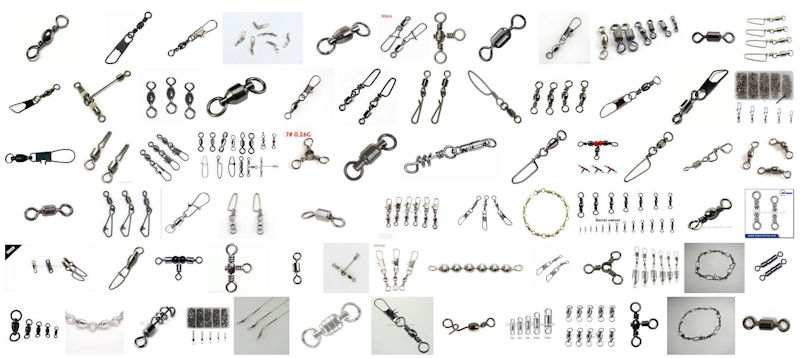
A: I use fishing swivels, which you can get at most stores that sell outdoor sports equipment. They come in a wide variety of designs and sizes, small ones for lake and stream fishing, but also very strong ones for ocean fishing that can carry loads of over 100 pounds (50kg).
Balance & Alignment
Topic: Building from the bottom up and throwing off balance on purpose
Q: Everything I have researched recommends beginning with the bottom-most arm and building upwards, finding balance points as you go. I’m assuming this means that each connection point all the way up the mobile will perfectly balance all the arms beneath it. Is that correct? So my question is, would it work to deliberately throw the balance off on the lower arms so that you could correct in the opposite direction as you build up? In other words, ignore determining balance points for the first few arms and then make up for the lack of balance in subsequent arms.
A: The balance of the arms are not connected to each other in a direct way, meaning the balance of an upper piece does not change the balance of the lower pieces. For example, the fifth piece from the bottom doesn’t care about whether the lower four pieces are balanced or not. Those four lower piece are just weight that’s attached to the end of the arm of the fifth piece, and that weight stays the same whether the four lower pieces are balanced or not. So no, your idea would not work, at least not with any mobile structures that I know of.
Topic: Vertical alignment of arms like Calder’s mobiles
Q: Many of Calder‘s mobiles appear to hang almost perfectly with each mobile arm vertically aligned. I have been experimenting with some small scale mobiles (pieces made of acrylic and wires up to 0.04″). While I seem able to control general alignment, getting the mobile to hang in good vertical alignment seems impossible. Any tips on this or are many mobiles photographed against a wall? Does this become easier as the mobiles become larger and/or with heavier wire or tubing?
A: I’ve experimented with the shapes of the wire loops, round loops versus more pointy “V” shaped loops, to get the arms to align the way I’d like them to. Sometimes I also adjust the orientation of the loops after assembling the mobile. While that helps to some extend, the arms do keep moving freely and individually to some extend, which on the flip side is part of what makes a mobile a unique and fascinating art form. Heavier mobiles move less because they’re less susceptible to air currents. For the design of a mobile to be easily comprehensible in a 2 dimensional photo, it does help to align the arms vertically. I don’t know if this was done intentionally with Calder’s mobiles, but I usually do try to get at least one or two photos of my mobiles showing off the design with the arms aligned in a flat 2 dimensional way if possible. I don’t photograph them against a wall. I just keep giving the arms a gentle push here and there, or just blow at them a little here and there to get them to align, and keep taking photos. I usually take many more than I need to, and sort out the alignments I think look best on my computer later on.
Topic: Does bending a loop change the balance point?
Q: Once you’ve got the balance point, you have to bend a loop into the wire. Doesn’t this mess up the balance point? How do you then compensate…by bending, adding weights or something else?
A: That’s a very good question. When I bend a loop, I try to do it so that I use wire for the loop from both sides of the loop. In other words, I don’t just bend one end of the wire into a loop, I wrap both ends. If you have a balance point that is exactly in the middle of an arm, you would wrap both ends by a 180 degrees to make a loop. If one end of the arm is shorter, you’d want to wrap that end a little less than the longer end to still keep the balance point in the same spot.
Wire Choice, Gauge & Handling
Topic: Wire for outdoor mobiles
Q: I have made several mobiles with Glass, Copper, and Aluminum. Most are indoors. What wire would you suggest for an outdoor mobile with Aluminum sheet metal (tennis ball container tops) disks,…other than aluminum? I want something with a little more spring to it than the aluminum wire. Would small gauge Stainless Steel be OK. And would it be cost prohibitive, since almost everything I use is recycled or scrap.
A: I would use galvanized steel wire. It has a protective zinc coating that prevents rusting. I’ve had mobiles with galvanized steel wire outside for a long time and they didn’t rust. If you want to make very sure it won’t rust, maybe (spray) paint the wire? The wire should be springy if it’s thick enough. Galvanized steel wire is quite cheap. You should be able to get it at your local hardware store.
Topic: Curving wire and keeping it curved
Q: I read your article regarding wires. It really helps. How do you make a beautiful curve and keep it curved? (Doesn’t the wire try to go back to straight?)
A: I curve the wire by hand. When you first start out, it might take you a little while to get it shaped the way you want it. With some practice you’ll get more efficient. To make small loops or hooks I use needle-nose pliers. Unless you’re using very thin wire, it will not bend back.
Topic: Wire gauge for small blocks
Q: I am thinking to use 3 or 4 small blocks (maybe 2″ high max) of balsa wood, which is very light. Which gauge of wire do you recommend? I feel that 18 is too thin for that?
A: 18 gauge might be a little too thin to attach 2″ balsa wood blocks to. It also depends on the layout of the mobile. If for example, you’re planning on attaching the blocks to the ends of long stretched out wire pieces, 18 gauge most likely would be too thin. If you’re planning on attaching the blocks to the ends of short curved wire pieces, 18 gauge might be thick enough. I think with 16 gauge you would probably be safe either way. Maybe get one roll of each gauge and experiment?
Topic: Straight wire vs coiled wire, material and gauge
Q: I am trying to make a small, multiple level, lightweight metal kinetic mobile with hanging anodized aluminum pieces. What is the best material to use for the horizontal metal components from which I will hang my aluminum pieces? I have seen music wire and aluminum rods. It seems like I should be able to buy some straight pieces that I will cut to size and then bend at both ends as opposed to wire on a coil that I would have to straighten. It appears that 18 gauge wire would be an appropriate size for a small, lightweight beginning mobile. Do you have any suggestions? What is the material that I should be looking for?
A: I’ve always bought wire in rolls. I cut off pieces and straighten them by hand. With a little practice, it’s actually quite easy to do. I haven’t seen straight pieces available in the stores where I usually buy wire. I’ve seem them available on McMaster-Carr but I think the longest straight pieces they have are only 1 foot long. I would give it a try with 18 gauge for your project. It works for light weight attachments and is quite easy to bend. The choice of material is really up to. Steel is usually the cheapest and therefor maybe the best to experiment with as you start out. Galvanized steel has a protective zinc coating that prevents rusting. Some craft stores sell some of the fancier and shinier wires.
Topic: Straightening wire and workflow
Q: What technique do you use to straighten steel wire from a coil? I can already do this, but I was wondering if there was a more effective or efficient method. Also, do you use an Eastman HotCoat to paint your weights? I’m just wondering how you can be so prolific with your mobiles. It takes me hours to make just one!
A: I cut off a piece of wire and then straighten it out and shape it by hand. The way I do it is, I hold one end of the piece of wire with one hand, and I pull away towards the other end of the wire with my other hand with my thumb extended pushing down onto the wire as I glide over it (you sort of run your thumb over the bended wire). Every time I do that, the wire straightens out (or bends) a little more. I don’t know if this makes enough sense. A video would do better … quick YouTube search … this lady here does something similar to what I do. Her approach works fine with thin wire. What I do differently is, I push down onto the wire with my thumb instead and pull away with my thumb pointing towards my other hand. It gives me a little more control and it’s easier on my fingers than the way she does it. Someone told me they’ve used a drill to sort of unwind a roll of wire. I’ve never tried but he said it worked great. I don’t paint the weights. If by weights you mean the metal shapes, there’s a variety of options from spray paint to paint applied with a brush to having it powder coated. It takes me hours too to make one. The big ones can take days or even weeks for a really large custom mobile.
Rods & Large-Scale Mobiles
Topic: Materials for large and heavy mobiles
Q: I want to try my hand at building a large-scale mobile for my uncle’s house, which has an extremely high ceiling. I’m guessing steel wire, even at 12 or 9 gauges isn’t going to work anymore. What material do you use to connect the shapes on your larger mobiles (ones that may go over 20 lbs), and where can you get them? I tried checking home depot for aluminum tubes, but no luck.
A: I use aluminum rods (also called rounds). To keep the mobile as light as possible, I would use aluminum instead of steel, for both the rods and the sheet metal. See if there’s a metal retailer in your area, something like Metal Supermarkets. Unless you’re making something really large, I doubt you’ll end up going over 20 lbs. I’m always surprised how light the larger mobiles turn out when I ship them.
Sheet Metal, Shapes & Finishing
Topic: Cutting, sanding and sourcing sheet metal
Q: My first few mobiles were made from origami – modular geometric origami pieces. But now I’m interested in using metal. I bought a roll of aluminum from a hardware store – one foot by ten feet. The gauge was not listed on the label, but it is pretty thin. I’d guess 18 gauge. I also bought some shears, and got to work. The aluminum is easy to cut. But the shears leave a “serrated” texture along the edge. I tried using a flat file, and that worked OK, but not on concave edges. So my questions are: do you use a file and / or sandpaper on the edges of the aluminum pieces? If a file, what kind(s)? If sandpaper, which grit? Regarding shears: what kind do you find works best? I bought some with really short blades, thinking they would be easier for making detailed curves. I also found a steel / metal retailer that sells 4 foot by 8 foot aluminum sheets, in gauges from 18-11. I’m kind of thinking these might be the way to go because they’re already flat (the roll I bought needs to be flattened, and I couldn’t quite get the pieces perfectly flat).
A: I do sand the edges of the pieces after I cut them out. I have one of those stationary tabletop disc / belt sanders that I use a lot. I lets me shape the pieces very precisely and at the same time gets the job done quickly. I currently have a 120 grit on it. I haven’t found a perfect solution regarding snips and shears leaving marks yet either. I’ve tried both, serrated ones and ones with plain blades. I have one serrated pair that I use a lot similar to this one. It’s probably not the best one for the job, it does leave some marks (that I sand off), but I just really like they way it cuts and feels and it has lasted me forever. It’s more of a personal attachment thing. I buy flat sheet metal.
Topic: Thickness of sheet metal
Q: What is the thickness of the sheet metal you use?
A: The thickness of the metal depends on the design and size of the mobile you have in mind. I would recommend getting some thin sheet metal that’s easy to cut with a pair of shears or snips at your local hardware store to start with. If you’ve never made a mobile before, maybe you want to experiment making a couple out of something easier and quicker than sheet metal, just to get the hang of it.
Topic: Attaching wire to metal shapes
Q: How do you attach the wire to the sheet metal shapes, looks like it’s welded or soldered?
A: For a smaller mobile, I would just drill two holes into the metal shape and attach the wire with a loop through the two holes (see photos and illustration). For larger mobiles I suggest attaching the shapes with rivets. I would use welding only for something really large.
Materials & Calder
Topic: Tin vs aluminum and what Calder used
Q: I just saw the Calder exhibit at LACMA here in LA, the exhibit was designed by Frank Gehry, it’s a remarkable exhibit. I was floored. I’ve been a Calder fan for most of my life but for some reason seeing this exhibit inspired me to try making my own mobiles. Your various articles have been very helpful so far. At Home Depot today I got some 14 & 16 gauge galvanized wire, then I looked at metal for shapes, I couldn’t make up my mind between tin or aluminum. I went with tin and I think it might be a mistake. I bought tin shingles, the aluminum they had was about the same thickness but it bent much easier so I thought the sturdiness of the tin was better. I think the tin is too heavy and difficult to cut. So I wanted to ask your advice. Do you use aluminum? Did Calder use aluminum for his petal shapes?
A: For smaller mobiles I mostly use steel. For larger ones, I sometimes use aluminum. Brass is another good and beautiful option, although more expensive. I think Calder used mostly steel. As much as I know, aluminum wasn’t used that much in general in those days. During the 2nd World War when many types of metals were scarce I think he used whatever he could find.
Working, Prefab, Shipping & Business
Topic: How to physically work on a mobile
Q: I’m just curious. How do you work when you’re making mobiles? Do you have a hook or something to hang the ongoing project? It would be hard to work on your desk, wouldn’t it?
A: Yes, when working on a mobile, I hang it from a hook. When I make a new piece, I take the mobile off the hook, attach the new piece to it, and put it back on the hook. If it looks good, I move on to making the next piece.
Topic: Pre-made wire mobiles to hang objects from
Q: Where can i find a selection of pre-made wire mobiles so that all I have to do is attach apples made of assorted materials from wood to marble to silk to silver?
A: I don’t think anything like what you’re looking for exists. Mobiles work with balance, so the wire structure of the mobile has to be made so it works with the specific weight of the objects attached, meaning you couldn’t just attach random objects or the balance would be thrown off.
Topic: Shipping mobiles without disassembly
Q: I recently made a mobile for my uncle who lives in Arizona, but can’t figure out how to ship something as fragile as a wire mobile without dis-assembling it. How do you transport your mobiles to your customers/clients in one piece while making it hassle-free for them to install it out of the box without tangling/assembly issues?
A: With the exception of really large custom mobiles, I ship all mobiles fully assembled. I fold the mobiles so they are as small and flat as possible. I keep the top part of the mobile on top and have a string attached to it already. That way the mobile can be just lifted out of the box by the string. Then I buy flat cardboard sheets (Uline has them) and make custom sized boxes that are just slightly bigger than the folded mobiles. I line the inside of the boxes with one-side-stick bubble wrap sheets and wrap the shapes (paddles) of the mobiles in bubble wrap. Then I fill the rest of the space in the box with packing material (air filled bags, packing peanuts, etc) as tightly as possible without bending the mobile out of shape. I put a few bright orange “Fragile! Handle With Care” stickers on the outside of the box. That’s about it. As far as I know, with having shipped hundreds of mobiles at this point, I’ve had two boxes arriving damaged by USPS, none by UPS.
Topic: Making a living from mobiles
Q: Do you believe someone can make a living making and selling mobiles?
A: The short answer: it is possible to make a living making and selling mobiles but it isn’t easy. The longer answer: Like any small business, it takes time to set it up, and time to get it going. You have to figure out how to make the mobiles, ideally you’d make something a little different than the competition or at the least beat them in price, you have to take great photos of the mobiles, you have to list them on various online sites and/or find galleries or stores to carry your mobiles and/or show them at art fairs, etc, then you have to figure out how to pack them (they’re fragile), etc. There isn’t a lot of competition with making mobiles but the ones that do it full-time are quite good at it. That said, there’s always people who have a space suitable for a mobile, it just doesn’t cross their minds. So I think there’s always untapped markets to reach out to. I think it’s really a personal decision, just like with starting any other small business, do you think you have what it takes to keep working at it day after day until (hopefully) it turns profitable.
More Q&A, Examples & Resources
I’ll add more of these questions and answers from my email archive when I get a chance.
Joe Murphy sent me a link to a video of the first mobile that he made with dragonflies made of glass after reading some of my how-to posts:
Additional resources on making mobiles:
- Blog post I wrote explaining some of the basics about the balance of a hanging mobile
- Blog post I wrote about What Wire to Use to Make a Hanging Mobile and Where to Buy It
- An article I wrote for MAKE magazine on How to Make a Mobile Based on Calder’s Mobiles
- An article I wrote for Houzz: From the Artist: How to Make a Real Mobile – It’s All in the Balancing Points (there’s a number of questions and answers in the comment section of the article as well). The article is now also available in German
- A history of early mobiles that I’ve put together
- Some technical (“behind-the-scenes”) aspects of designing, making and installing a large custom mobile
- A definition of mobiles
- Q&A about Mobiles for a middle school student’s math class project
- See some of my mobiles if you’re looking for design ideas: handmade mobiles, large custom-made mobiles, 3D printed mobiles and kinetic sculptures
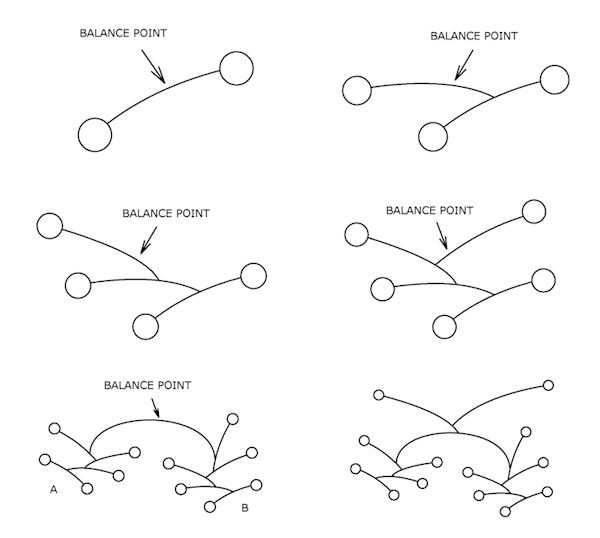
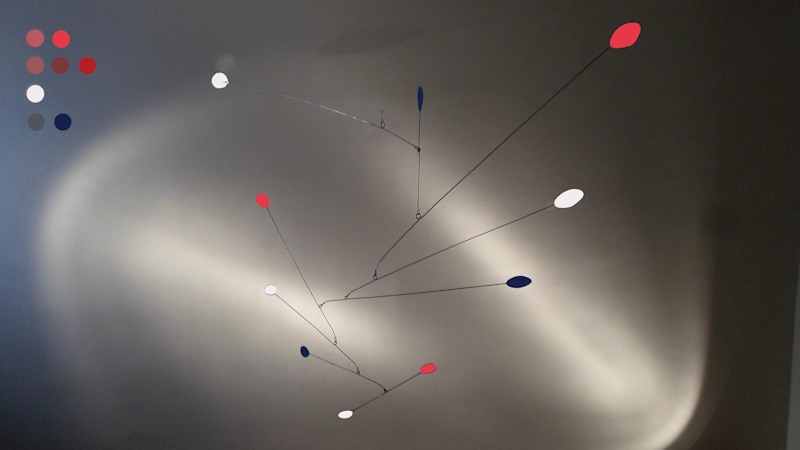
Photo of a custom mobile in progress
Just a photo of a custom mobile that I’m currently working on:
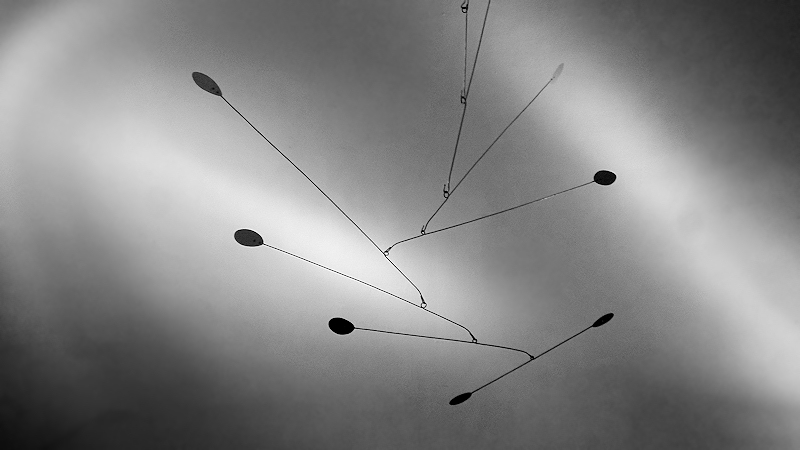
See more of my custom-made mobiles …
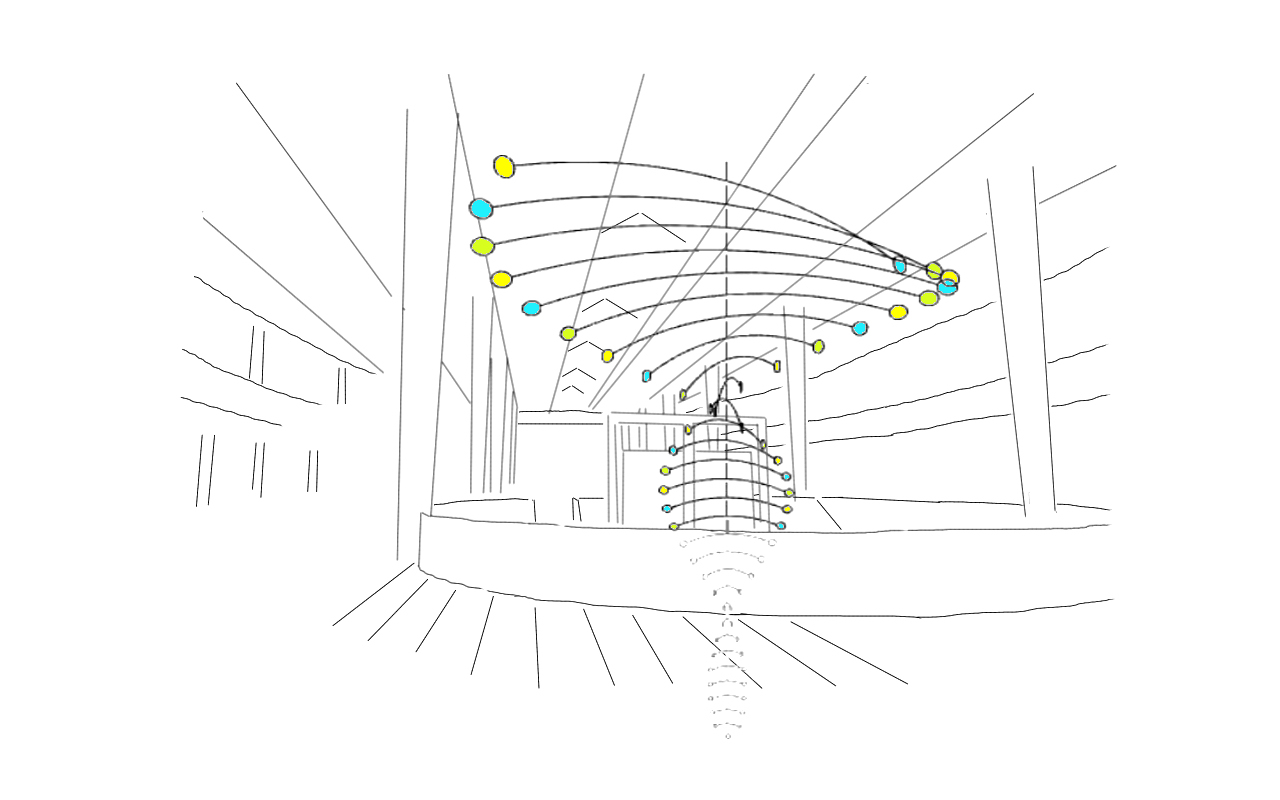
Designs for large custom mobiles for a shopping mall – Part 2 – Main Atrium
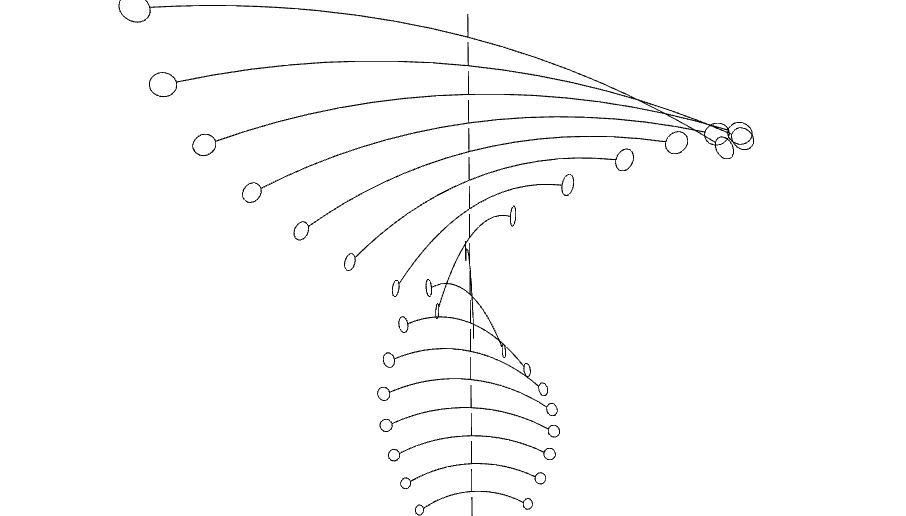
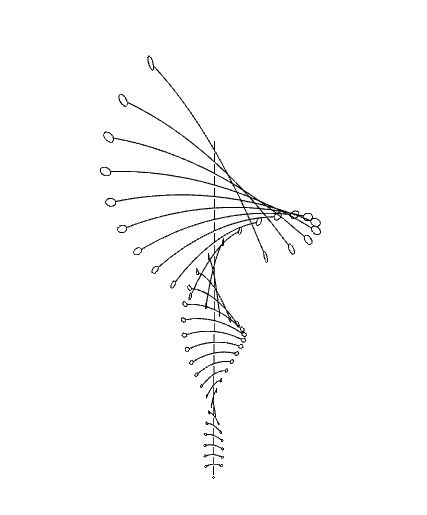
Custom design of a large scale hanging mobile for the main atrium of a shopping mall in Kazakhstan:
See more of my custom mobiles …
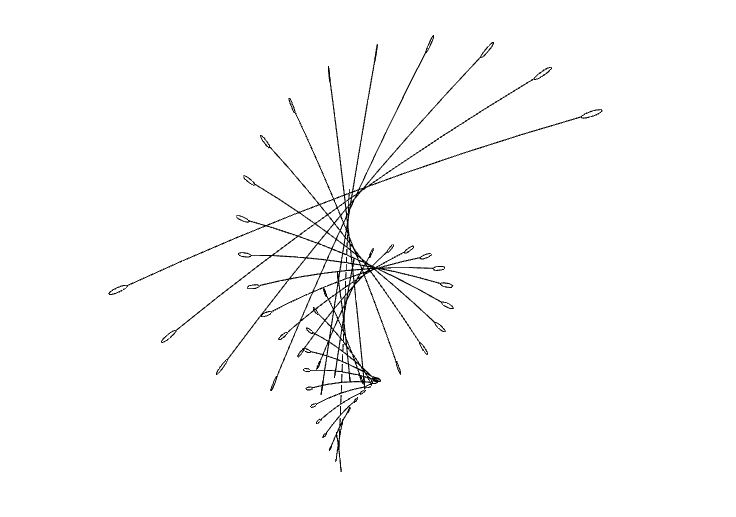
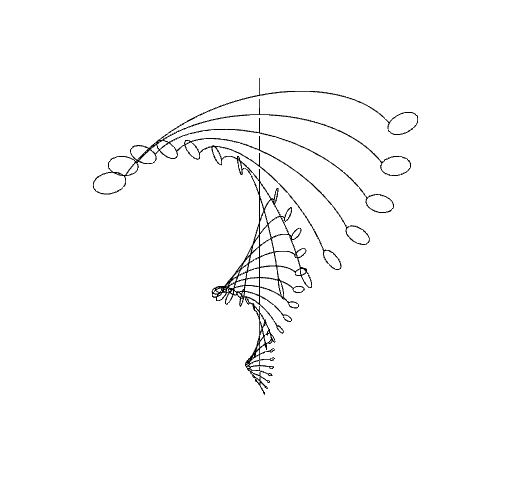
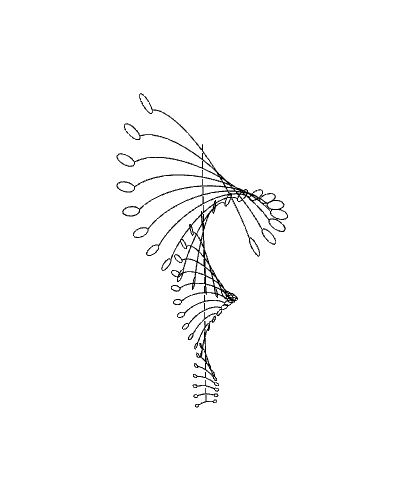
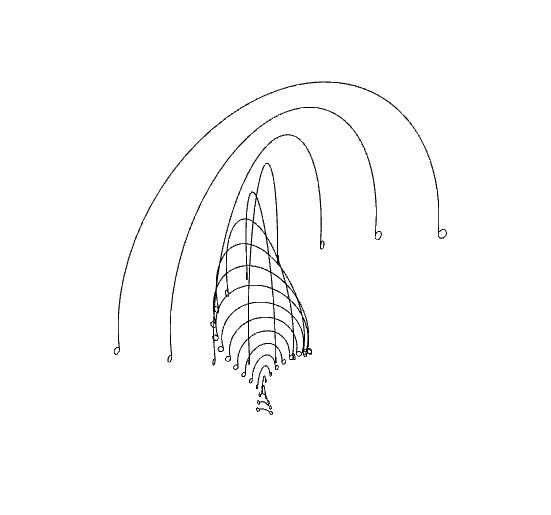
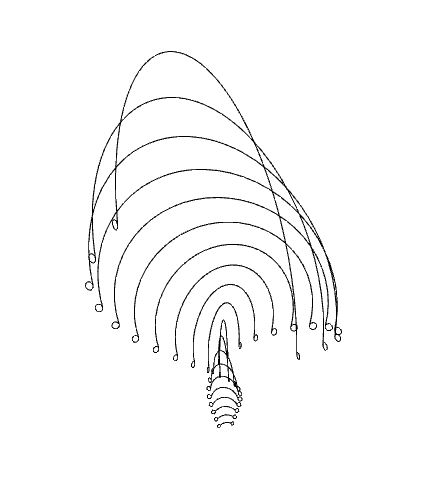
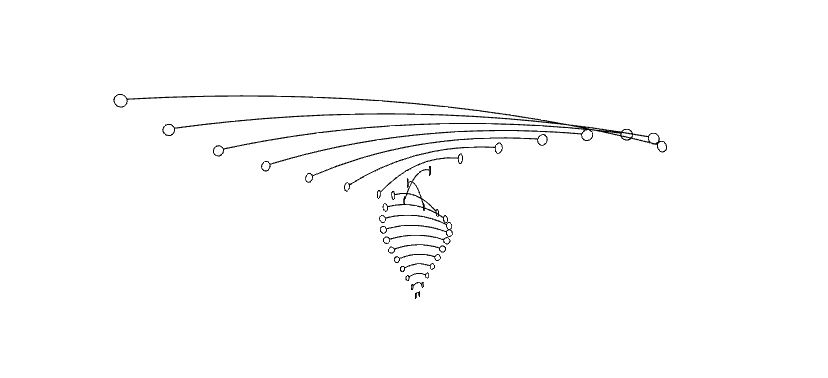
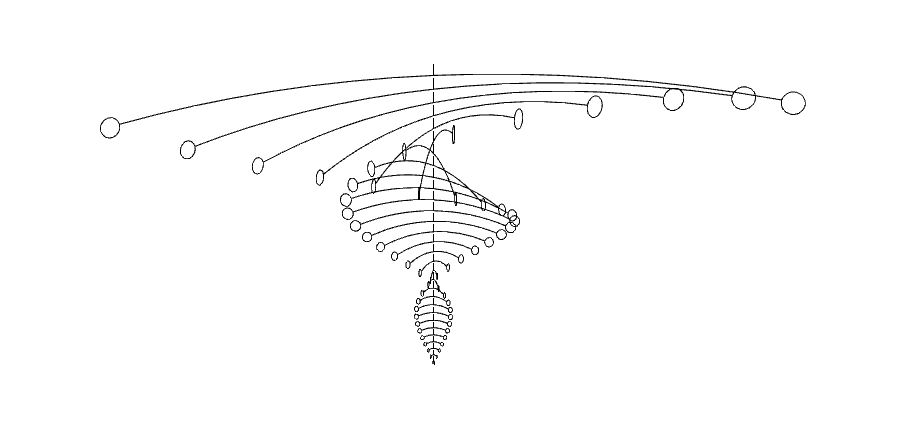
Large custom hanging mobiles designed with scripts
New designs of custom mobiles to be built in large scale out of aluminum (to keep the mobiles lightweight yet robust). I designed them using scripts similar to the ones utilized with the 3D Printed Mobiles.
See more of my custom designed mobiles …
Designs for large custom mobiles for a shopping mall – Part 1 – Smaller Atrium
Designs / sketches of two large custom hanging mobiles for a shopping mall in Kazakhstan:
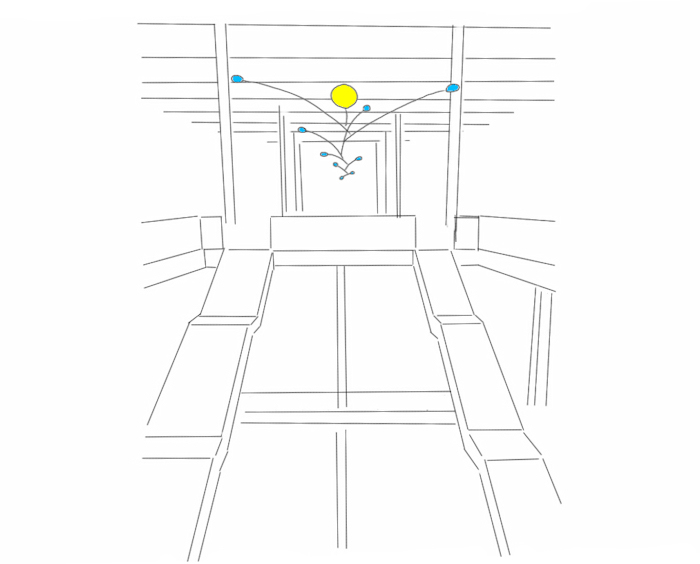
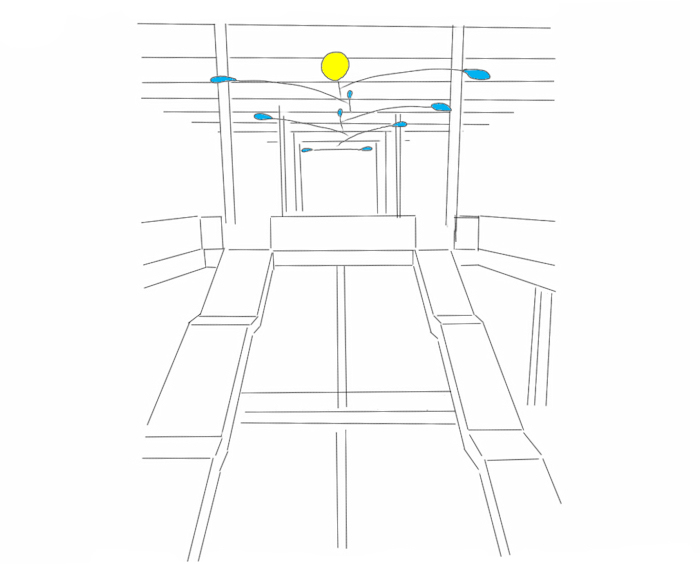
See more of my custom mobiles …
What is the largest kinetic sculpture / mobile in the world?
There’s an amazing kinetic sculpture titled Kinetic Rain at Changi Airport designed by the highly creative and innovative ART + COM and manufactured and installed by MKT, Olching:
Links to various videos of the installation keep floating around social media sites calling it “the largest kinetic sculpture in the world”, spanning an area of 75 square meters (810 sq ft) and a height of 7.3 meters (24 ft). While the sculpture is an amazing accomplishment, it doesn’t seem to be the world’s largest kinetic sculpture. To my knowledge, the largest kinetic sculpture in the world (and also the largest mobile sculpture) is Alexander Calder‘s White Cascade, which hangs in the Eastburn Court of the Federal Reserve Bank of Philadelphia:
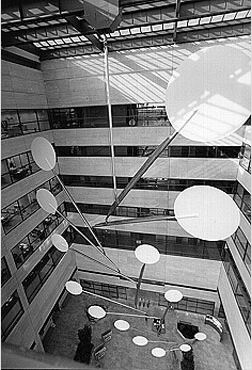
It measures approximately 100 feet (31 meters) from top to bottom, is 60 feet (18 meters) at its widest point, and weighs close to 10 tons, including the motor, surpassing Calder’s 920 pound 76-foot-long mobile (or 85 feet, depending on source) at the National Gallery of Art in Washington, DC. I’m not sure if any of his stabiles are larger, but if not, then this would also be Alexander Calder’s largest sculpture. Speaking of that large Calder mobile at the National Gallery, it is made with hollow honeycomb-type structures designed by Paul Matisse (grandson of Henri Matisse and son of Pierre Matisse) and covered with paper-thin aluminum, and aluminum and steel bars, with the stress points being strengthened with molybdenum. It weighs 930 pounds (422 kg). The previous estimates from Calder’s foundry in Biémont exceeded 5000 pounds (2268 kg). It doesn’t have a name. When Calder was asked for a title, he replied “You don’t name a baby until it is born.” But then he passed away one year before it was installed at the Gallery. The mobile sculpture has been refurbished recently.
Back to White Cascade: It took just two days to install it. The installation was carried out in two stages. In the most difficult and time-consuming part of the job, the four top-most and largest aluminum discs — still in their protective wrappings — were joined to their respective stainless steel rods, then raised one by one and linked together. The 10 lower discs and rods were linked together on the ground level, then raised into position as a unit. A crane situated on the sidewalk outside the entrance to the Bank provided the lifting power.
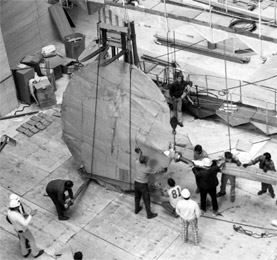
Finally, the wrappings were removed. The 14 white aluminum discs that comprise “White Cascade” range in size from 3.5 feet in diameter to 12.7 feet. The longest of the connecting stainless steel rods is 36 feet; the shortest, 9 feet. Powered by an electric motor, the mobile rotates clockwise on a radius of 32.5 feet.
Here’s a photo by H. Scott Heist of Calder in front of the mobile:
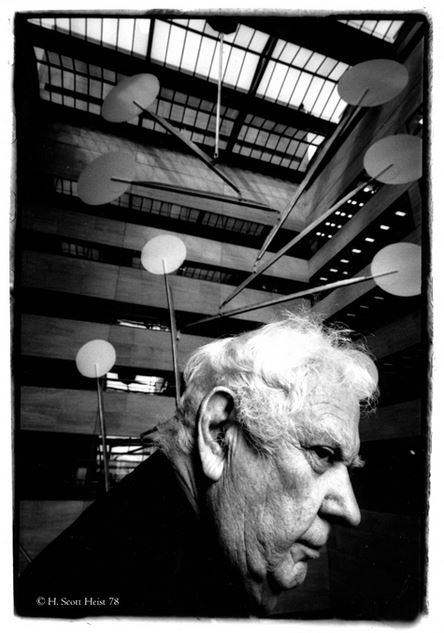
The mobile was installed in May 1976, Calder passed away less than six months later.
Do you know of a larger kinetic sculpture? Let me know if you do and I’ll add it to this post.
Current relevance as of January 2026: No newer kinetic sculptures surpassing White Cascade in size have been widely reported in searches up to this date.
Also see my list of the 5 Largest Mobiles worldwide that I’m aware of.
– Update: –
I received an email from Anthony Howe nominating his OCTO 3 sculpture as possibly the largest outdoor permanent kinetic wind sculpture. It measures 25′ h x 30′ w x 30′ d (7.6m x 9.1m x 9.1m) and weighs 7000 pounds (3200 kg):
Since receiving the email from Anthony, it seems that he has surpassed these dimensions with the cauldron he created for the 2016 Rio Olympics measuring 40 ft (12.2 meters):

Related: Watch as Anthony Howe creates a massive, kinetic wind sculpture
– See some of my kinetic sculptures and mobiles –
Iconic 1960 Calder mobile from private collection on offer
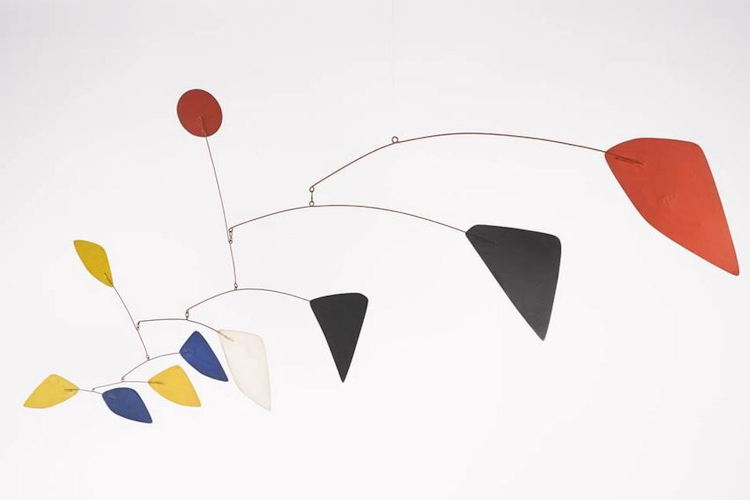
Alexander Calder, Maripose, 1960, 30 x 67in.
Bonhams will offer Alexander Calder‘s (1898-1976) 1960 sculpture Maripose in the November 12 2013 Contemporary Art auction (est. $1,200,000-1,600,000). This stunning example of Calder’s large scale mobiles has been in private American hands for nearly 40 years in Wisconsin-based collections.
A native of Pennsylvania, Calder was born into a family of sculptors. His first solo show was held in Paris in 1927 while he was still in his twenties; he would soon become one of America’s most lauded and prolific artists. It was Marcel Duchamp who first dubbed Calder’s kinetic wire sculptures “mobiles,” – these hanging, interactive pieces would come to define the artist’s legacy.
Maripose was originally offered at Perls Gallery in New York, which represented Calder from 1954 until the artist’s death. The mobile was acquired in 1976 by a prominent private collector from Milwaukee’s Irving Galleries, and passed by descent to the present owner in 1988. The mobile was exhibited at the Milwaukee Art Museum in 1987, and is registered with the Calder Foundation.
“In Maripose, every element of Calder’s genius is evident through the striking sense of balance and momentum the sculpture evokes,” said Jeremy Goldsmith, Bonhams Director of Contemporary Art in New York. “It’s a pleasure to bring such an important work to the market after nearly four decades in private hands.”
The auction will preview at Bonhams November 9-12 2013.
3D Printing Artists
Additive manufacturing or 3D printing is a process of making a three-dimensional solid object of virtually any shape from a digital model. 3D printing is achieved using an additive process, where successive layers of material are laid down in different shapes. More and more artists and specifically sculptors are making use of this technology. This is a list of 3D printing artists that I will keep adding to:
Marco Mahler and Henry Segerman
A collection of 3D printed mobiles, the result of a collaboration between Marco Mahler, a kinetic sculptor specializing in mobiles, and Henry Segerman, a research fellow in the Department of Mathematics and Statistics at the University of Melbourne. Designed in the spring of 2013, they appear to be the first fully 3d printed mobiles in the world.
Joshua Harker is a well-known American artist and considered a pioneer & visionary in 3D printed art & sculptures. His sculpture Crania Anatomica Filigre holds the record for the most-funded kickstarter sculpture project. His work is among nearly 3000 collections that include work from notable artists such as Andy Warhol, Ron English, Shepard Fairey, R. Crumb, & Robert Williams.
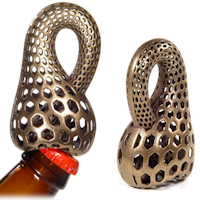
Bathsheba Grossman is an artist from Santa Cruz, California who creates sculptures in bronze and stainless steel. 3D printing is her main medium but she also works with subsurface laser damage in glass. She defines herself as an artist exploring the region between art and mathematics. Her work is about life in three dimensions: working with symmetry and balance, getting from the origin to infinity, and always finding beauty in geometry.
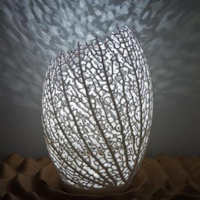
Nervous System is a generative design studio that works at the intersection of science, art, and technology. We create using a novel process that employs computer simulation to generate designs and digital fabrication to realize products. Drawing inspiration from natural phenomena, we write computer programs based on processes and patterns found in nature and use those programs to create unique and affordable art, jewelry, and housewares.
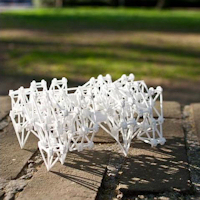
Theo Jansen is a Dutch kinetic artist. In 1990, he began what he is known for today: building large mechanisms out of PVC that are able to move on their own, known as Strandbeest, wind-walking examples of artificial life. The 3d printed versions of the kinetic sculptures are a great example of what 3D printing is ultimately capable of, and continue to evolve with the addition of a Propeller Propulsion system.
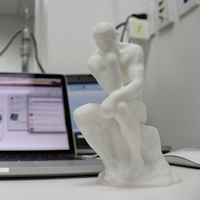
Cosmo Wenman has a vision of digitally scanning masterpieces from museums all over the world, and making the resulting files and information freely available online. His goal is to allow anybody with a 3D printer to be able to reproduce these rare works of art in their own homes, or in the classroom. In fact, he already has several works of art that he has scanned available.

Studio Nick Ervinck applies tools and techniques from new media in order to explore the aesthetic potential of sculpture, 3D print installations, architecture and design. Through his divergent practice, a strong fascination with the construction of space is noticeable. Not only does Nick focus on the autonomous sculptural object, he also questions its spatial positioning and points to the phenomenological experience and embodiment of space.

Linlin (from China) and Pierre-Yves (of French origin) are young artists who were able to blend their cultural differences and artistic skills to make create a partnership of unexpected creativity. These artists met many years ago during their art studies – she brought a master’s degree in digital design and he, a diploma in 3D video production. The chemistry between these two artists was immediate, creating works that are a tribute to nature, knowledge and human feelings.
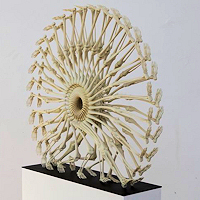
Monika Horčicová is one of the hottest emerging artists in the Czech Republic. Born in Prague, she currently resides in Brno where she studies at the Faculty of Fine Arts at Brno University of Technology under the tutelage of Prof. Michal Gabriel. Her work explore themes of infinity; a repeated cycle of conception and death. Rather than looking at bones as a symbol of morbidity, she aims to show them as objects that can be beautiful when we view them properly.
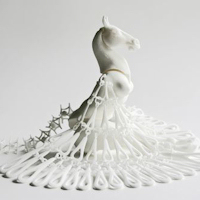
Michaella Janse van Vuuren is a designer and artist with a PhD in Electrical Engineering. These diverse interests enable her to create sculptures that are technically complex and artistically competent, with a strong focus on design for 3D printing or additive manufacturing. She writes: “I love the challenge of creating something that is imagined and then designed on computer and seeing if my idea printed out as envisioned. The first time I hold the design in my hand is when the finished product comes out of the 3D printer.”
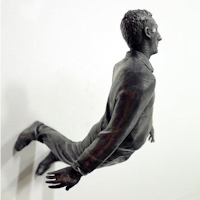
Louis Pratt’s approach to sculpture is novel and ground breaking. He starts by 3D scanning forms (people) from the real world into the digital world. With these digitized forms he then uses digital sculpture tools to manipulate the scanned data. He explores many types of algorithms and applies them to sculpture.The data is then rapid prototyped back from cyber space into the real world.
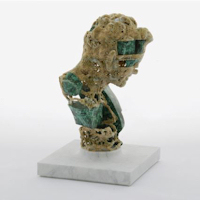
Isaïe Bloch, founder of Ergatory, focuses his ongoing research and design ambitions on the correlation between craftsmanship and additive manufacturing within several creative domains including architecture, fashion and plastic arts. He has won the ‘Artist of the Year Award’ at the 2013 3D Printshow in London.
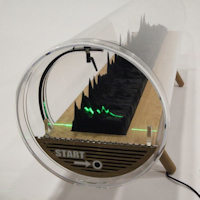
Gilles Azzaro, a French digital artist exposed his latest work at the 3D Printshow in London this year. The voice sculpture print: Barack Obama – Next Industrial Revolution. The 3D printed sculpture is the three-dimensional materialization of President Obama’s voice-print. The 3D voice-print portrays an extract of President Obama’s February 2013 State of the Union Address.

UK designer Lionel Theodore Dean believes in complexity. His objects are defiantly non-square, often pushing the boundaries of the functional object categories all industrial design adheres. Working with rapid prototyping techniques like laser sintering as a designer-in-residence at the University of Huddersfield, Dean realized that these methods were fully capable of producing high-quality objects fit for the consumer market.
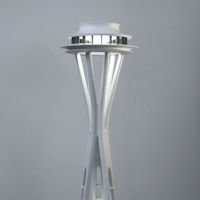
Lumenique, the art and design studio of Kevin Lee Willmorth, designs and creates sculptural portable lighting, with designs inspired by architecture and machinery, which includes lighted objects using 3D printing exclusively. In 2010, Kevin created 53 unique functioning SSL products in 52 weeks as an exercise in the creative use of technology. You can also find out more about his process on his blog.

Ivo Meier creates digital art that goes beyond traditional art. He uses digital technologies, namely 3D printing since 2017 to make interactive sculptures that exist in both real and virtual worlds. He combines art and technology in a unique and creative way that engages and inspires the viewer. His art is not only aesthetic, but also meaningful and value-driven. He explores themes of human existence, freedom, purpose, and transformation. He is an artist who pushes the limits of the digital art field and reveals new opportunities.
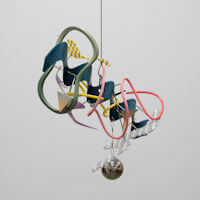
Trained as an architect and followed by a career in design and fabrication, Sam Wood Wilson uses technology and architectural tools to create assemblages that reconfigure aesthetics and formal tropes from global art and design trends into new worlds and ideas. By sculpting his reaction to the relationship of designed content, contemporary aesthetic, and technology, he creates a narrative that conveys a world between the physical and digital, creating an opportunity for reflection on our ever changing societal structures.
I’ll be adding to this list over time …
If you’re a 3D print artist and would like to be added to this list, please contact me.
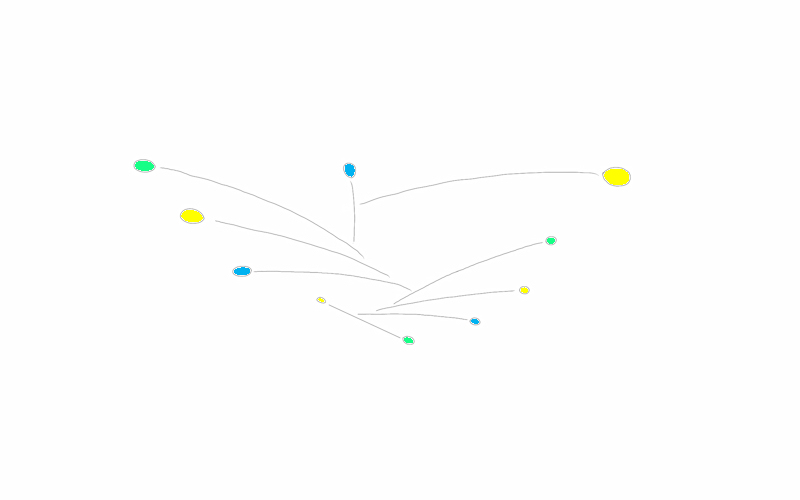
Designs for a custom mobile for a private residence in Cape Cod
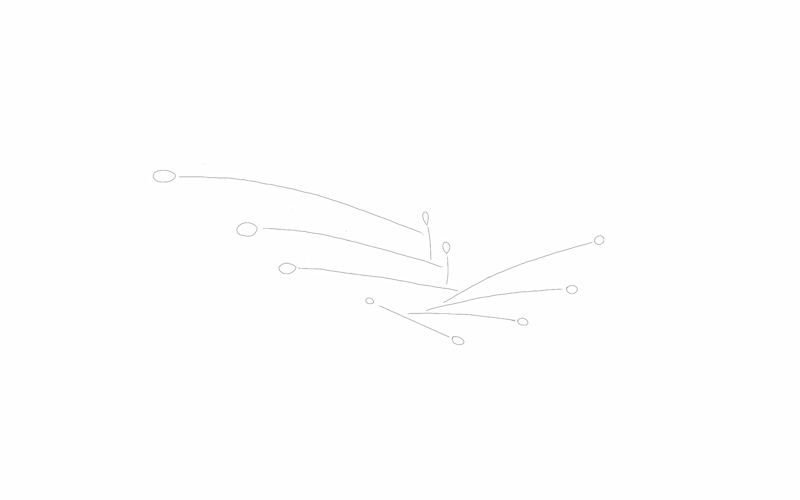
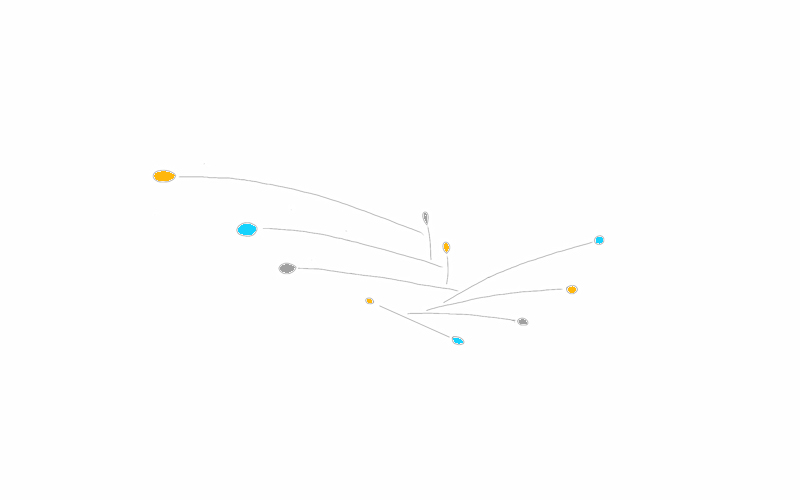
Designs / sketches for a custom hanging mobile for a private residence in Cape Cod


 Included in over 1000 Ideabooks on Houzz
How To Make Mobiles:
- Houzz Article -
- Balance Basics -
- What Wire to Use -
- FAQ Mobile Making -
- MAKE Magazine Article -