
Mobile Sculptures at Art Basel Miami Beach 2017
Mobile Sculptures for sale at Art Basel Miami Beach December 7th – 10th 2017:
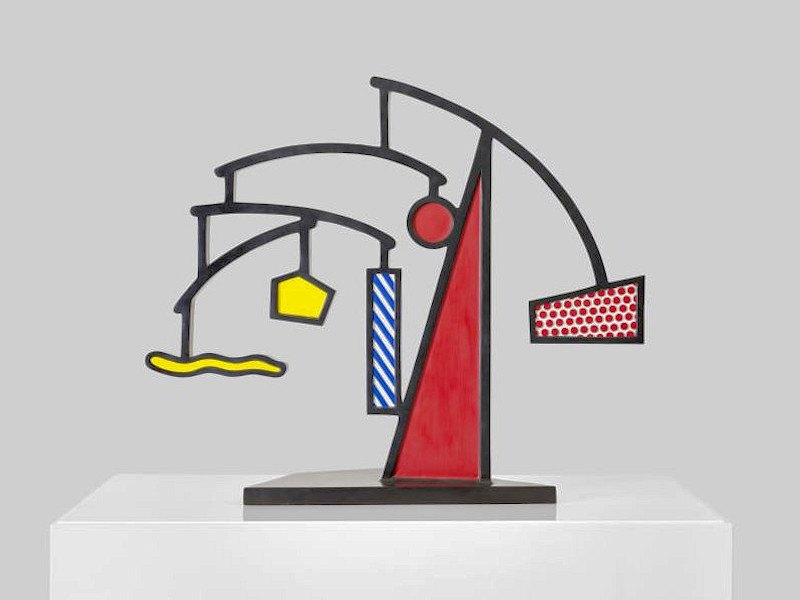
Roy Lichtenstein
Mobile I, 1989
Galerie Gmurzynska
FOS
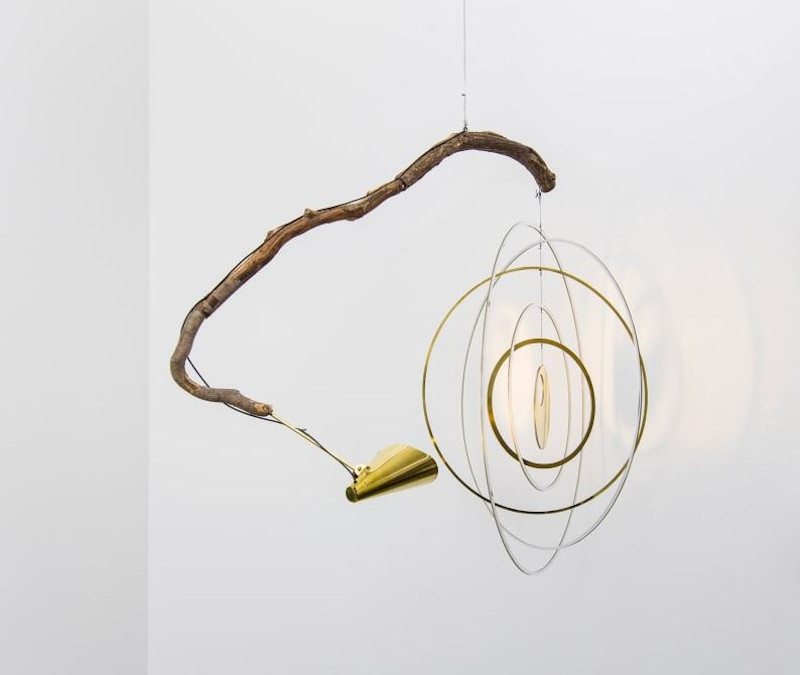
Mobile, 2010
Nils Stærk
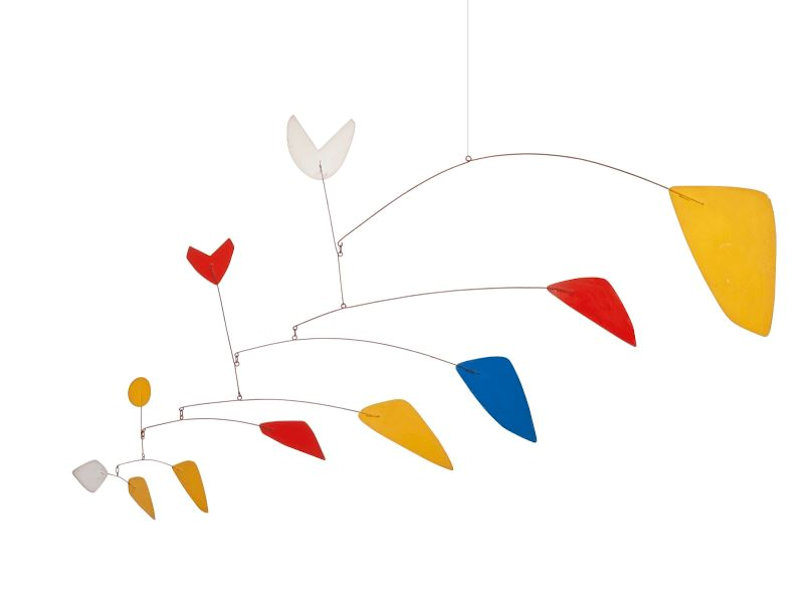
Alexander Calder
Untitled, 1967
Kukje Gallery / Tina Kim Gallery
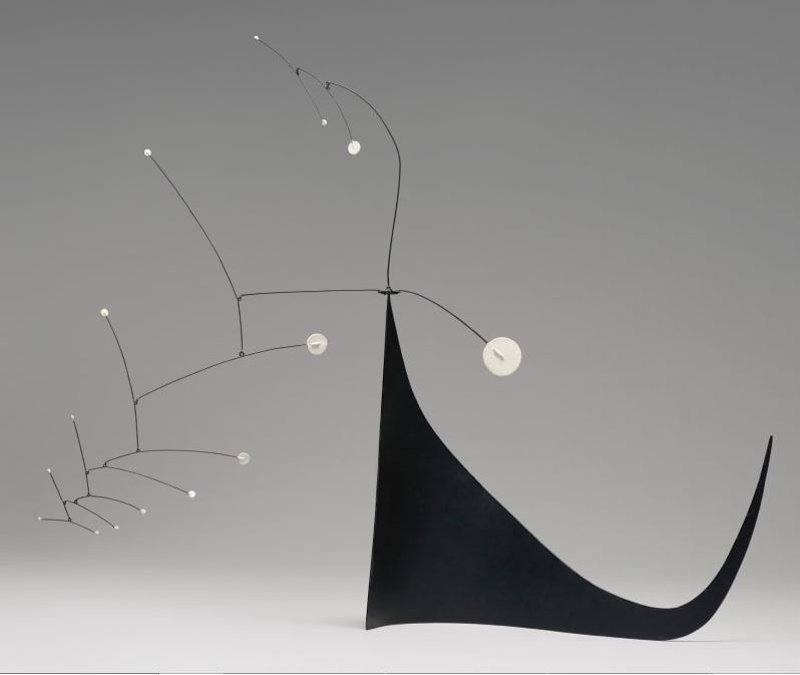
Alexander Calder
Gypsophila on Black Skirt, 1950
Helly Nahmad Gallery
Helly Nahmad Gallery also showed and sold Rouge Triomphant, a large hanging mobile by Calder, at Art Basel Miami Beach in 2014.
Alexander Calder
Untitled, 1955
Helly Nahmad Gallery
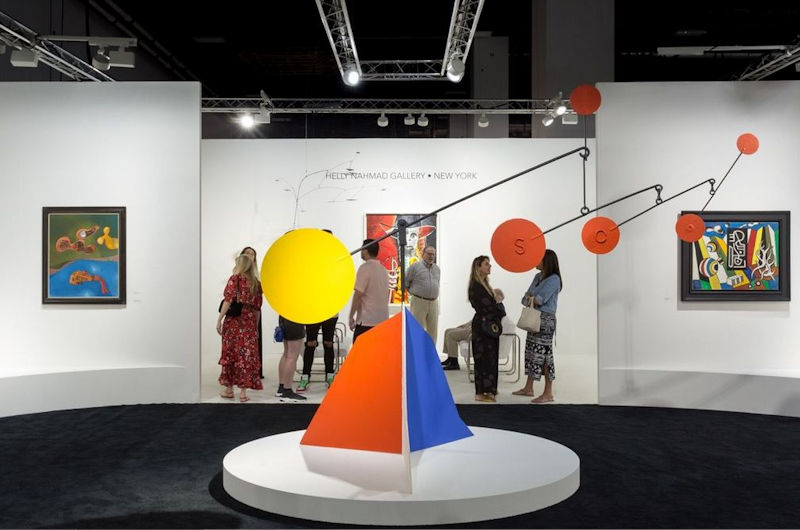
The above mobile sculpture measures 9 ft (2.74m) in height and 11 ft (3.35m) in width. It was made by Calder in India and can rotate full circle. Helly Nahmad Gallery is offering it for US$6.8 million.
Alexander Calder
Three Tentacles, 1975
Galerie Thomas
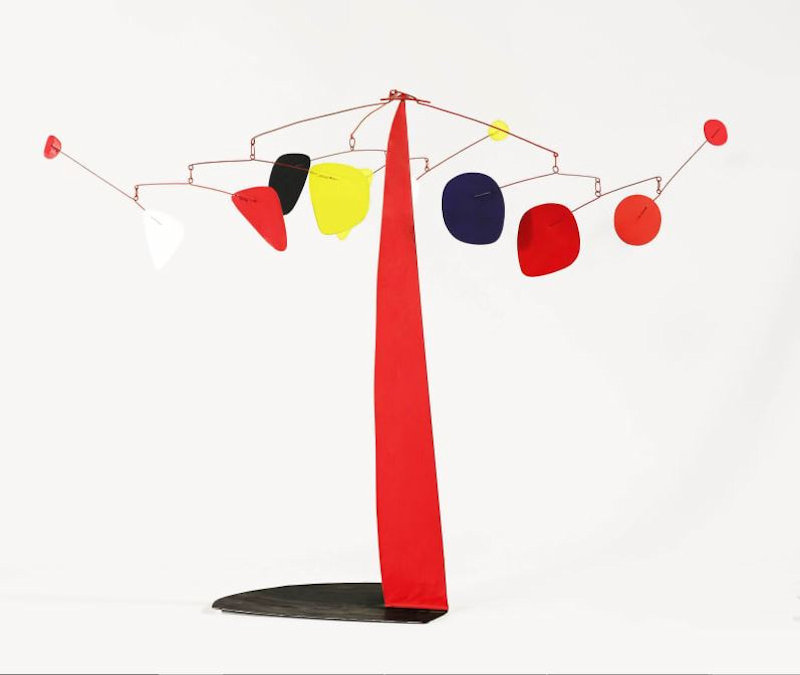
Alexander Calder
Untitled, 1974
Galería Leandro Navarro
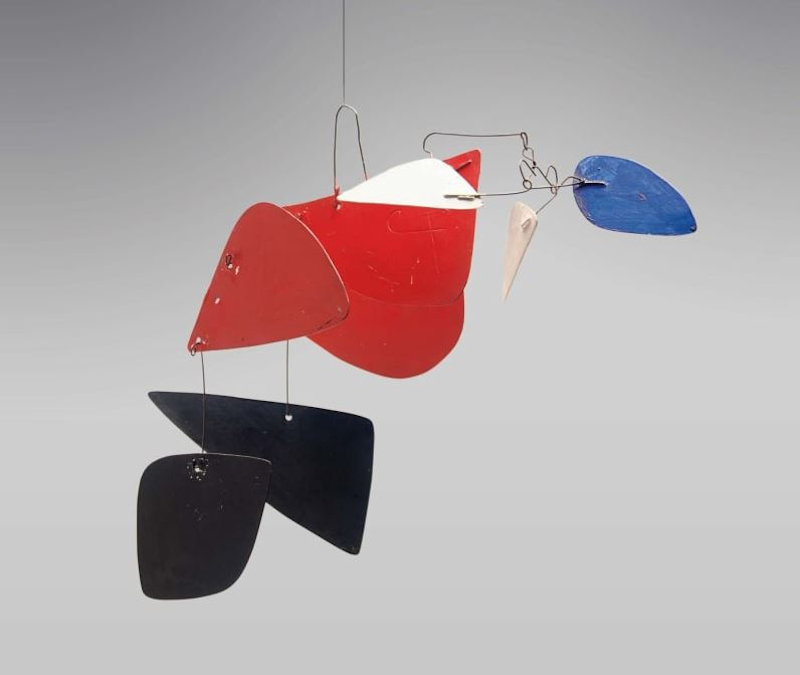
Martin Boyce
Untitled, 2017
The Modern Institute
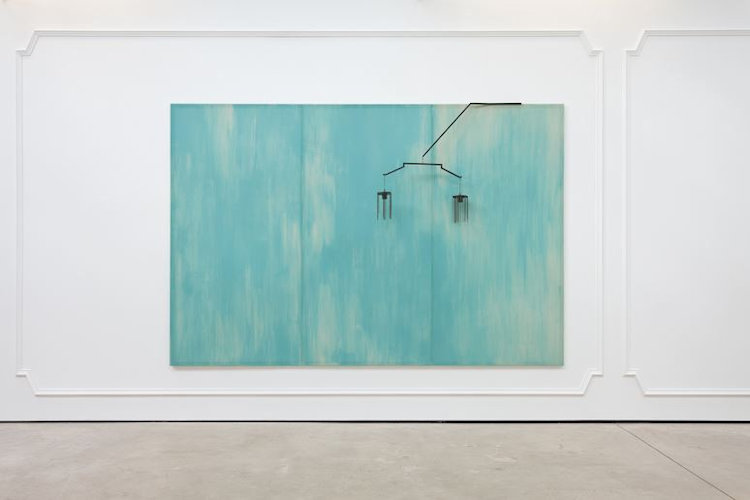
Alexander Calder
Red Snail, 1959
Galerie Thomas
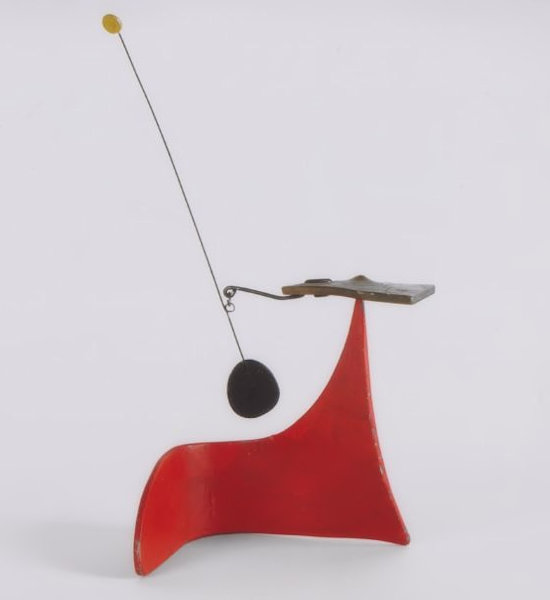
Tomás Saraceno
Cumulonimubus calvus/M+Mb, 2017
Esther Schipper
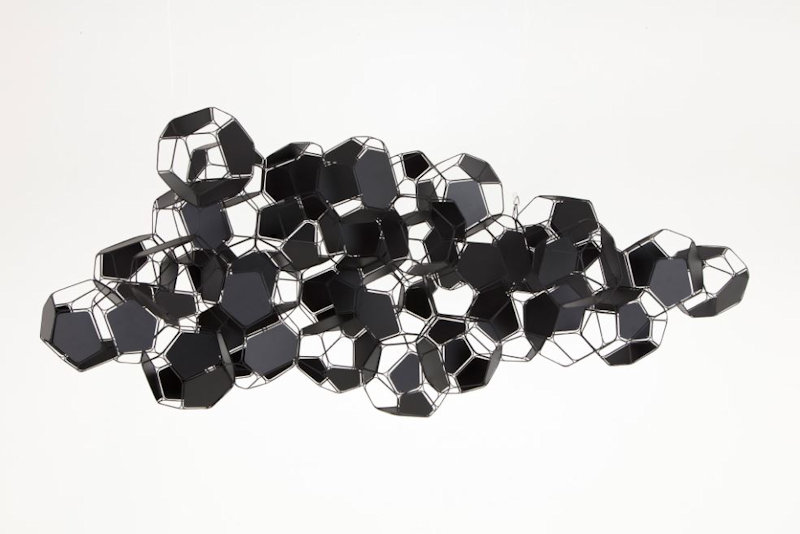
Tomás Saraceno
Foam 91p/Mn, 2017
Esther Schipper
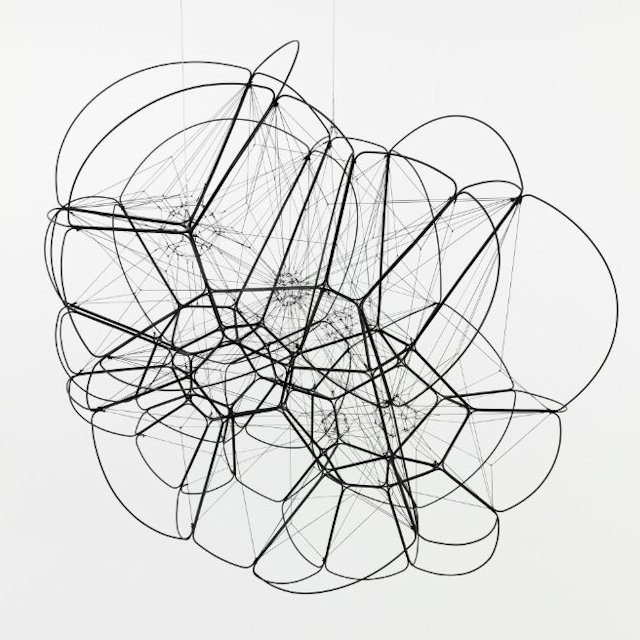
Tomás Saraceno
NGC/IC/M, 2017
Tanya Bonakdar Gallery
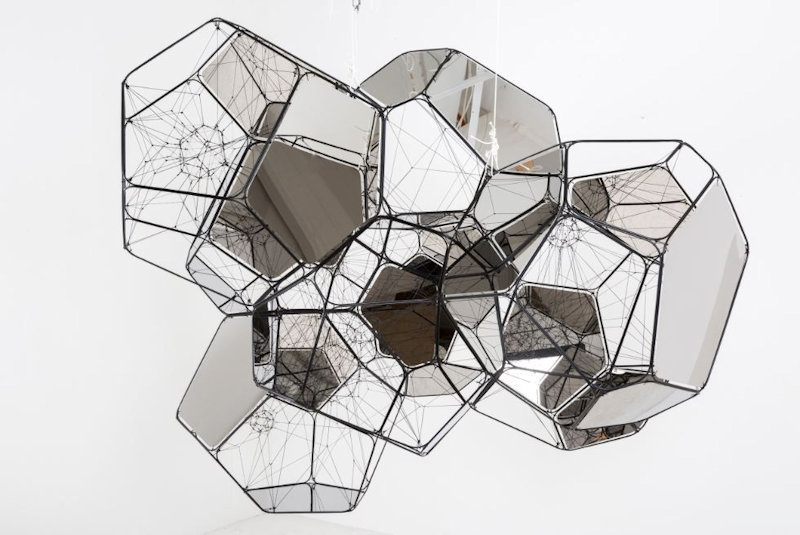
Claire Falkenstein
Sun, 1960
Michael Rosenfeld Gallery
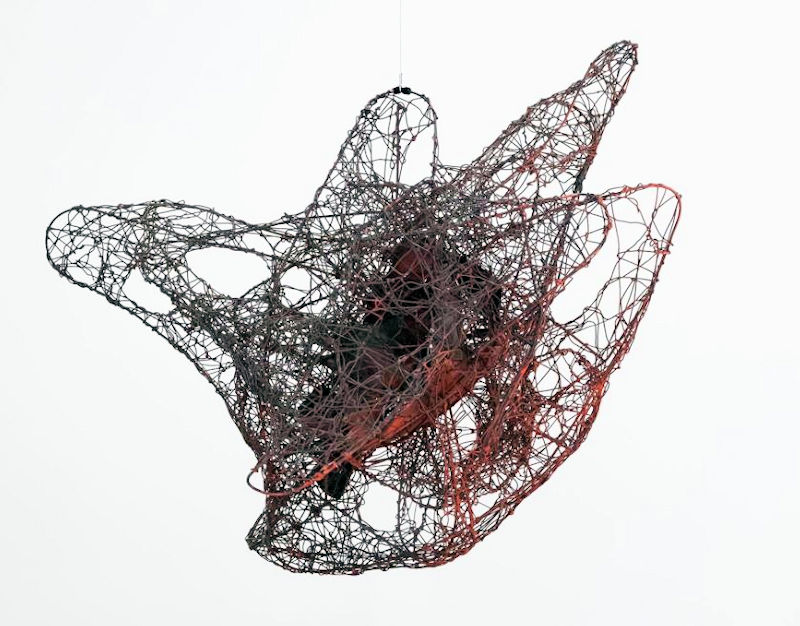
The above sculpture reminds me of Swarm Chandelier by Zaha Hadid.
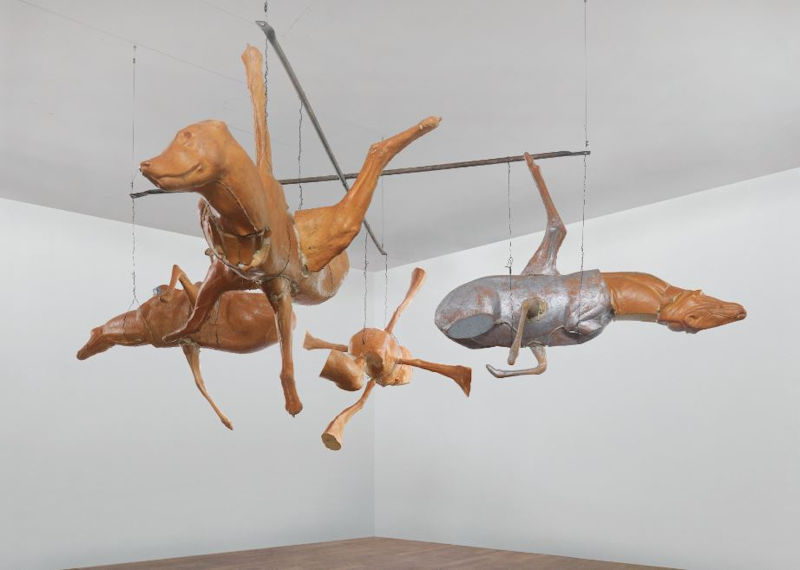
Bruce Nauman
Untitled (Two Wolves, Two Deer), 1989
Hauser & Wirth
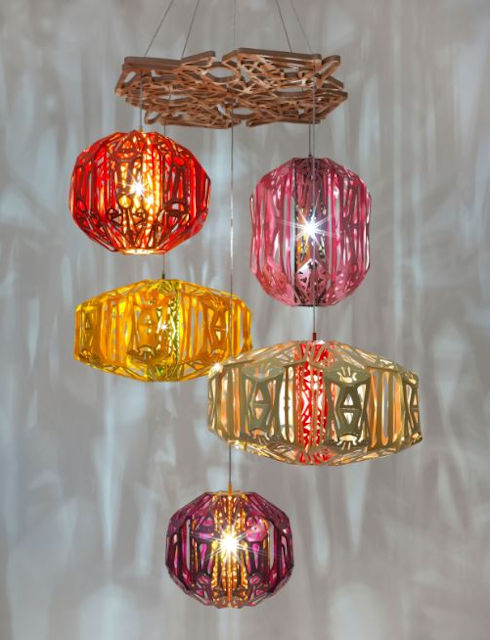
Jorge Pardo
Untitled, 2015
neugerriemschneider
And some suspended sculptures for sale at Design Miami Dec 6th to–10th 2017:
Christopher Kurtz
Untitled #1, 2017
Patrick Parrish Gallery
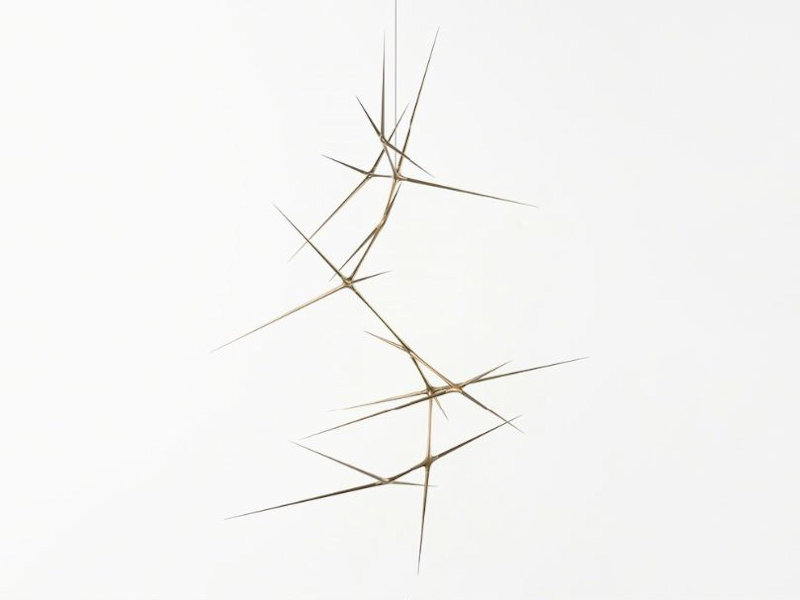
Christopher Kurtz
Untitled, 2017
Patrick Parrish Gallery
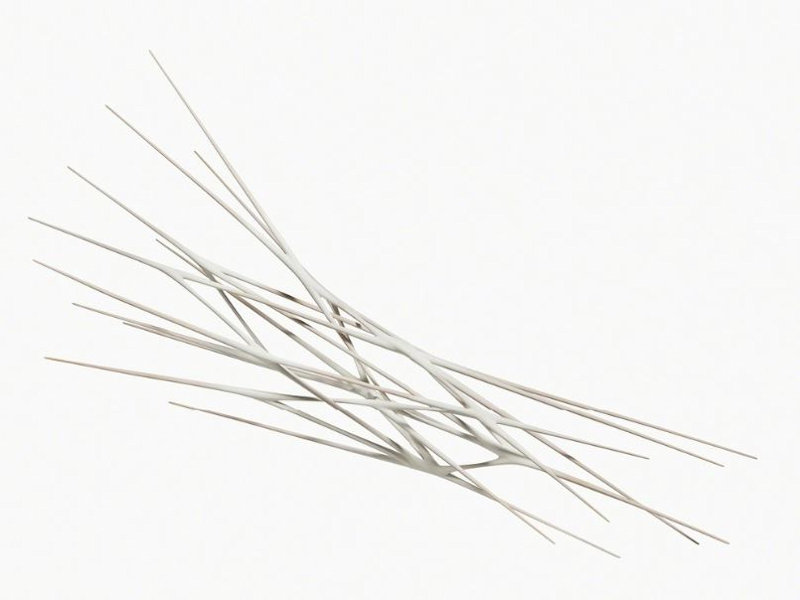
Kasper Kjeldgaard
Talisman, 2017
Patrick Parrish Gallery
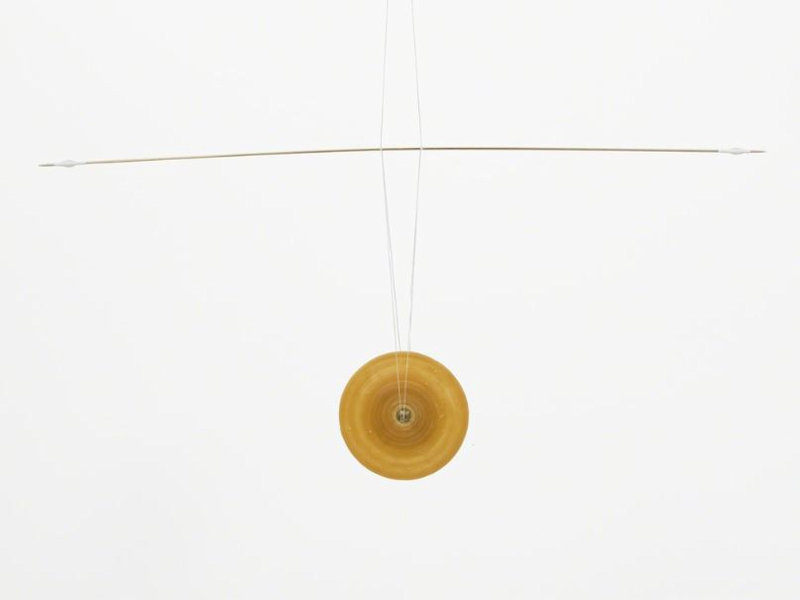
And a hanging mobile:
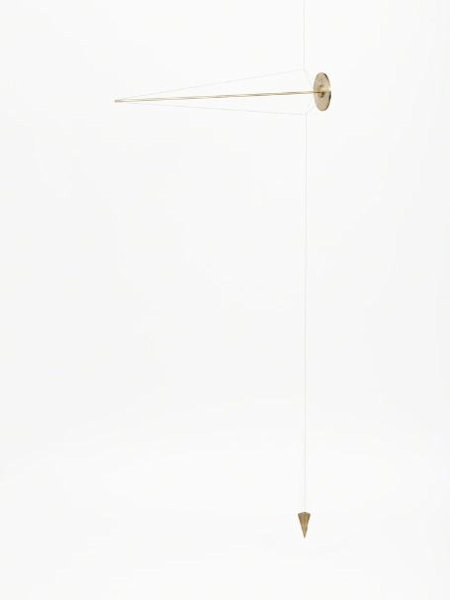
Kasper Kjeldgaard
Friction, 2017
Patrick Parrish Gallery
Related: The 15 Best Booths at Art Basel in Miami Beach 2017
– See more mobiles –
– Read more of my blog about mobiles –
Contemporary Mobile Sculpture – Distinct Appearances from Various Angles
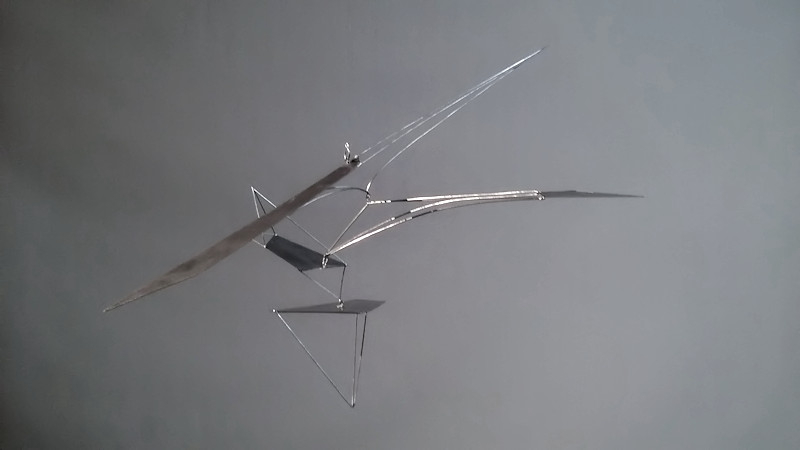
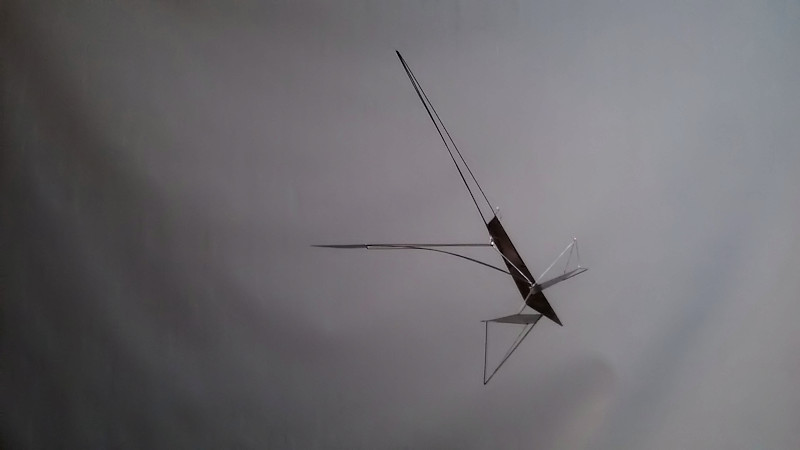
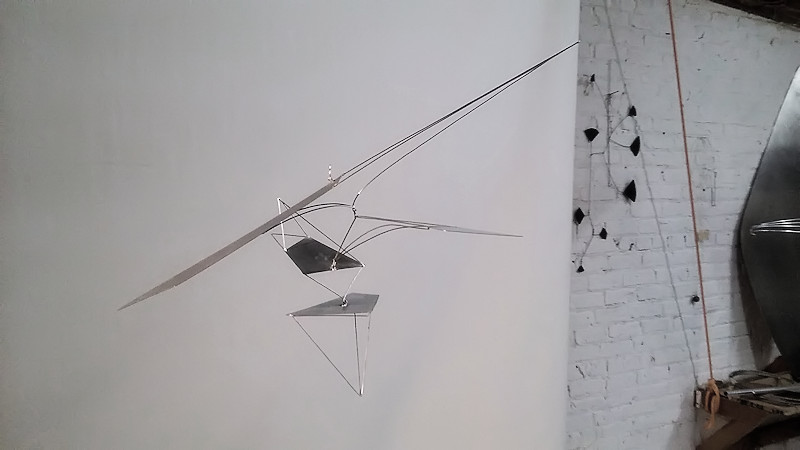
Snapshots of a mobile in progress – as part of a new series of contemporary original mobile sculptures I’m currently working on. The 2-dimensional photos illustrate well the many different ways a mobile sculpture can appear from various angles:
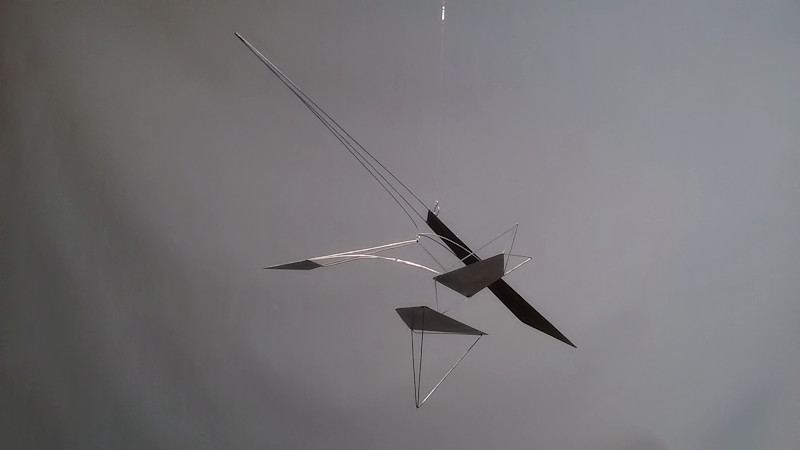
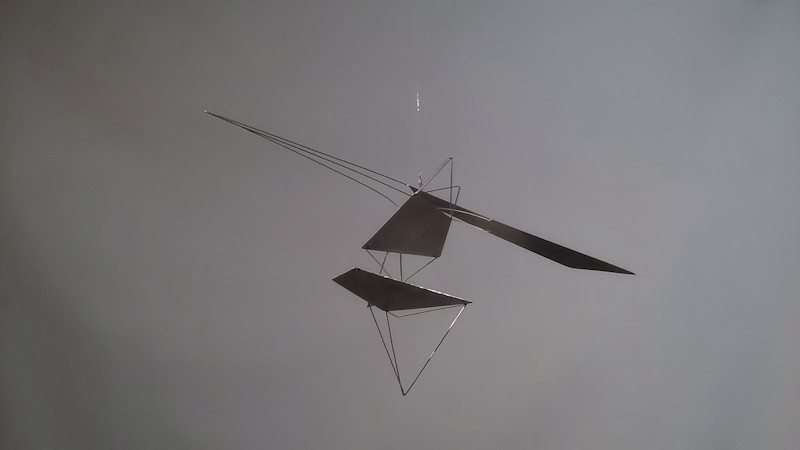
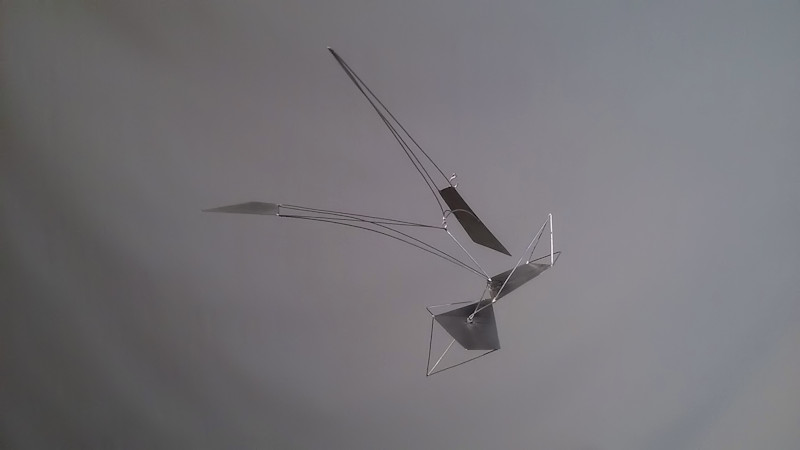
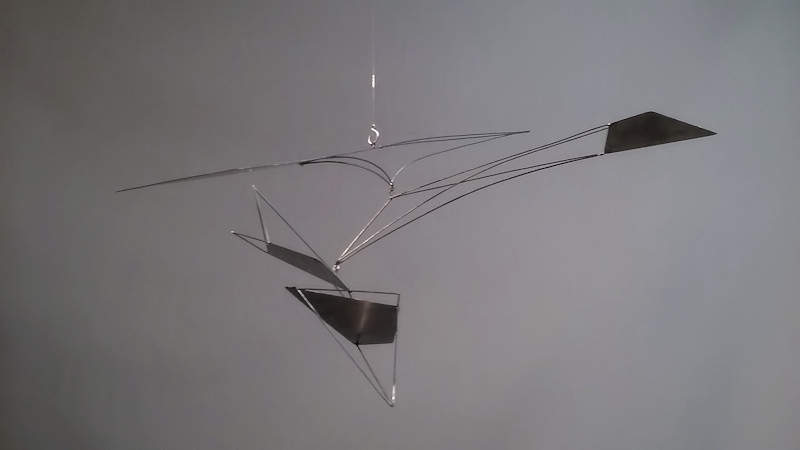
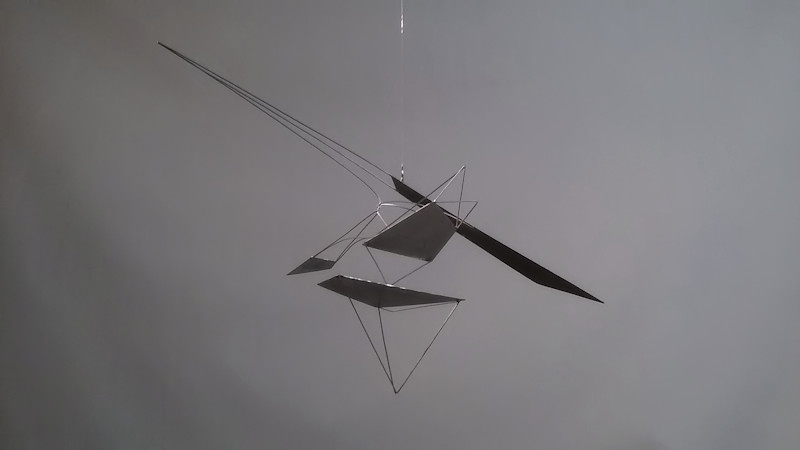
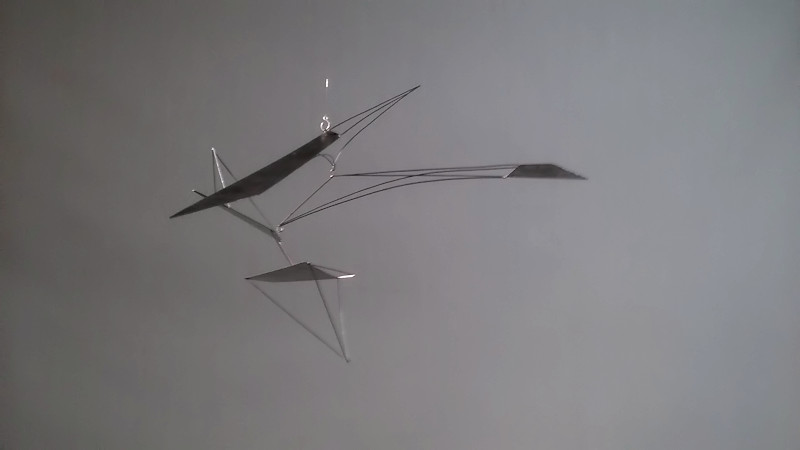
Same as the above linked-to sculptures, this mobile is a kinetic sculpture based on the same type of balance structure as a conventional Calder mobile, yet original and contemporary in design (architectural in design?).
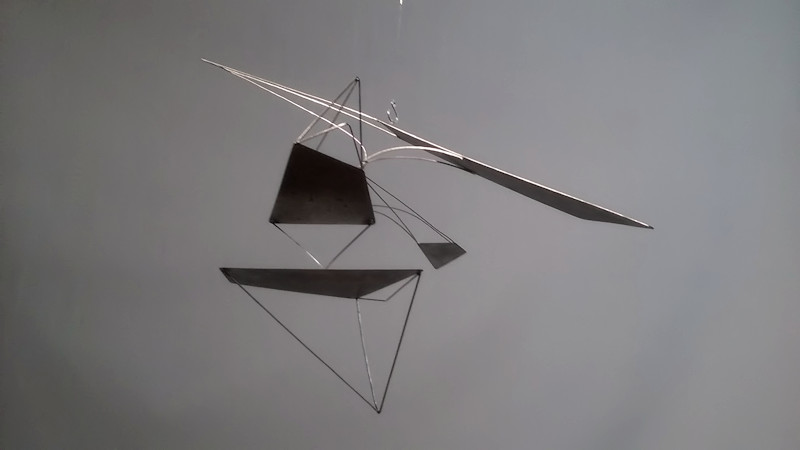
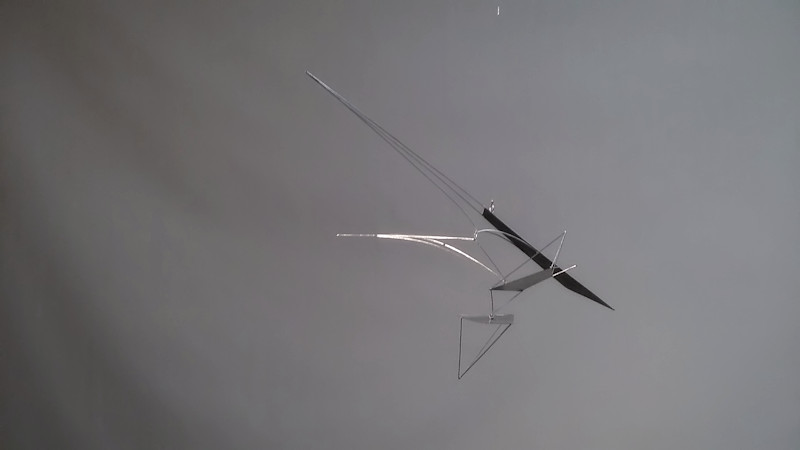
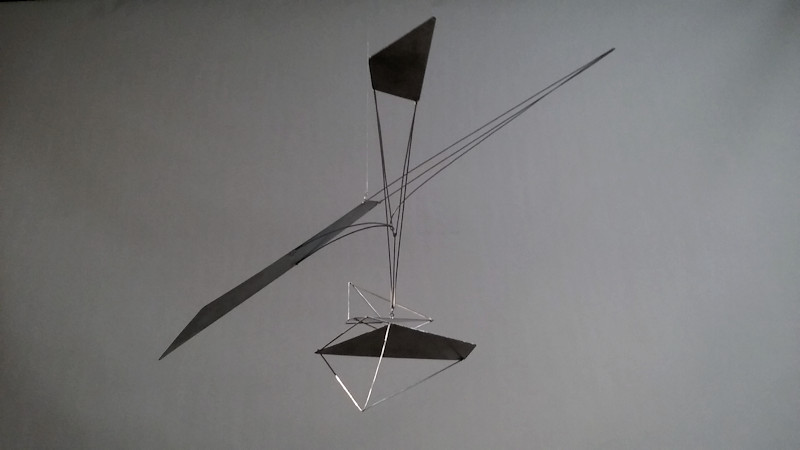
See more contemporary mobile sculptures:
– New Contemporary Original Mobile Sculptures in Progress – Part 1
– New Contemporary Original Mobile Sculptures in Progress – Part 2
See more of my mobiles
Mobile Sculpture Artists – A History of Mobiles (Part 2)
As a professional mobile sculptor, I continuously study other artists’ work who have also explored the art form of mobiles. On this page I’m summarizing some of the research I have done for myself. Also, this is a continuation to my previous post Mobiles before Calder – A History of Mobiles (Part 1), in which I wrote about mobiles (or mobile-like sculptures) throughout history up until the early 1930s, when Alexander Calder started to make them. This second part focuses on sculptors who have expanded the art form of mobiles from the 1930s on to present day.
Probably anyone who is familiar with mobiles as an art form knows of Calder’s work. After all, he is widely regarded as the originator of the genre, which he continues to dominate even to present-day. “Calder is a school of one”, the Daily News announced in 1972. Art critic and Los Angeles Times contributor David Pagel referred to mobiles in a Los Angeles Times article in 2012 as “a genre of sculpture [Calder] may not have invented but owns so completely that it’s almost impossible for another artist to make a mobile and not be compared, unfavorably, to Calder.” As someone who makes mobiles professionally, I believe that there are vast uncharted territories in the art form of mobiles. The balance structure of a mobile (the whippletree mechanism) is like a few simple chords on an instrument: simple, but the possibilities of what can be done with it are infinite.
Not many sculptors have applied themselves yet to the relatively new art form of mobiles over the past 100 years. However, some mobile sculpture artists (besides Calder) have created new creative approaches and expanded the art form of mobiles since the early 1930s:
Lynn Chadwick (1914-2003)
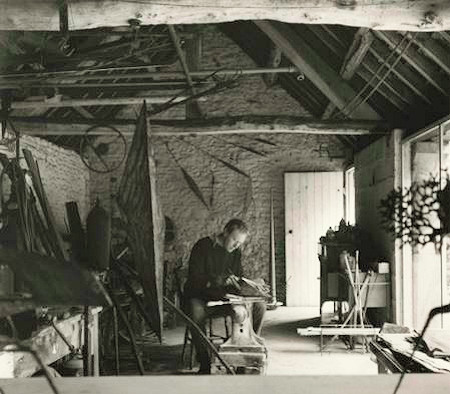
Lynn Chadwick was an English sculptor and artist. A self-trained yet extremely skilled craftsmen in metal, he is regarded as one of the major figures in the arts of the second half of the 20th century. While working with architect Rodney Thomas, he made at least sixty mobiles between 1947 and 1952, of which some were suspended and others freestanding. While Calder usually hand-cut rounded and oval painted shapes, and spaced them out in evocative patterns on simple wire frameworks, Chadwick’s geometric, interlocking shapes appeared to be cut from a single sheet and, in the 1951 mobiles, anchored by an elaborate, rigid, constructed framework made of wire, balsa wood, copper and brass. Very few of these mobiles survive. Interestingly, Chadwick always insisted that he had no knowledge of the mobiles that Calder made for 20 years previous to his, but that his mobiles had evolved in his own style from his work on exhibition stands:
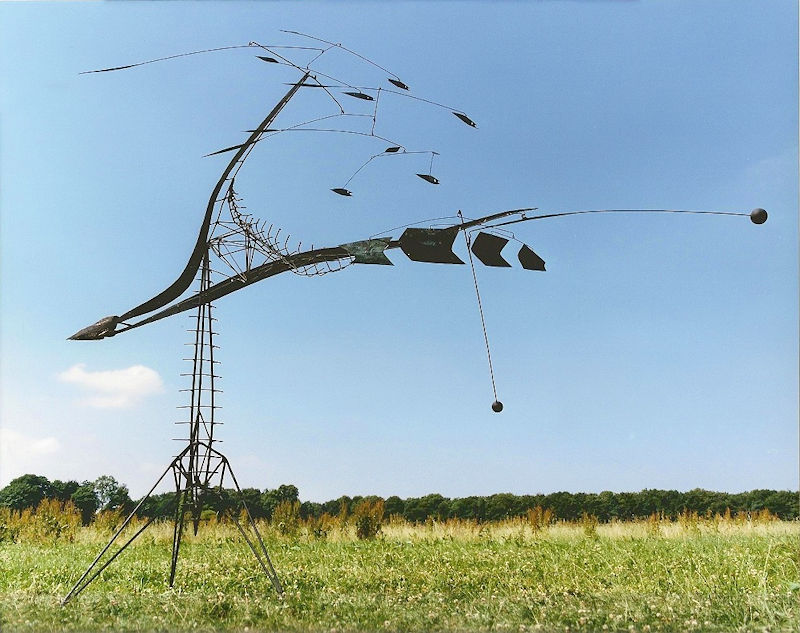
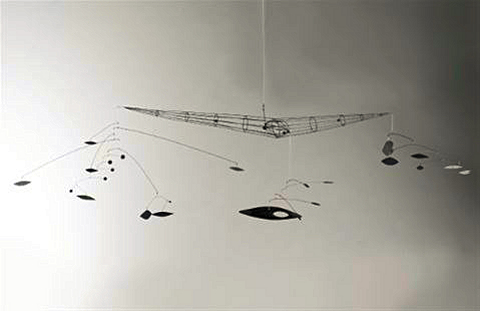
Later in his career, Chadwick would commented: “So I did this suspension idea, and it took a long long time till I realized that I was doing exactly the same thing as Calder, but this was just about the time when I gave it up, because I realized that Calder was, really, better at doing what he was doing, than I was at what I was doing.”
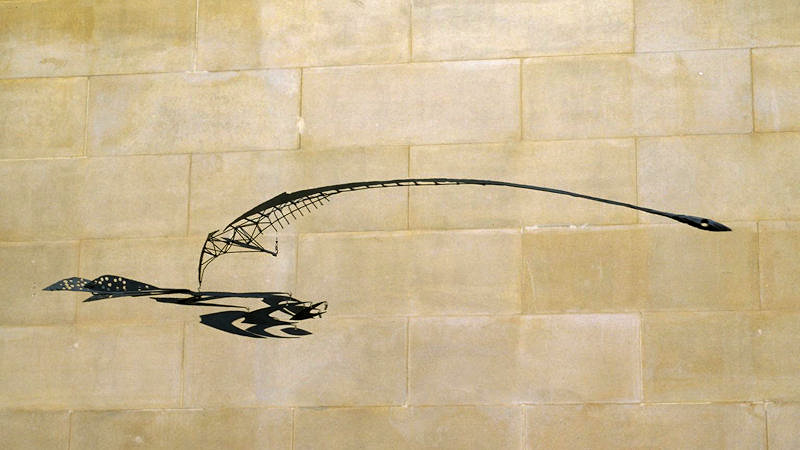
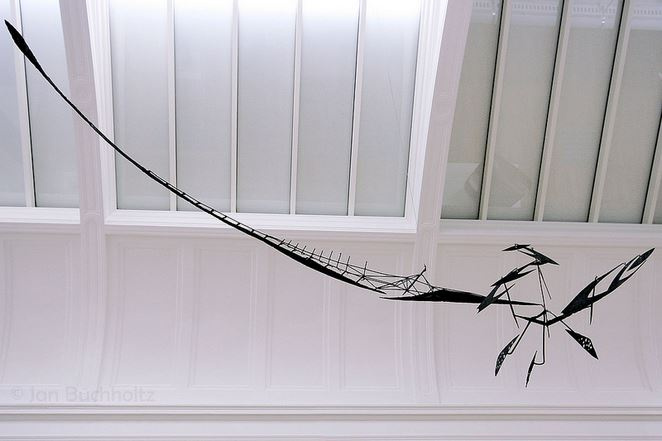
His son Daniel Chadwick makes mobiles as well.
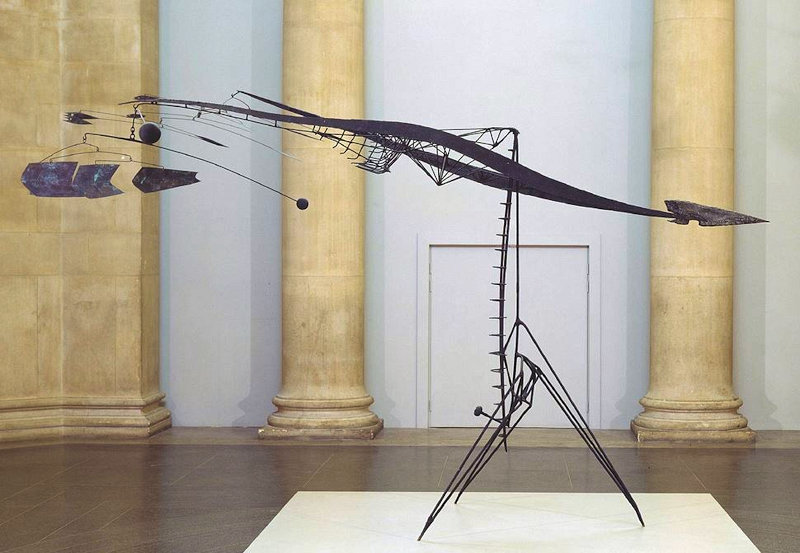
A mobile appears to be hanging on the wall in the back in Lynn Chadwick’s studio:
George Rickey (1907-2002)
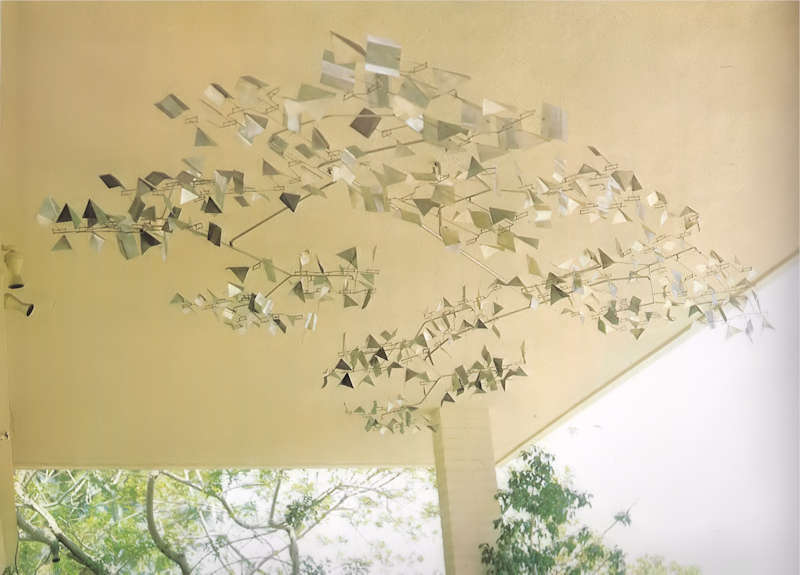
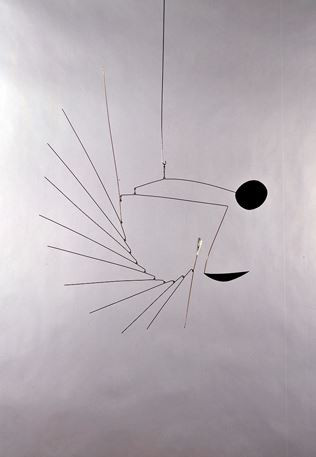
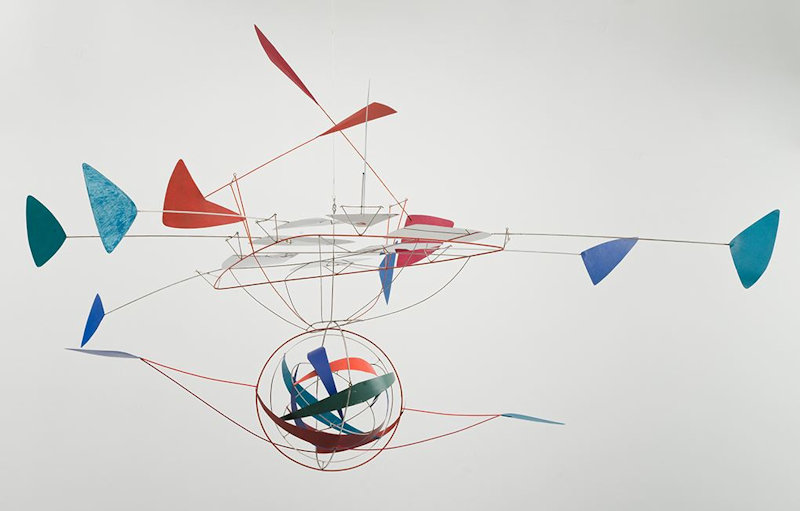
George Rickey was an American kinetic sculptor. Originally inspired by Calder’s mobiles and having served as an engineer in the Army Air Corps in World War II, he is well known for his innovative standing kinetic sculptures that respond to the slightest air currents, and whose simplicity and scale made him an important figure in contemporary art. Around 1954, he began to wonder whether Calder, brilliant and varied as his mobiles were, had said it all. “When I found he had not, I had to choose among the many doors I then found open.” Whereas in Calder’s mobiles the motion of one part is almost invariably dependent on the motion of another (usually neighboring) element, the elements in Rickey’s work are no longer hierarchical but of equal status and able to move independently and randomly in relation to each other. In George Rickey’s obituary in 2002, Ken Johnson wrote in The New York Times: “Mr. Rickey was one of two major 20th-century artists to make movement a central interest in sculpture. Alexander Calder, whose mobiles Mr. Rickey encountered in the 1930’s, was the other.” He added: “It is a curious fact of contemporary art history that Mr. Rickey left no significant artistic heirs … no sculptor has adopted his innovations with comparably persuasive ambition or elegance.” I would think Tim Prentice (see below) would strongly qualify as a significant artistic heir, as well as perhaps Susumu Shingu, and more recently Phil Price, Pedro S. de Movellán and Michael Christoph Ernst. As to Rickey and mobiles, he made them as a child already and kept returning to the art form (although after around 1950, he often opted for standing kinetic sculptures instead of suspended ones):

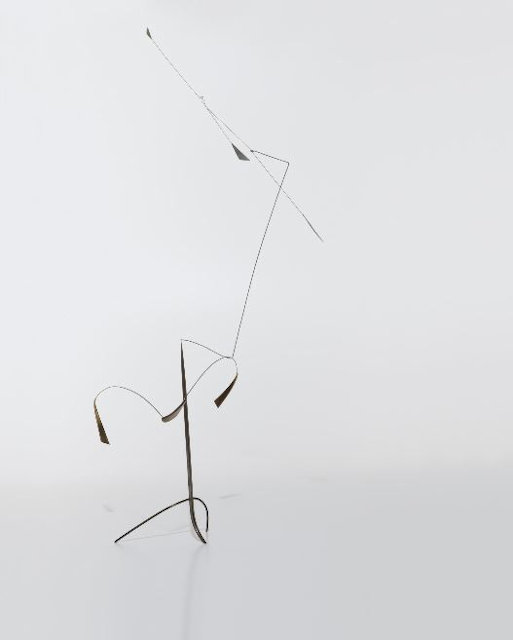
A standing mobile:
Tim Prentice (b. 1930)
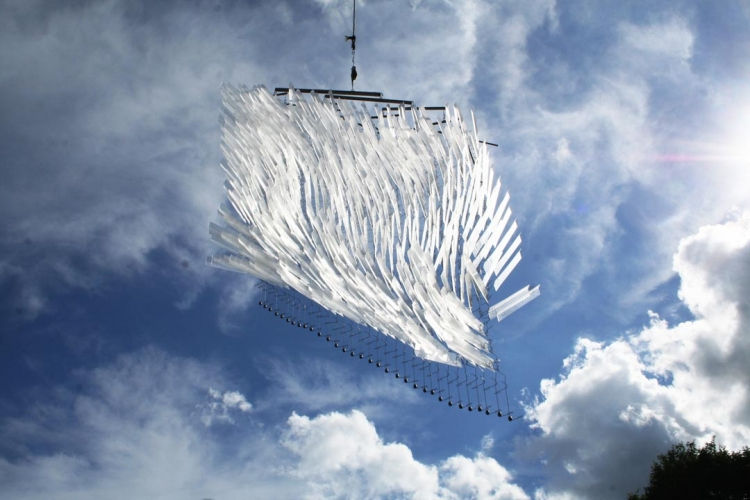
Tim Prentice is an American architect and kinetic sculptor. Beginning in the 1970s, his work grows out of the tradition of Alexander Calder and George Rickey, both of whom he met, but it became something very original and fascinating of its own, or as he recently put it “I claimed some new territory because there was more turf to be explored”:
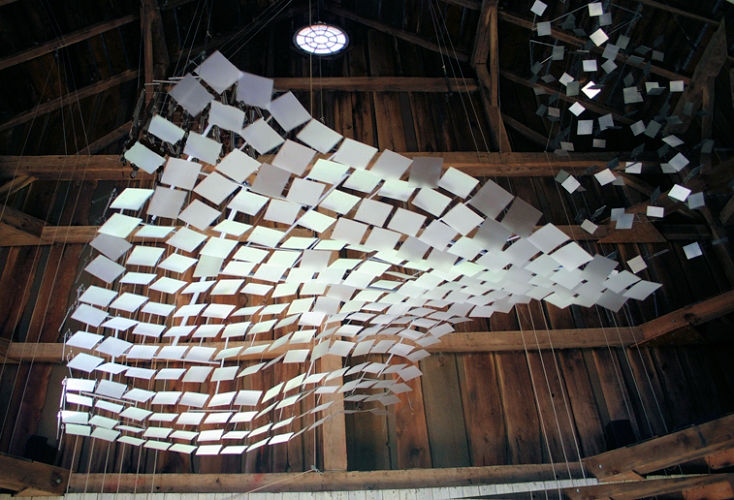
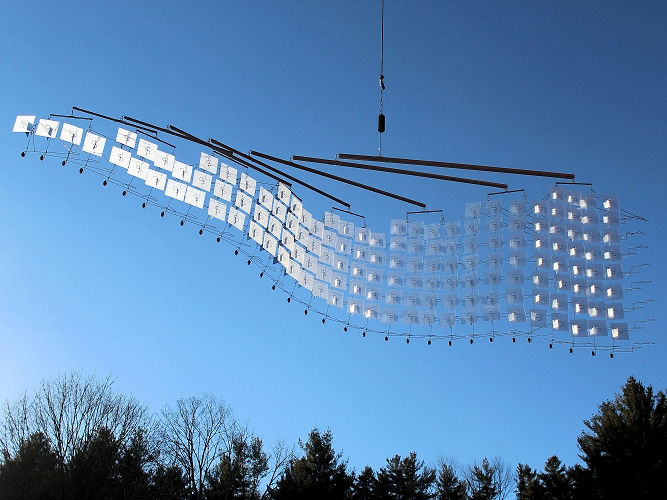
See a short film At Work with Tim Prentice- A studio visit with kinetic sculptor Tim Prentice.
Bruno Munari (1907-1998)
Bruno Munari was an Italian artist, designer, inventor, and author. He was interested in creating pieces of art that could interact with their environment, and made what he called “Useless Machines” (macchine inutili) of which many were essentially mobiles. Very similar to Calder’s thought process when he started to make mobiles, Munari thought that instead of painting geometric forms, why not free them from their static state and suspend them in the air:
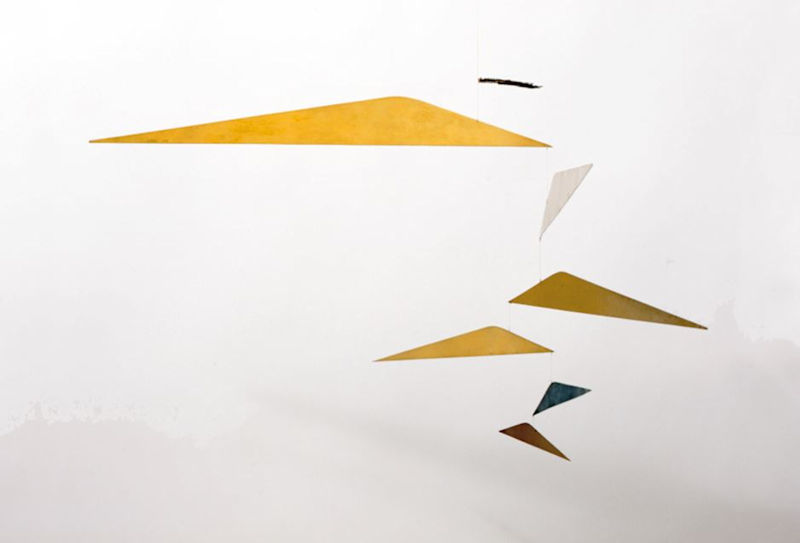
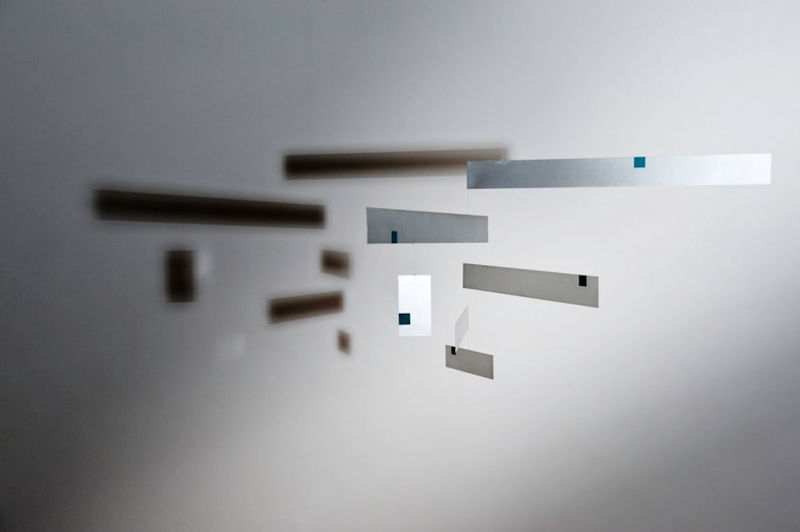
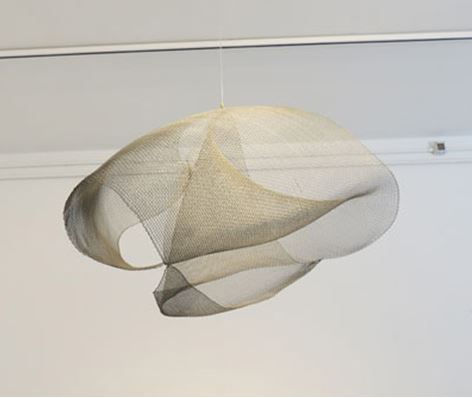
The following suspended sculpture by Munari seems related to Ruth Asawa’s looped wire sculptures that she made only a short number of years later:
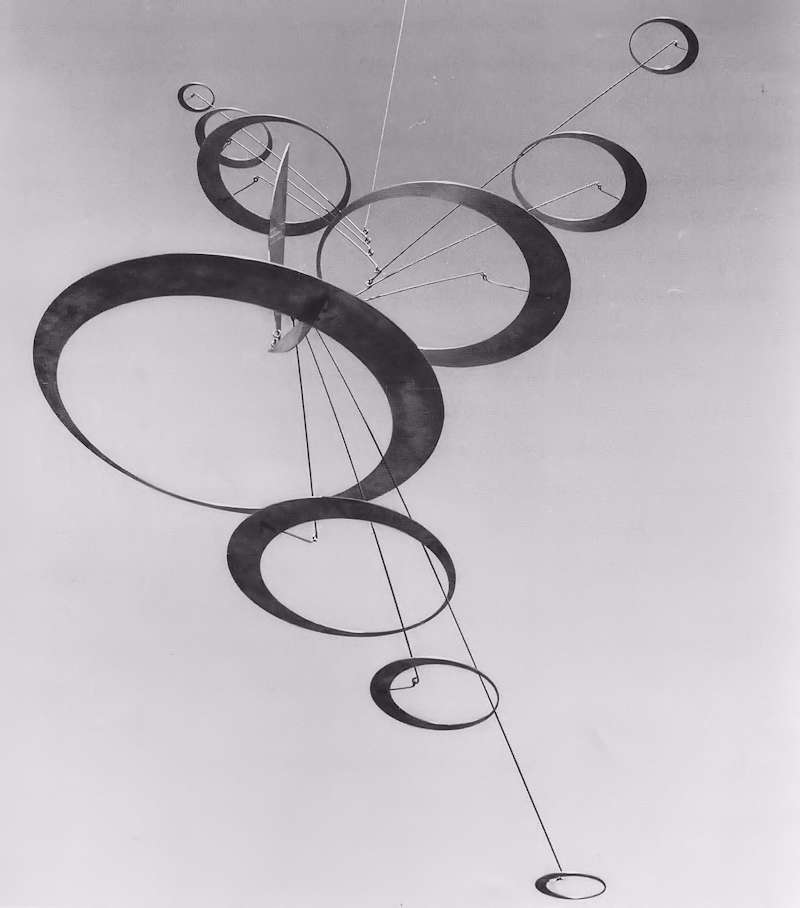
Jerome Kirk (1923-2019)
Jerome Kirk was an American sculptor. After earning a degree in mechanical engineering from MIT, he has made sculptures that measure over 45 feet in height and weigh over 6 tons, exploring a wide variety of kinetic sculptures including mobiles, both suspended and standing:
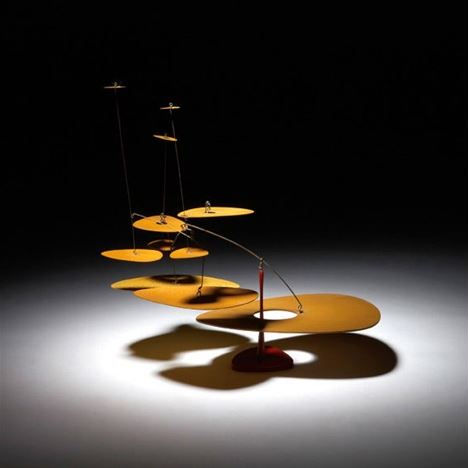
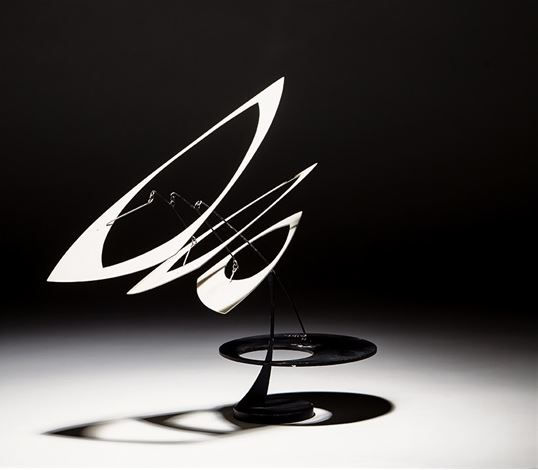
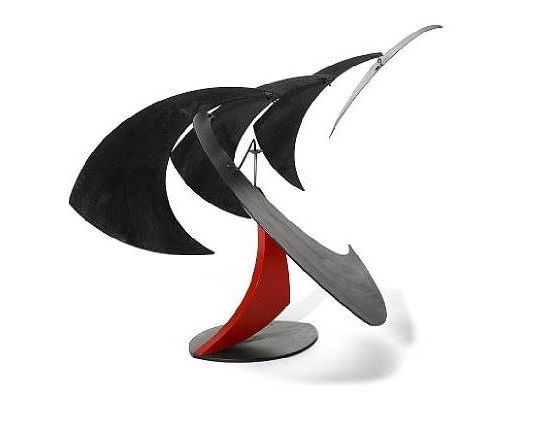
Marco Mahler (me)
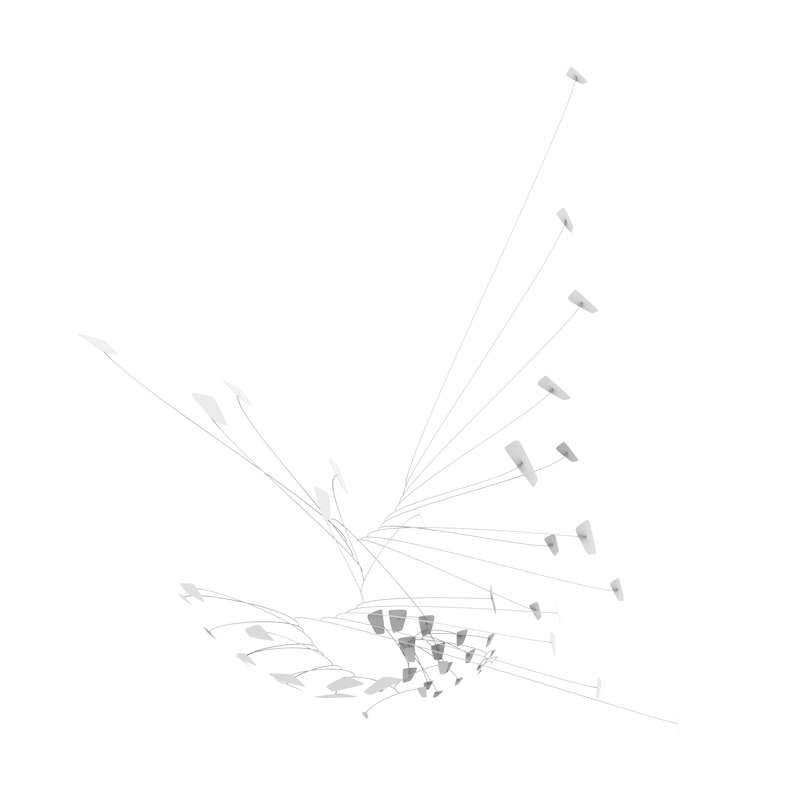
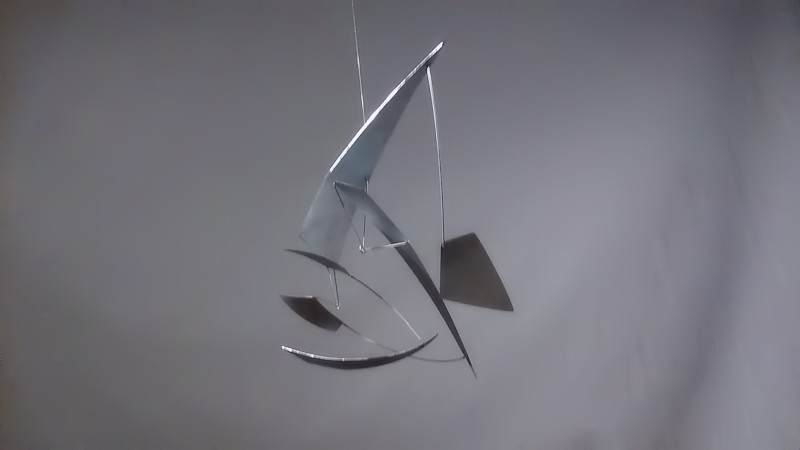
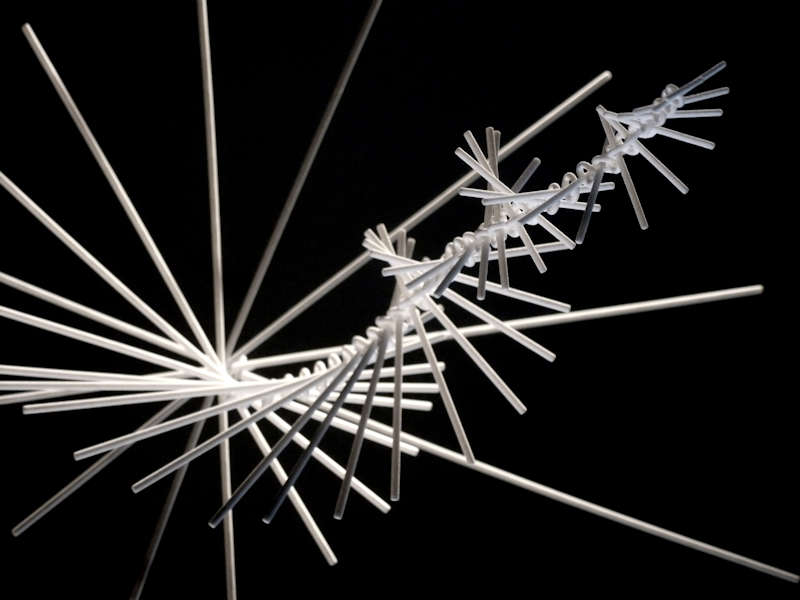
I would certainly not be so arrogant to see my work as comparable to the artistic accomplishments of the other sculptors listed here, however, as opposed to just create mobiles “in the style of Calder”, expanding the art form of mobiles with new creative approaches and techniques has been the underlying motivation and passion for me in my work. I’d like to think that I’m in the process of succeeding with this, from my fully three-dimensionally designed mobiles that I’m currently working on, to the deconstructivist (?) contemporary mobiles, to the fully 3d-printed mobiles that I created in a collaboration with Henry Segerman, all of which are ideas in progress that I’m working on expanding:
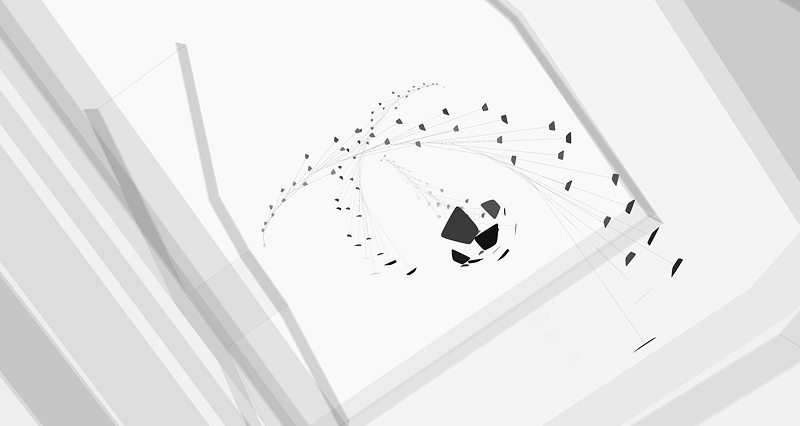
Philippe Hiquily (1925-2013)
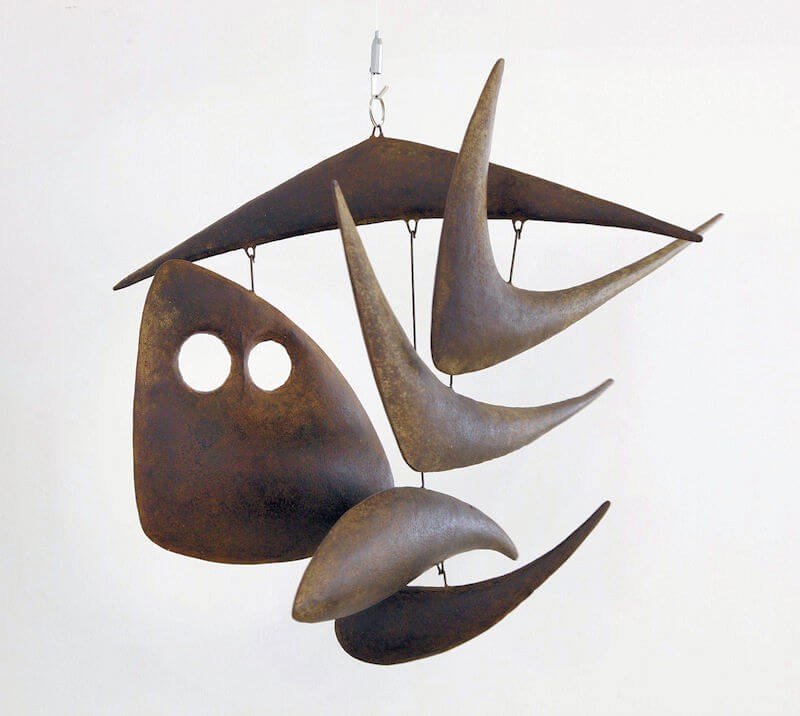
Philippe Hiquily was a French sculptor and designer. After attending Ecole des Beaux Arts in Paris, including workshops by Swiss kinetic sculptor Jean Tinguely, he went on to make a wide variety of sculptures and furniture. Influenced by indigenous and ancient art, while also exploring themes of eroticism and abstraction, he began to make mobiles in 1954, and made weathered iron mobiles after his move to Tahiti in 2006:
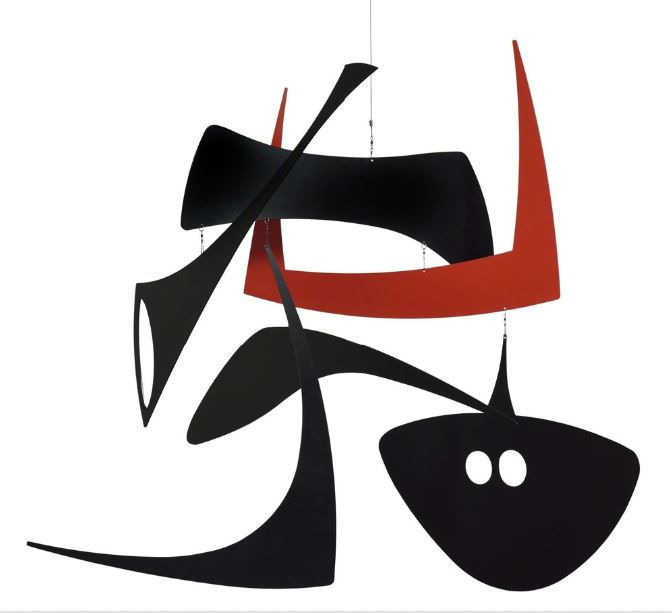
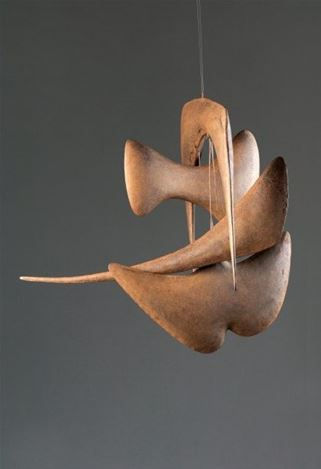
Additional mobile sculpture artists (besides Calder) to be added to this list who have created new creative approaches and expanded the art form of mobiles since the early 1930s would be: Laurent Martin “Lo”, Philippe Jestin, Derick Pobell, Yuko Nishikawa, Steve Haas (who combines multiple levers within one object), Jade Oakley, Brad Howe and Dylan Davis and Jean Lee.
The following suspended sculptures don’t qualify as mobiles in a strict sense, because they don’t utilize the interconnected balance structure (a whippletree mechanism as in a Calder mobile) that distinguishes a mobile from simply a suspended kinetic sculpture. However, I think the sculptures by these artists are closely related to mobiles and would be important to add to this list:
Kenneth Martin (1905-1984)
Kenneth Martin was an English painter and sculptor who (with his wife Mary Martin and Victor Pasmore) was a leading figure in the revival of Constructivism. After focusing on portraits and landscapes, his interest turned to Kasimir Malevich‘s art and geometric abstraction, which he also applied to mobiles and kinetic sculptures beginning in the early 1950s:
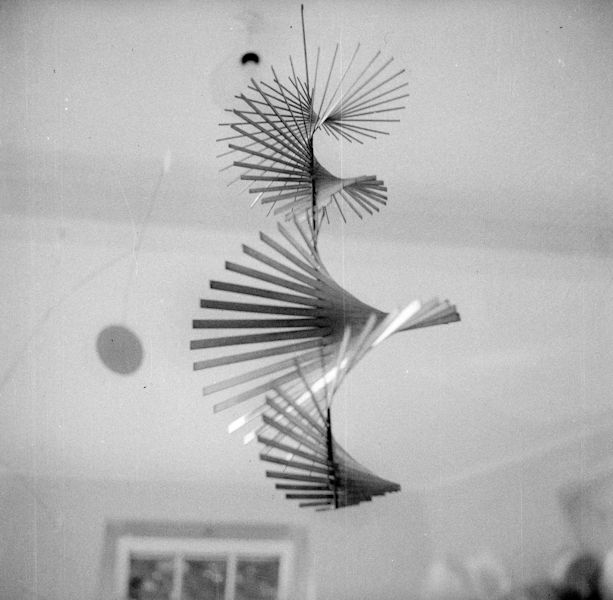
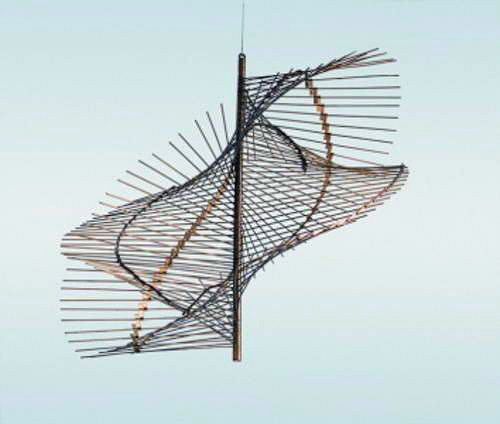
Among contemporary mobile artists, Miranda Watkins’ mobiles appear to be taking a similar approach as the above mobile, as well as some of the 3d printed mobiles I created in a collaboration with mathematician Henry Segerman.
Richard Lippold (1915-2002)
Richard Lippold was an American sculptor known for his geometric constructions, often relating to Cubism and Constructivism. His suspended sculptures may not qualify as mobiles, but I like them too much to not include them in this list. He spent decades stringing wires across rooms, working with architects like Walter Gropius, creating hanging sculptures that measured over 100 feet and consisted of miles of wire. The below pictured “Orpheus and Apollo”, which used to be installed at Lincoln Center, was possibly one of the largest works of public art in New York City.
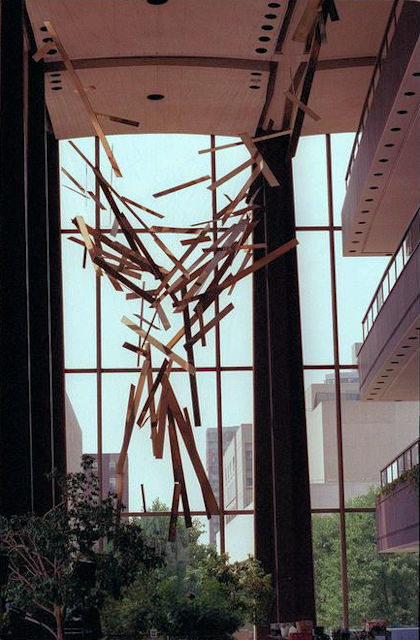
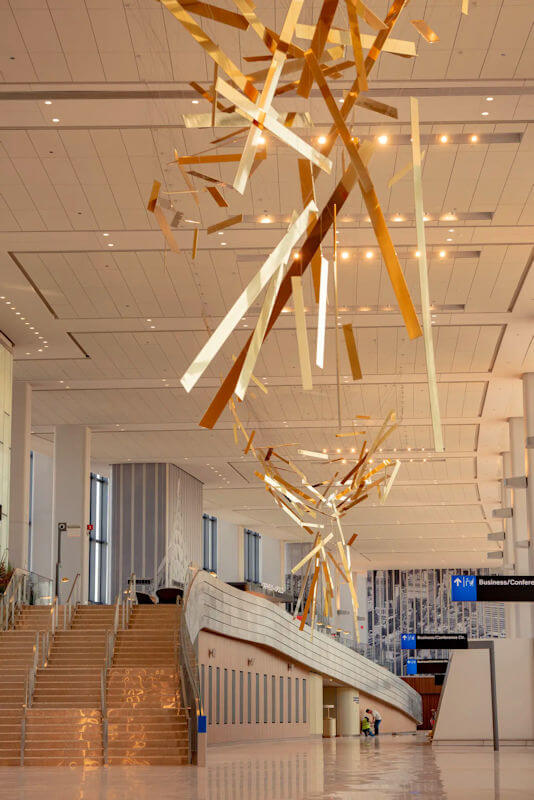
In 2014, it is was dismantled for maintenance and conservation, and it will not be reinstalled at its original location. Instead, the sculpture will be suspended as the centerpiece of La Guardia Airport’s Central Hall, which is set to open in 2022.
Update – October 2023: The five-ton sculpture has been reinstalled from the ceiling of the new glass-enclosed Atrium Business and Conference Center at La Guardia (connected to Terminal B’s arrivals and departures hall) that opens next week to the public.
If you like Richard Lippold’s work, take a look at Pae White‘s work.
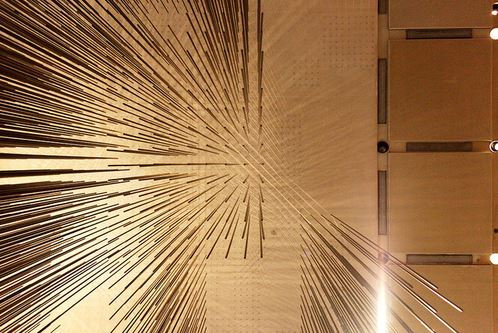
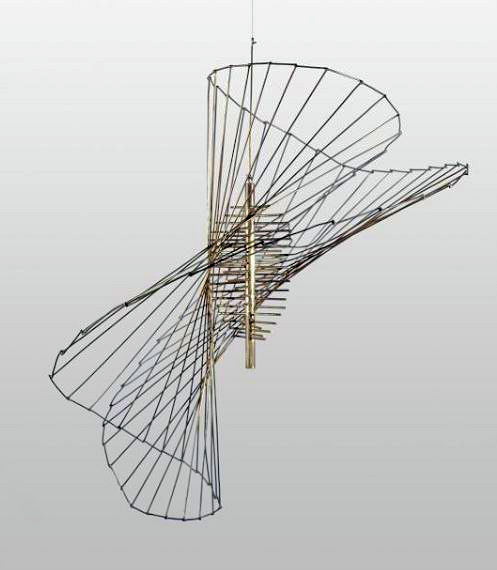
Gertrud Louise Goldschmidt (1912–1994), more commonly known as Gego
Gego was a modern Venezuelan artist and sculptor. I wouldn’t consider her suspended kinetic sculptures necessarily to be mobiles, at least not the ones that I’m familiar with. Yet I think the breakthroughs she contributed are, and will be, very significant to the art form:
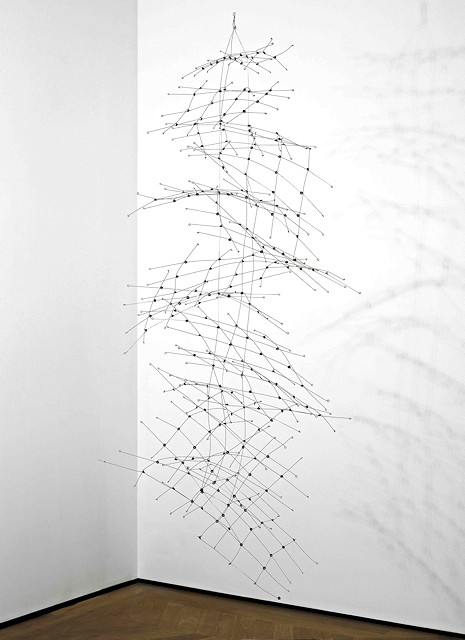
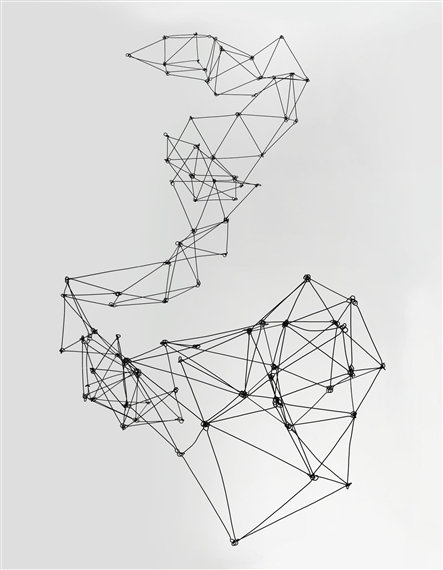
Be sure to also take a look at the amazing work by Elias Crespin (her grandson).
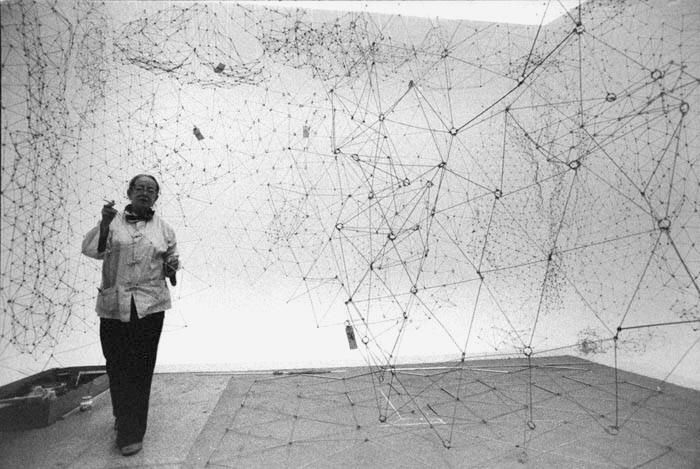
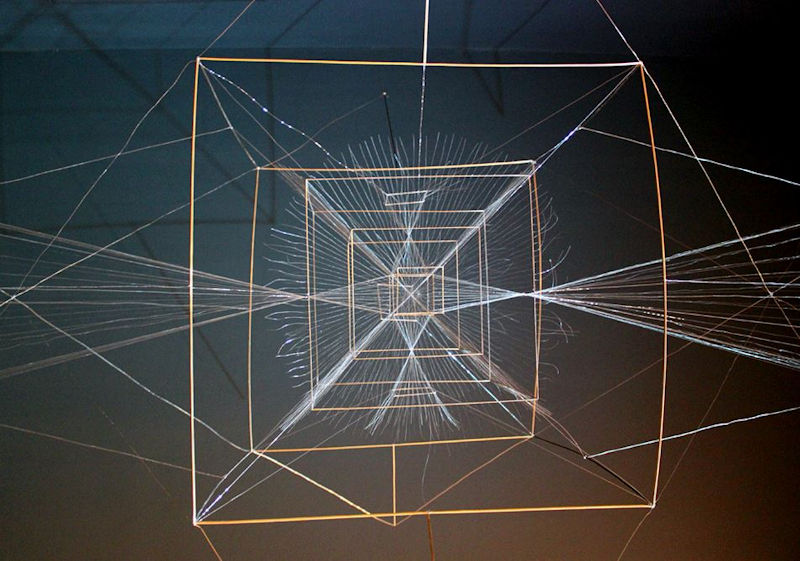
Additional sculptors whose work is related to mobiles (even though their work doesn’t qualify as mobiles in a strict sense because they don’t utilize the interconnected balance structure based on the whippletree mechanism) would be: Tomás Saraceno, Elias Crespin, Reuben Heyday Margolin, Julio Le Parc, Pae White, Paul Vexler, Ralph Helmick, Hitoshi Kuriyama, Leon Jakimič (founder and owner of Lasvit), Fausto Melotti, Neil Dawson, Jean Tinguely, Antony Gormley, Matt McConnell, Jonathan and Evelyn Clowes, Mel Ristau, Ralfonso “Ralf” Gschwend, François Morellet, Jesús Rafael Soto, Ruth Asawa, Hirotoshi and Nami Sawadaand, Sarah Sze and Kendall Buster (my work space neighbor a few doors down).
Calder’s work, along with mobiles in general, has recently received renewed attention and interest, partly due to the Calder Foundation‘s excellent management of Calder’s body of work and arrangements of brilliant shows worldwide. His mobiles keep setting new records at auctions, selling in the tens of millions of dollars. In 2014, the Art Newspaper wrote about that year’s world-renowned art fair Art Basel in Miami Beach: “The number of mobiles by Calder and other artists on galleries’ stands is striking. Among the works by the hundreds of artists brought by 267 galleries from 31 countries, mobiles definitely constitute a trend.”
Aside from the art form of mobiles, Calder was also a pioneer in making wire sculptures starting in the 1920s, making portraits out of wire of public figures, entertainers, close friends and himself. He also made wire sculptures for his Cirque Calder and of animals, often sprinkled with a bit of humor. One story has it that Calder presented himself at an exhibition venue at Harvard with no work. According to Calder, the gallery director “protested that I arrived with nothing but a roll of wire on my shoulders and pliers in my pockets”. By the time the show opened a few days later, Calder had created all the works for the show on the spot, while interacting with gallery personnel, patrons, and friends. Artists such as Ruth Asawa, Kendra Haste, Sophie Ryder, Edoardo Tresoldi, Kue King and Tomohiro Inaba have expanded the art form of wire sculptures since.
I’ll be adding to this list from time to time. As a continuation, please see my page Contemporary Mobile Sculptures – Expanding Calder’s Art Form.
This article was originally published on my blog here on this website in 2017. As with anything on my website, if you have any suggestions, anything that should be added, corrected, or have any questions or comments, please let me know.
Related:
Artsy article: 7 Artists Who Created Innovative Mobiles—beyond Alexander Calder
New York Times article by Nancy Hass: How Artists Are Challenging Alexander Calder’s Mobiles
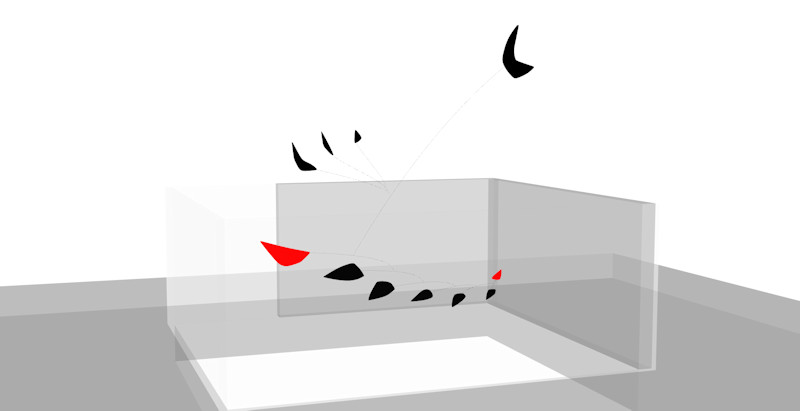
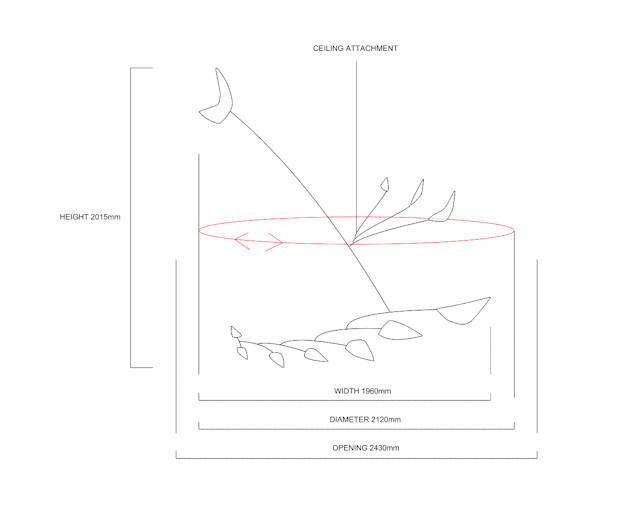
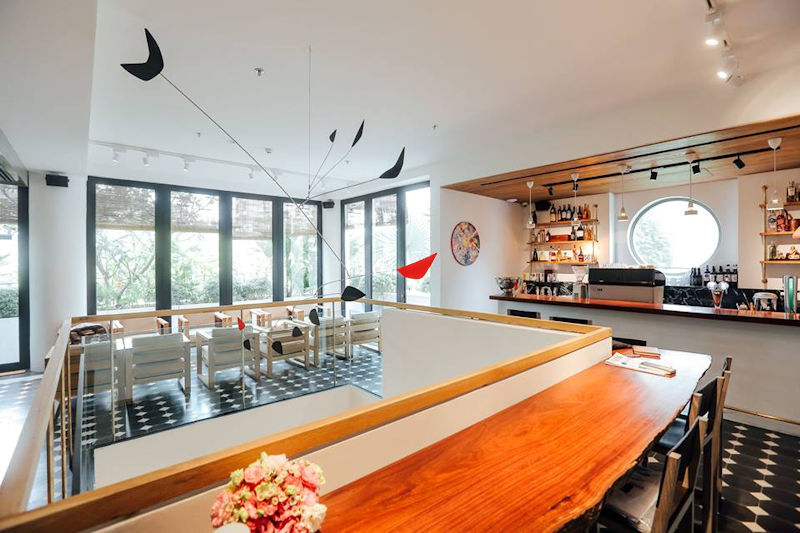
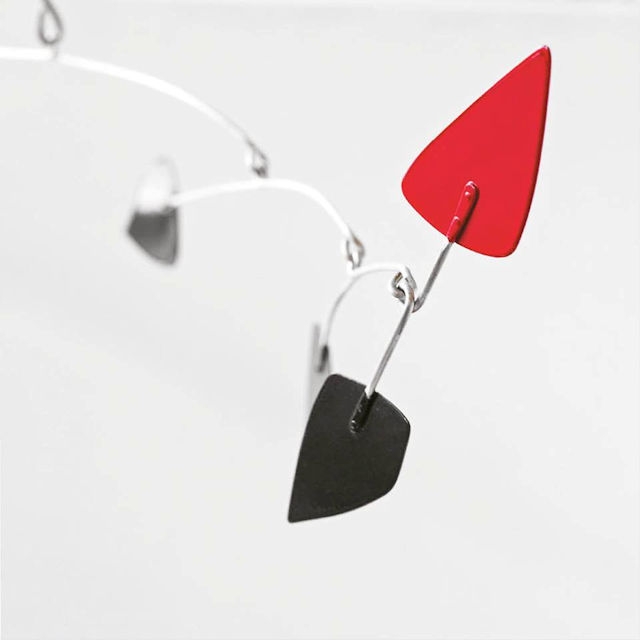
Large Calder-Style Custom Mobile for L’Usine Vietnam
Custom-designed / custom-made Calder-inspired mobile for L’Usine Le Thanh Ton (via Tom Johnson and BHA Studio).
The idea / design:
Measurements:
The finished mobile:
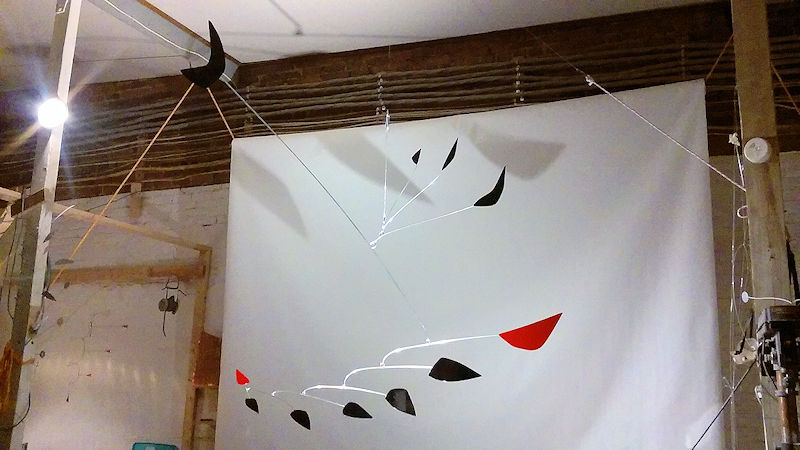
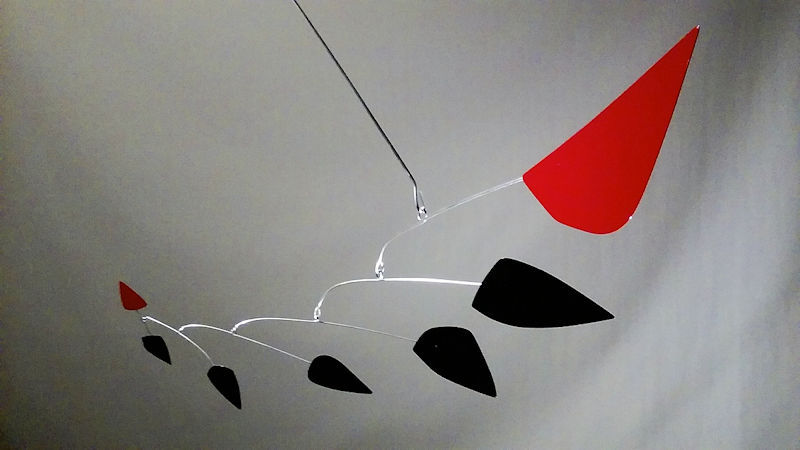
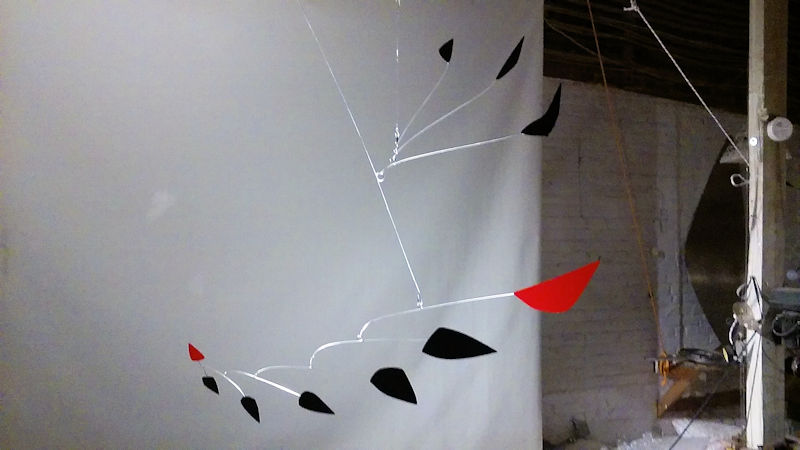
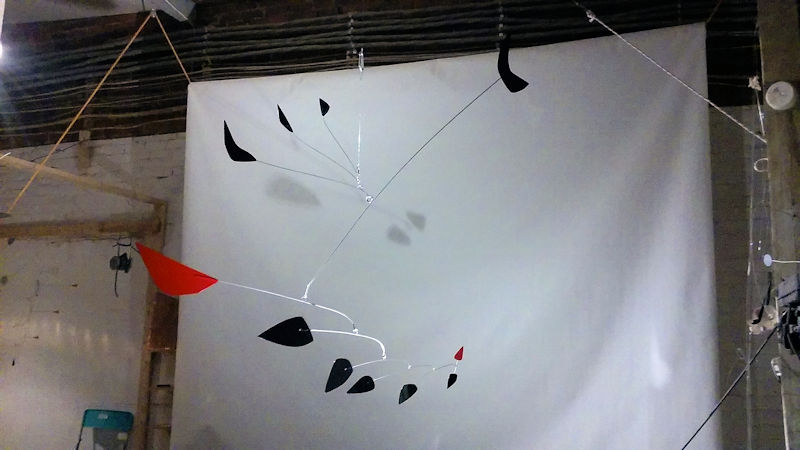
The installed mobile on site (L’Usine’s Facebook post):
See more of my mobiles
Read more of my blog about mobiles
See the most popular blog posts
New Calder Exhibit “Motion Lab” at SFMoMA – Installation of Large Mobile in Atrium
A new Alexander Calder exhibit titled Motion Lab at The San Francisco Museum of Modern Art opened this past Saturday and will run until Sept 10 2017. It traces Calder’s explorations of motion from the late 1920s to the late 1960s.
Photos of Rigger Lawrence LaBianca lowering from the SFMOMA sky bridge to finish installing Calder’s 27-foot Untitled (1963) mobile in the Evelyn and Walter Haas, Jr. Atrium:
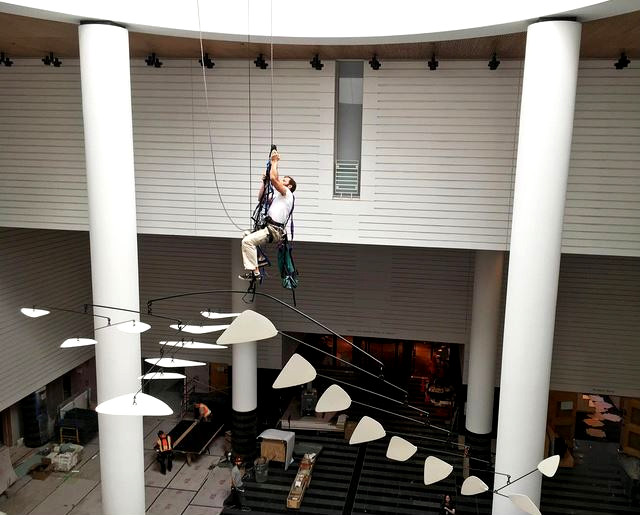
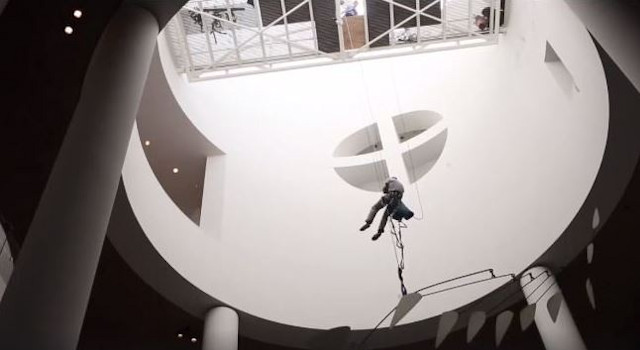
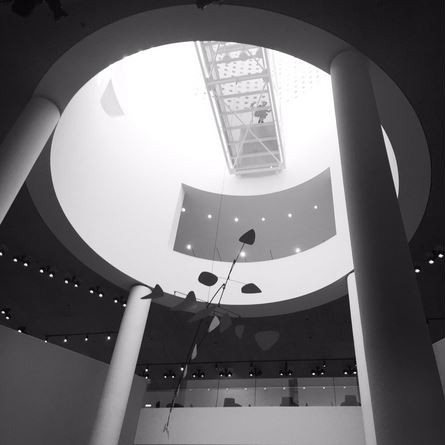
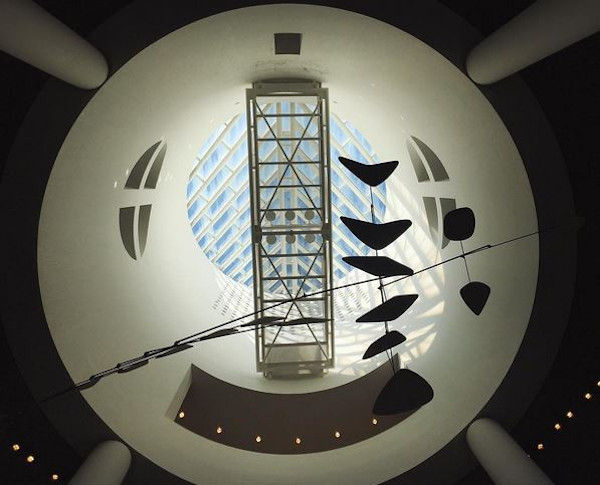
There’s also a video of the installation by the San Francisco Chronicle.
– See some of my mobiles or read more of my blog about mobiles –
9 Original Calder Works Coming to Auction for the First Time
A group of nine works by Alexander Calder will be sold at Christie’s Post-War and Contemporary Art Evening Auction in New York on May 10th 2016. All of them were made by Calder in 1955 while visiting Ambalal Sarabhai’s family estate in India. Calder spent three weeks at the secluded 20-acre estate, in a makeshift studio constructed in the garden with “a water-buffalo lady and a calf” for company, as he wrote in his book (Calder: An autobiography with pictures, 1966). This is the first time this group of Calder sculptures is coming to auction. Among the works to be auctioned:
Sumac #17
Hanging Mobile
Sheet metal, wire and paint
Inspired by the flowering plant of the same name
Estimated at US$4 million to US$6 million
[Update: Price Realized $5,765,000]
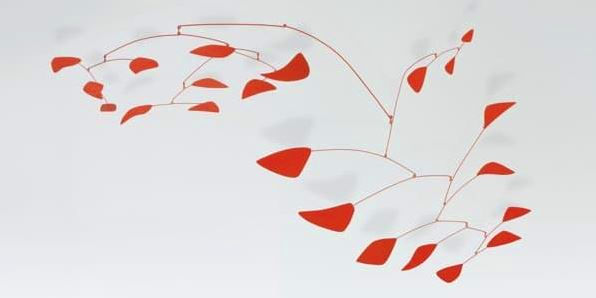
Related: Watch a 360-degree view of Calder’s large red mobile Sumac created in 1961.
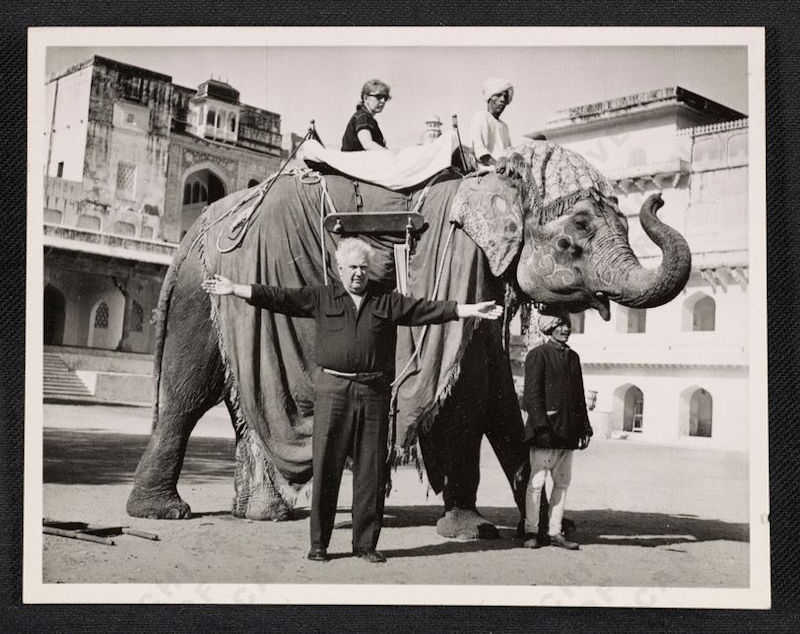
How the visit to India came about, in Calder’s own words: “In 1954, I received a letter from a young Indian woman, Gira Sarabhai, youngest of eight children of a large wealthy family in Ahmedabad, which is somewhere halfway between Bombay and Delhi. She offered Louisa and me a trip to India, if I’d consent to make some objects for her when there. I immediately replied yes.”
Calder in India in 1955 (Louisa Calder, his wife, is seated atop the elephant):
Estimates range as high as US$10 million, with a total pre-sale estimate of around US$26 million to US$38 million.
Read The forgotten journey of Alexander Calder and view the e-Catalogue. Also see An Expert Look at Never-Before-Auctioned Alexander Calder Works and Mobile Revolution.
– Read more of my blog about mobiles or see some of my mobiles –
The 5 Largest Mobiles Worldwide That I’m Aware Of
.125 by Alexander Calder
In collaboration with SOM
At the International Arrival Building at JFK Airport
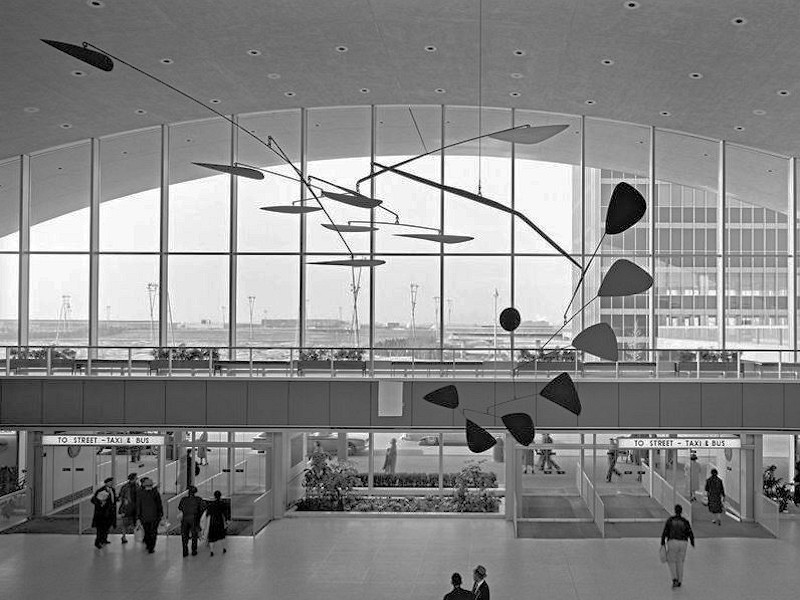
The 5 largest mobile sculptures worldwide that I’m aware of – all by Alexander Calder:
- White Cascade (1976) at the Federal Reserve Bank of Philadelphia – 100 feet / 30 meters
- Untitled (1977) at the National Gallery of Art – 76 feet / 23 meters
- Eléments Démontables (1975) in the collection of the Calder Foundation – 47 feet / 14.5 meters
- .125 (1957) at JFK Airport New York City – 45 feet /13.5 meters
- Mountains and Clouds (1986) at the Hart Senate Office Building – 42.5 feet / 13 meters
The largest mobile that I’ve made to date measures 33ft (10m).
In 1962, George Rickey (the other major twentieth-century artist to make movement a central interest in sculpture next to Calder) wrote: “The great size of recent pieces carried out by metalworkers has resulted in Gargantuan designs beyond [Calder’s] control, loss of scale, and immobility; gross execution in very thick material substitutes for skillful analysis of engineering problems and economy of means. In his thirty-foot hanging mobile London, made especially for the Tate by welders in Paris from a small maquette and not assembled till the exhibition, the plates and rods are far heavier than necessary, and it hangs motionless and red beneath the lofty vault.”
“People often make a big deal about Calder’s training as an engineer, but in reality his mechanics are pretty rudimentary. Surprisingly for a history major, Rickey was a master engineer.” – Tim Prentice
There’s an incomplete List of Alexander Calder’s Public Works. You can help expand it if you know of additional ones.
The Calder Foundation’s new website also has an interactive map of Calder’s sculptures around the world.
The largest mobile sculpture to ever appear at auction, measuring 25 feet (7.6 meters), is Blue Moon (1962) by Alexander Calder, which sold at Sotheby’s in New York City on May 15th 2024 for $14.4 million:
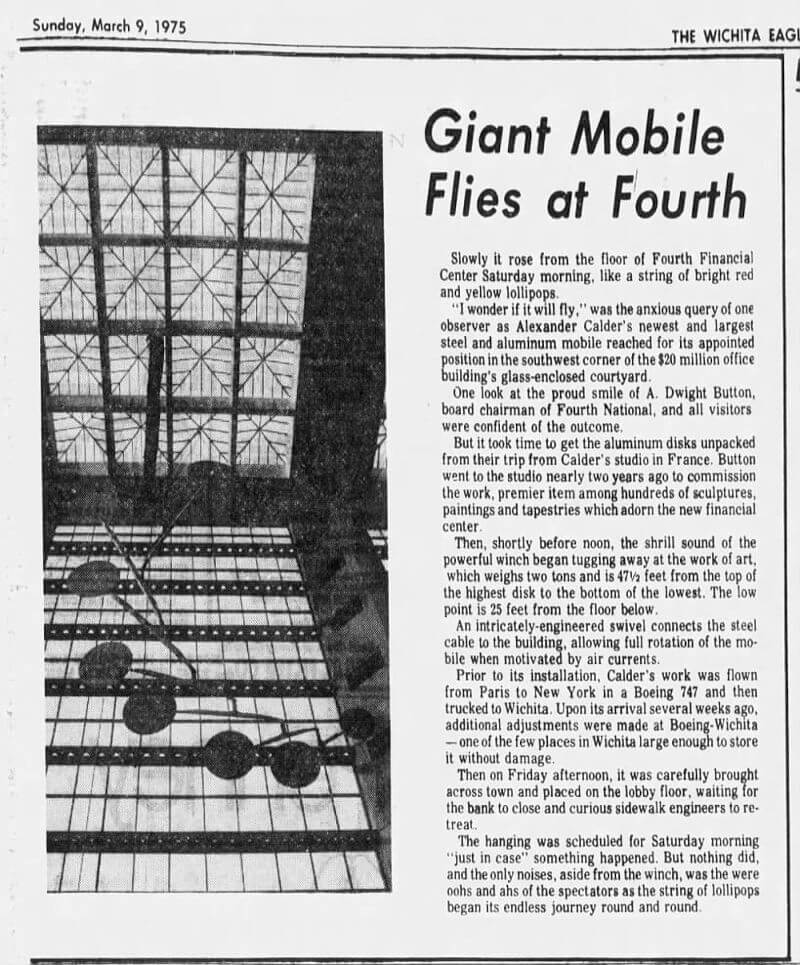
Eléments Démontables was suspended in the atrium of the Ruffin Building in Wichita, Kansas from 1975 until 2024, and is now in the collection of the Calder Foundation. An article “Giant Mobile Flies at Fourth” from The Wichita Eagle on March 9th 1975 when the mobile was originally installed:
Largest Alexander Calder Exhibition Opens at Tate (London)
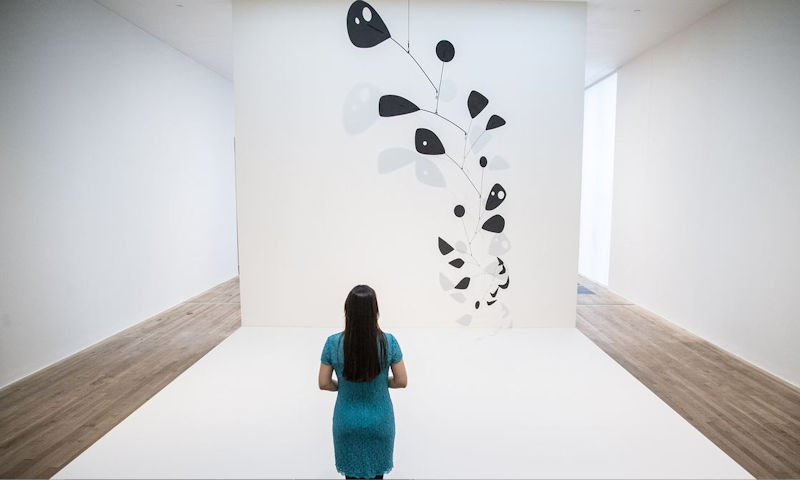
The largest Alexander Calder exhibition titled Alexander Calder: Performing Sculpture opens at Tate Modern (London) tomorrow with over 100 works, and runs from Nov 11 2015 until Apr 3 2016. The Guardian writes: “The exhibition is both a reminder of how good he could be, and a revelation of how complex and far-reaching his influence still is.”
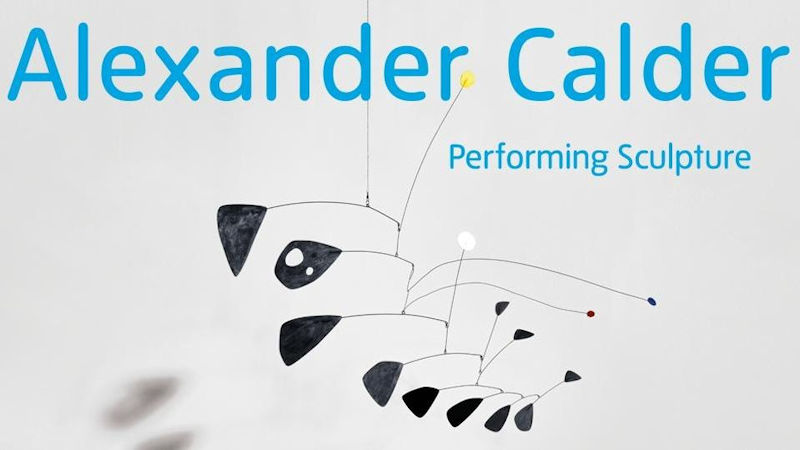
The exhibition includes Black Widow (1948) on loan outside of Brazil for the first time:
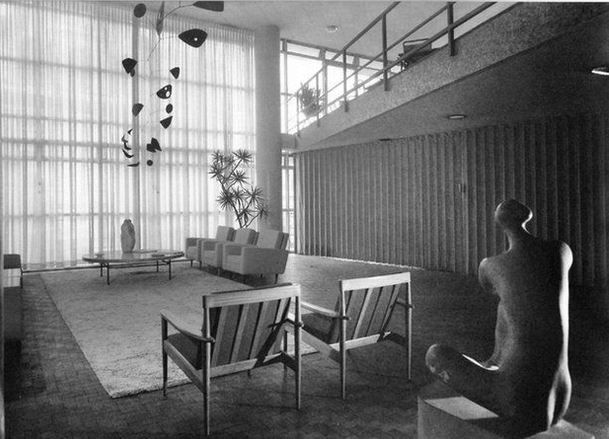
The large mobile has hung at the Instituto de Arquitetos do Brasil in Sao Paulo for more than 50 years:
Video of the exhibition by Vernissage TV:
Alexander Calder: Performing Sculpture Reviews:
- Largest Alexander Calder exhibition opens at Tate
- Rotation, rotation, rotation! Alexander Calder and his high-wire circus act
- Alexander Calder, Tate Modern, review: ‘has the wow factor’
- Performing Sculpture: Alexander Calder
- Alexander Calder: Performing Sculpture review – the master of perpetual motion
- Alexander Calder: Discovering a joyous reading of the experimental artist’s work at Tate Modern
- Alexander Calder: As his mobiles fill up Tate Modern
- Magnificent mobiles: the art of Alexander Calder
- Calder’s Performance Art at the Tate Modern
- Alexander Calder Comes to Life at London’s Tate Modern
- Alexander Calder: Performing Sculpture review
- Alexander Calder: the man who made abstract art fly
- Review of Alexander Calder: Performing Sculpture at Tate Modern London
- Alexander Calder: Performing Sculpture, Tate Modern
– Read more of my blog about mobiles –
3D Printed Mobile in Philadelphia Exhibit Titled MathThematic: A Fine Art Exhibition
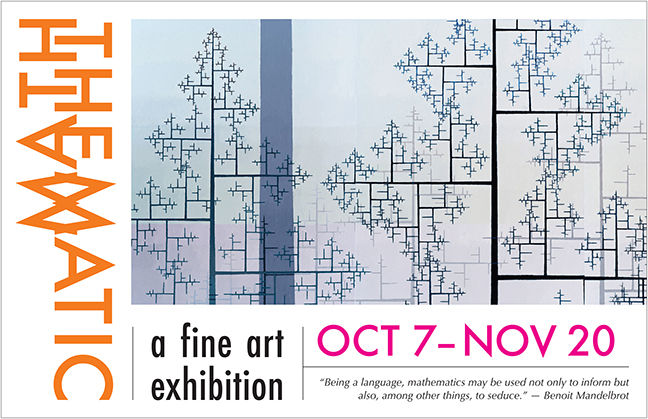
Our 3D printed mobile Quaternary Tree Mobile (Level 5) is part of the current exhibition at Esther Klein Gallery in Philadelphia titled MathThematic: a fine art exhibition:
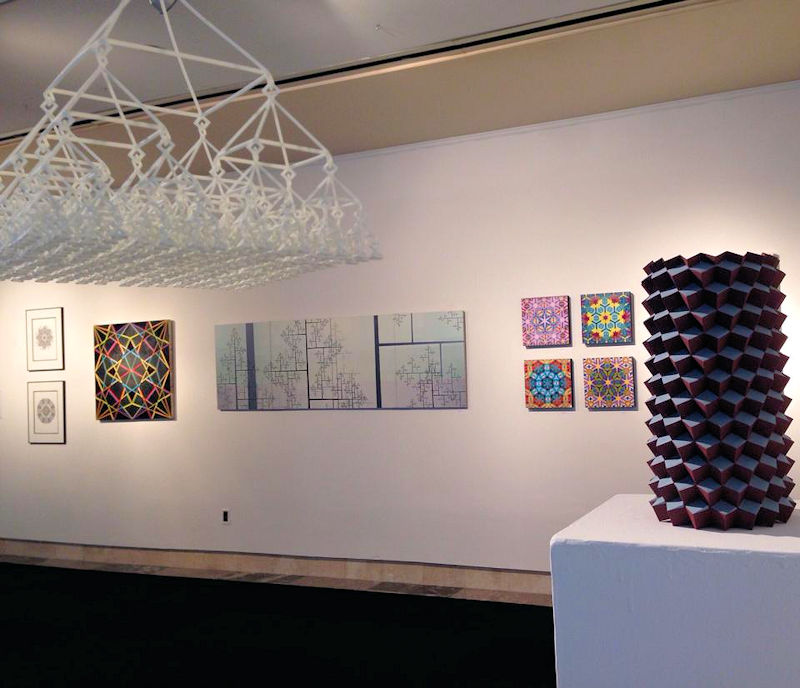
The show features artists of all media in an exhibition demonstrating mathematic evidence in art, whether the works are directly inspired by math (geometry, fractals, patterns, etc.) or if the mathematical principles emerge naturally and reveal themselves from our human predisposition towards order.
The exhibition is taking place at the Esther Klein Gallery at Philadelphia’s University City Science Center, 3600 Market Street, October 7–November 20, and is part of the annual city-wide DesignPhiladelphia festival (October 8–16). An opening reception is scheduled for today, October 14, 5–7:30pm. Gallery hours are Mondays–Saturdays, 9am–5pm.
Among 2-dimensional paintings and drawings that display intricate fractals and kaleidoscopic geometries, a variety of 3-dimensional, video and interactive works will be on display. Showcasing mathematics as much as the medium, some of the works on view include a long algae-like crocheted piece of hyperbolic curves, interactive design where the viewer can customize fractal performance with the touch of a finger, and unique geometric paper sculptures using the system of scientific kirigami.
Participating artists include: Justin Bean, Regina Ceribelli, William Cromar, Jessica Curtaz, Chris Eben, Robert Fathauer, Karen Freedman, S. Leser, Marco Mahler and Henry Segerman, Gabriele Meyer, Maximilian Morresi, Brittany Phillips, Bruce Pollock, Mike Tanis, Andrew Cameron Zahn.
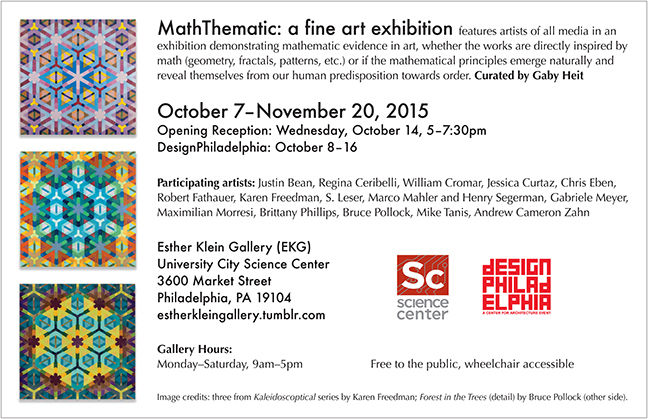
This is the second exhibition curated by Gaby Heit at the Science Center’s Esther Klein Gallery investigating natural design. The first one was Cellular/Molecular for the 2013 Philadelphia Science Festival.
Press:
- Philly Voice
- WHYY Newsworks
- Geekadelphia
- Philly Egotist
- UPenn Almanac
5th Prize for 3D Printed Mobile at Swiss 3D Printing Competition
As part of the 20th Triennial Grenchen 2015 Art Limited – Multiple Art, the
Kunstgesellschaft Grenchen in collaboration with PrintaBit organized a 3d printing competition, in which the 3d printed mobile I submitted won 5th prize:
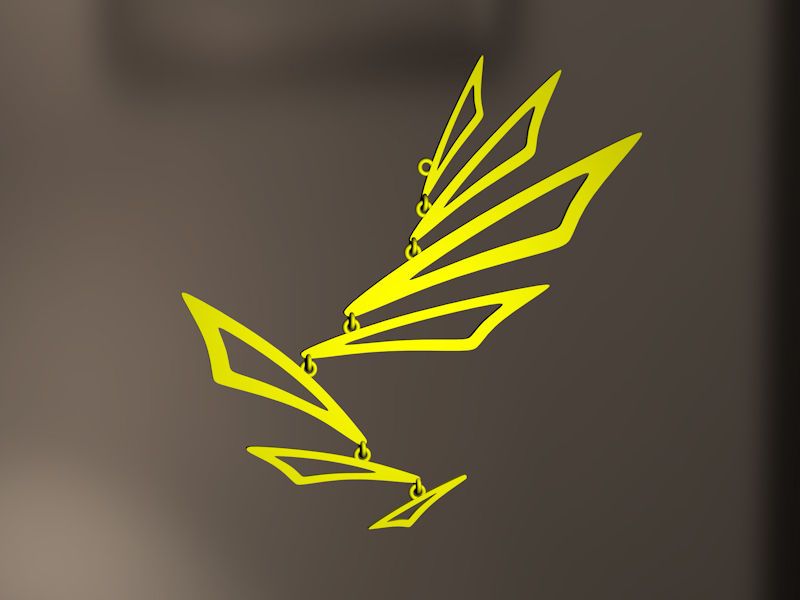
From the jury:
“This work highlights the formal possibilities of 3D printing, as the way the joints are combined within
one form is possible only in that new media technique; and despite the hard-edge material, the
movement and lightness of color, with the play of shadow on the wall, creates a sense of dynamic
lightness.”
The above is a render.
Announcements are at 3Druck and PPS.
1st Prize went to Markéta Schiffnederová for her 3d printed sculpture Crumpled Rabbit:
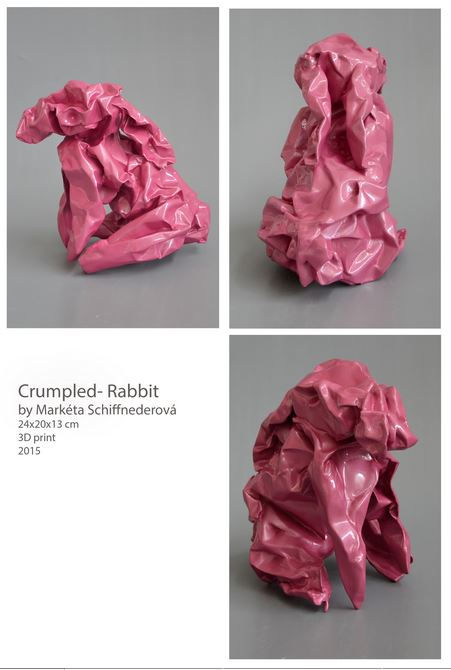
From the jury:
“As a 3-dimensional form, this work is visually interesting from all angles; its subject – an organic
creature – visually has the throw-away quality of crumpled paper, yet the synthetic colour and actual
texture are contradictions to the known sight and touch of both rabbit and paper; and because it
successfully embraces the nature of the medium of 3D printing.”
2nd Prize went to Marc Reist, 3rd to Jean-François Réveillard, and 4th to Oliver Ende.
See more 3d printed art and sculptures, see more of our 3d printed mobiles, or read more of my blog about mobiles.
 Included in over 1000 Ideabooks on Houzz
How To Make Mobiles:
- Houzz Article -
- Balance Basics -
- What Wire to Use -
- FAQ Mobile Making -
- MAKE Magazine Article -