
Where’s the Line between a Calder Replica and a Calder Inspired Mobile?
Every now and then I receive a request from a client to make a custom-designed Calderesque mobile, a mobile in the style of Alexander Calder, inventor of modern mobiles. I am not allowed, nor is anyone else, to make replicas (exact reproductions) of his mobiles. They are protected by copyright. I would refer you here to Manuel Marin (1942–2007) who was an artist and a convicted art forger. He admitted to making and selling millions of dollars of forgeries, mainly copies of works by Calder, and served prison sentences for his crimes.
Yet when I draw up proposals for these kinds of projects, I keep wondering where the lines are between a mobile that could be a replica, a mobile that’s strongly influenced by Calder’s style (“in the manner of Alexander Calder”), and a Calder inspired mobile. If I copied his style to a tee, most people wouldn’t be able to tell it from an original Calder mobile, yet it wouldn’t be a replica.
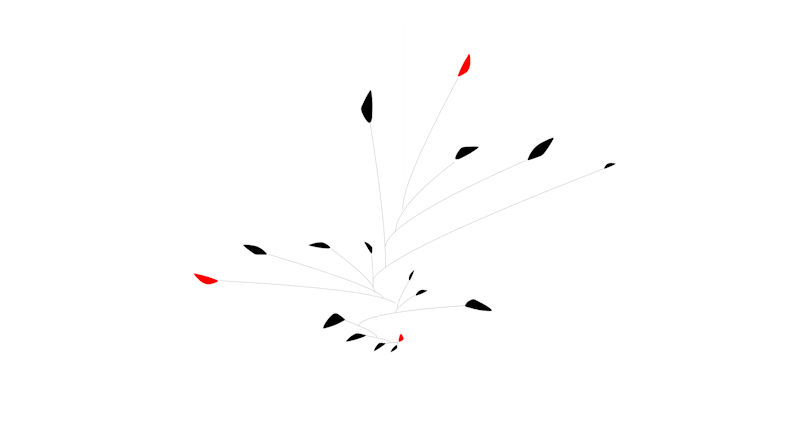
The question here is not simply about style, because Calder invented a new art form, and he still is to date by very far the most well known sculptor to create mobiles. This could be compared to Wassily Kandinsky, who is often (arguably) noted as having created the first abstract paintings starting in 1911, and then attributing all abstract paintings that followed by others to his work. An important difference here being that compared to abstract painting, few kinetic sculptors have tried to create their own style of mobiles so far, and even then, the basic idea, and in many cases the structures of their mobiles, are based on Calder’s work, and in that way, most mobiles are Calder inspired, even if they’re original in style. However, the underlying idea and structure of Calder’s mobiles was not invented by Calder. It is based on Man Ray‘s 1920 piece titled Obstruction, which he made about 10 years before Calder started to make mobiles. It utilizes the same structure as a whippletree mechanism, which probably dates back to between 190 to 209 AD. For further reading on this topic, please see the photos below of Calder’s copy of Man Ray’s sculpture, and see my page Mobiles before Calder – Who Invented Mobiles – A History of Mobiles.
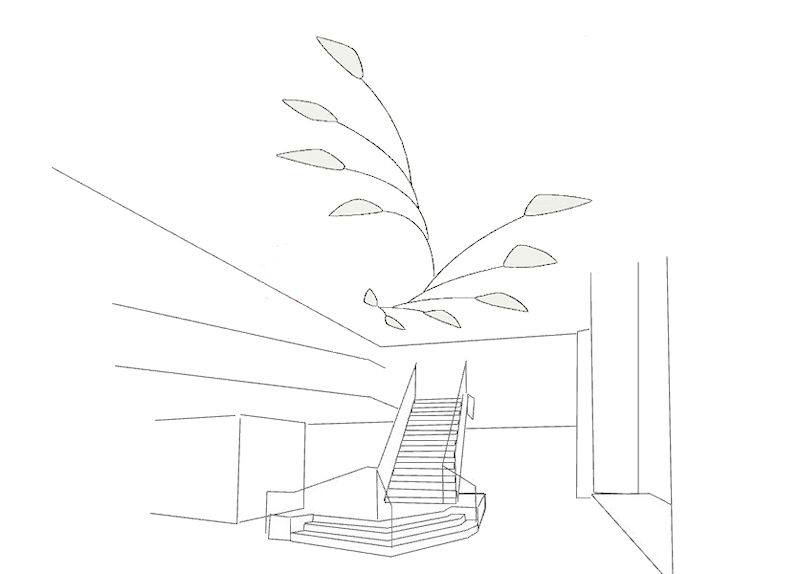
From a legal perspective, case law is telling us that style isn’t protected by copyright. In Steinberg v. Columbia Pictures, the court stated that style is merely one ingredient of expression and for there to be infringement, there has to be substantial similarity between the original work and the new, purportedly infringing, work. In Dave Grossman Designs v. Bortin, the court said that:
“The law of copyright is clear that only specific expressions of an idea may be copyrighted, that other parties may copy that idea, but that other parties may not copy that specific expression of the idea or portions thereof. For example, Picasso may be entitled to a copyright on his portrait of three women painted in his Cubist motif. Any artist, however, may paint a picture of any subject in the Cubist motif, including a portrait of three women, and not violate Picasso’s copyright so long as the second artist does not substantially copy Picasso’s specific expression of his idea.”
For more on the legal perspective, there’s a great article by Greg Kanaan titled You Can’t Copyright Style.

The sculptor Jerome Kirk, who in his early career was strongly influenced by Calder, went to visit him at his studio around 1954, and described the encounter in his book: “Low on money and feeling the need for some encouragement, I visited Alexander Calder at his home in Roxbury, Connecticut. To enter his studio was like walking into a dream world. There were large work benches, vices, anvils and a magnificent clutter of tools, wire and sheet metal. His mobiles and stabiles of varying sizes were everywhere. At first Calder seemed interested in wanting to know what I was all about, but his cordiality gave way to petulance after seeing examples of my work. Guessing that he resented the close resemblance of my work to his own, I left discouraged, saddened and angry.” Jerome Kirk went on to creating his own very original style with his kinetic sculptures.
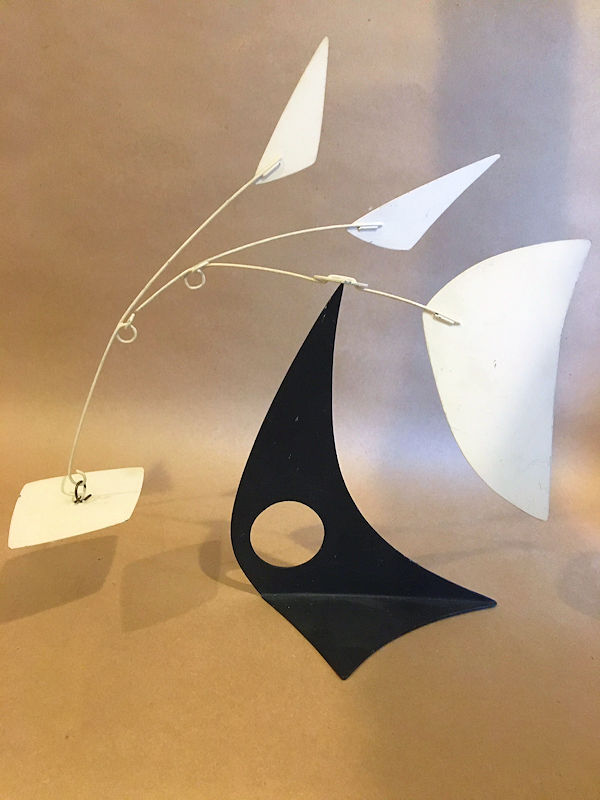
A standing mobile by Arthur Bauman:
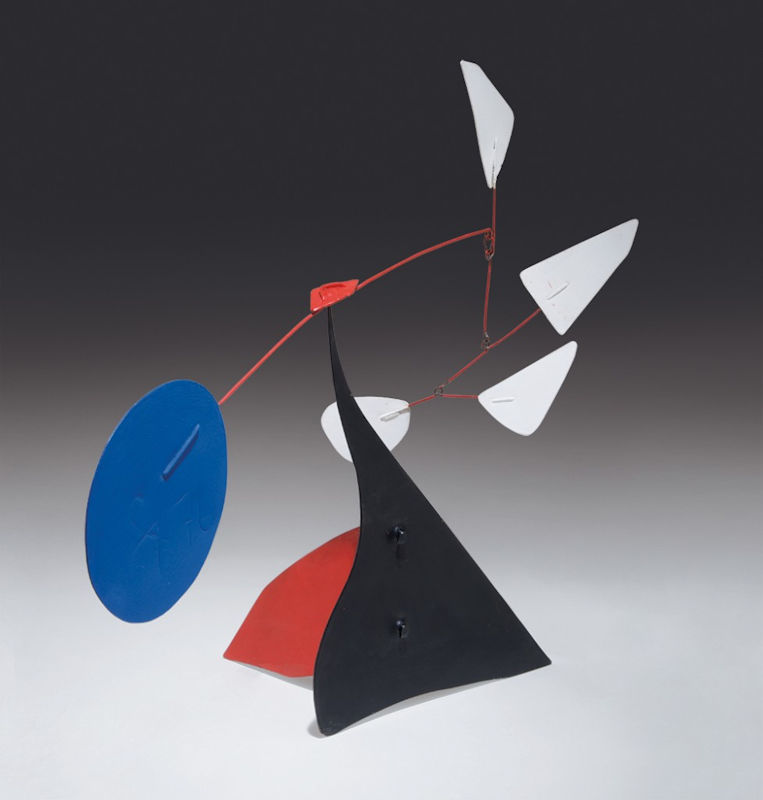
A standing mobile by Calder (Quatre Blancs, 1976):
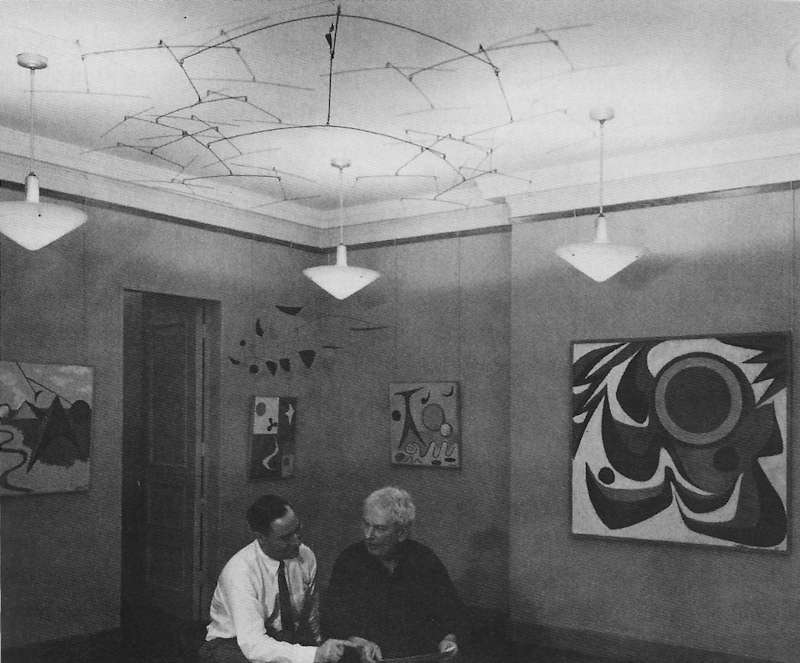
Here’s Calder (with Klaus Perls) at his 1956 exhibit at Perls Galleries with his mobile Untitled – Mobile with N Degrees of Freedom that he made in 1946:
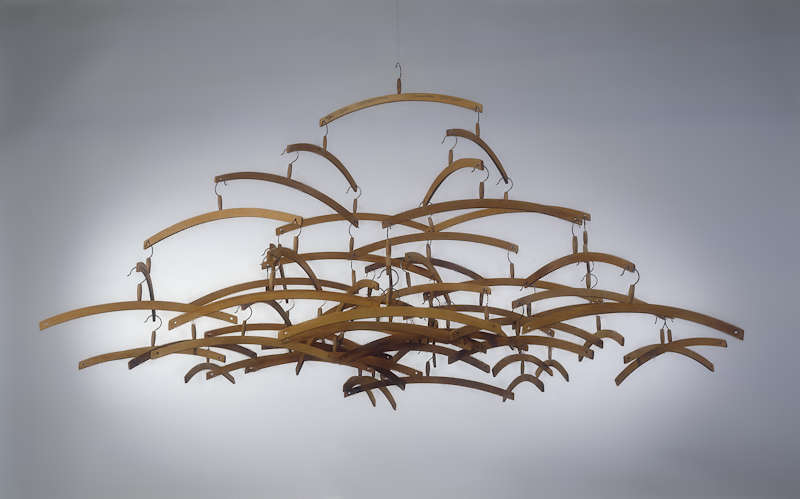
Calder’s mobile is essentially the same sculpture as Man Ray’s Obstruction (1920) just made with wire instead of coat hangers:
Pablo Picasso once said: “What does it mean for a painter to paint in the manner of So-and-So or to actually imitate someone else? What’s wrong with that? On the contrary, it’s a good idea. You should constantly try to paint like someone else. But the thing is, you can’t! You would like to. You try. But it turns out to be a botch. And it’s at the very moment that you make a botch of it that you’re yourself.” (Hélène Parmelin, Picasso: The Artist and His Model, and other recent Works, 1965, page 43)
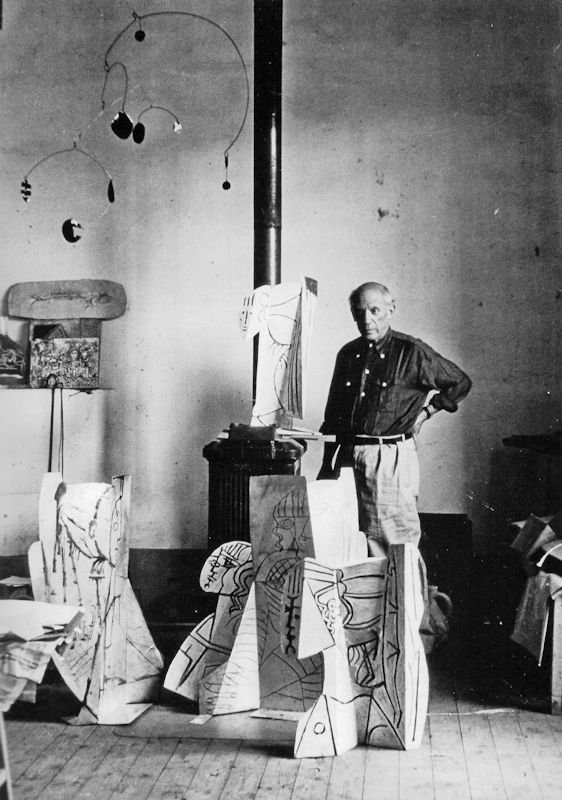
Picasso in his studio in 1956 standing next to a mobile not made by Calder:
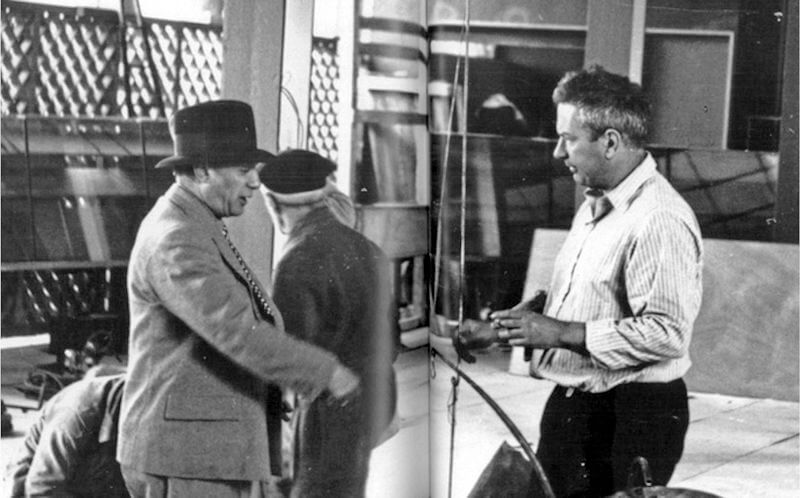
Pablo Picasso and Alexander Calder knew each other and crossed paths in Paris’s vibrant art scene during the late 1920s and 1930s. Their acquaintance likely began around 1926 to 1933, when Calder was living in Paris, creating his Cirque Calder and early mobiles, and Picasso was an established figure in Montparnasse and the Surrealist circle. A key moment in their relationship came in 1937 during the International Exposition in Paris, where both contributed major works to the Spanish Pavilion, a project organized to support the Spanish Republic during the Civil War. Picasso created his monumental Guernica, while Calder designed the kinetic Mercury Fountain. They collaborated closely with architects Josep Lluís Sert and Luis Lacasa on the pavilion’s layout, fostering direct interaction. Calder admired Picasso’s inventive spirit, and Picasso, intrigued by Calder’s innovative use of movement in sculpture, reportedly visited his studio. Their mutual connections, including artists like Joan Miró and Surrealist circles, further facilitated their acquaintance. While not intimate friends, their shared artistic environment and the 1937 pavilion project cemented a professional respect and familiarity during their time in Paris.
On the topic of style, as in style in fine art and art movements, Calder is widely regarded as one of America’s most important surrealists, although he did not consider himself an abstract artist, as noted by Milly Burroughs. When pressed on this matter in an interview, Calder explained that his penchant for kinetic art and other-worldly forms was his interpretation of what the universe might look like, and would therefore be Realism.
– Read more of my blog posts about mobiles or see some of my mobile sculptures –
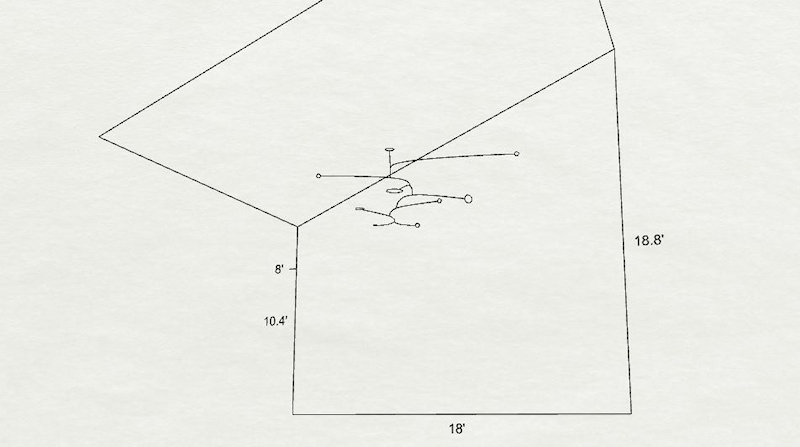
Custom Sized Mobiles – 3-D modeling software allows for precise planning
Diagrams I just drew up for a couple of proposals to illustrate the space available to custom sized mobiles that will be able to rotate full circle:
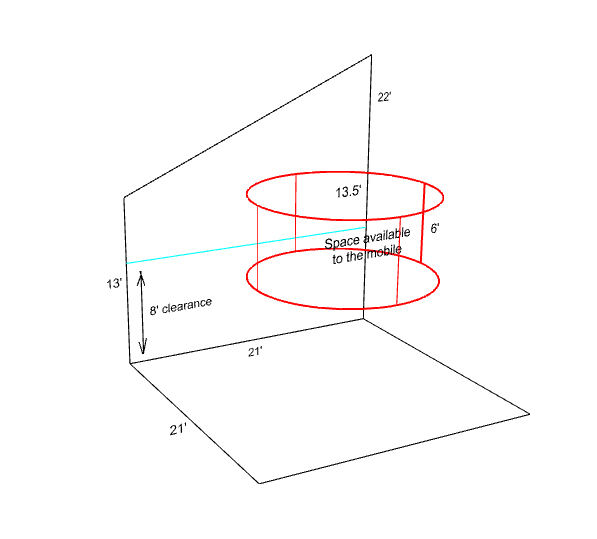
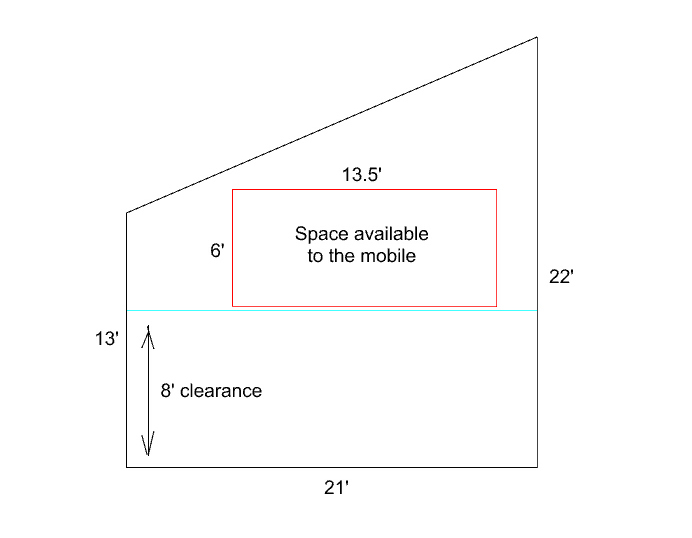
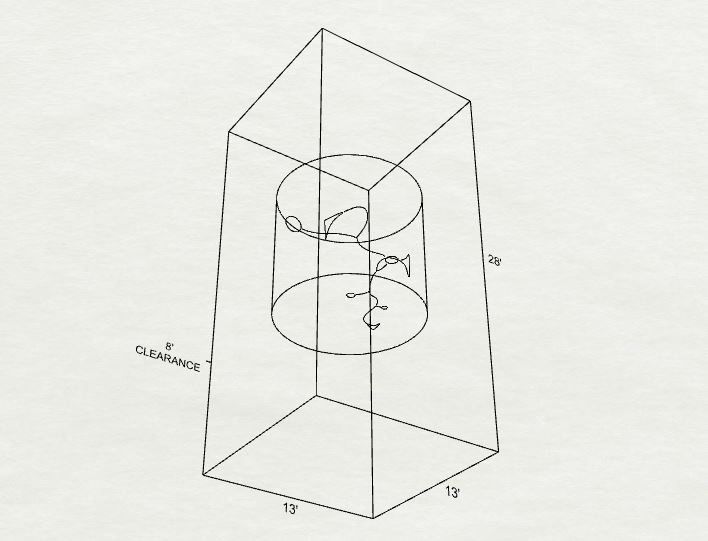
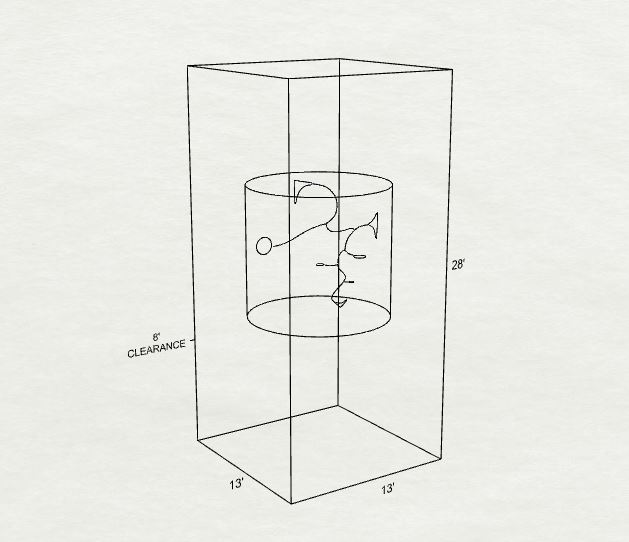
These are not the most impressive examples, but using 3-D modeling software allows for precise planning to ensure a custom sized mobile will fit the space nicely.
It is also a great tool during the design stage of a custom mobile to show how it will look exactly in a specific space:
Butterfly themed large custom mobiles – early drafts
Designs I’m currently working on for large custom mobiles for a large staircase at a restaurant / theater being built on the Las Vegas strip – early drafts:
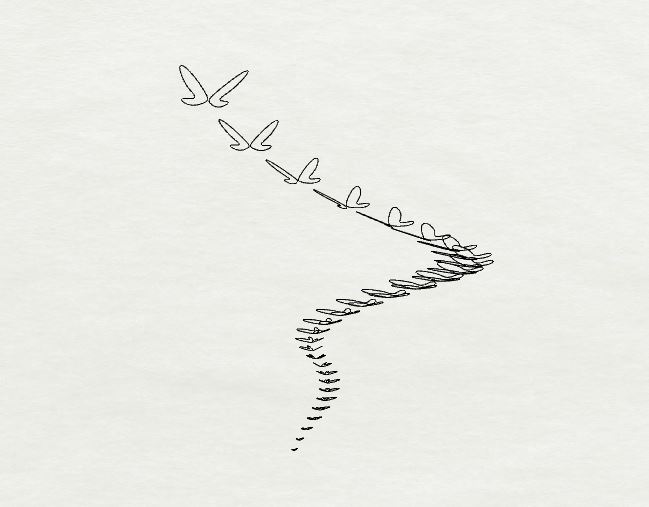
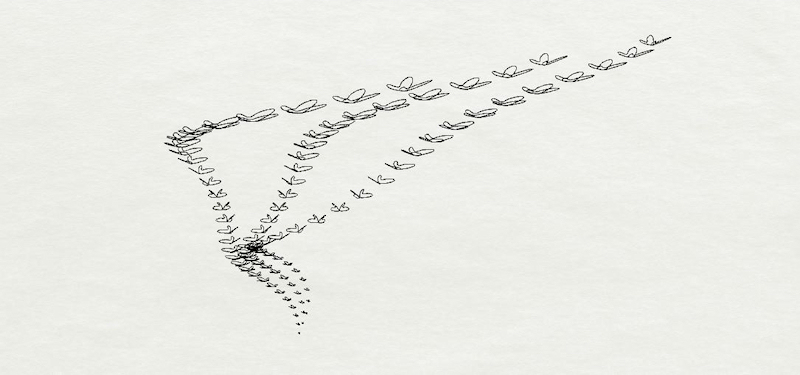
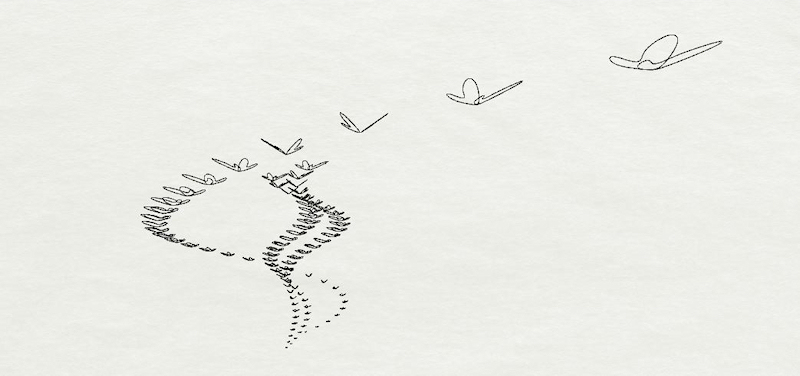
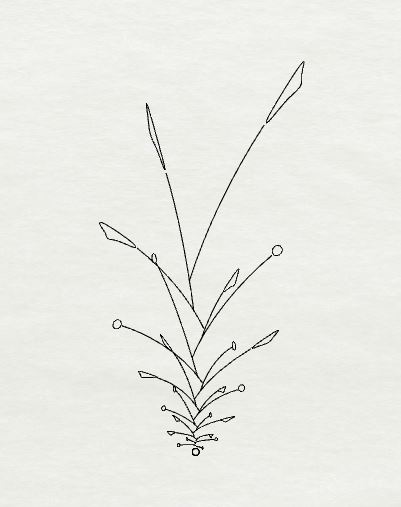
Designed with python scripts and rendered in Rhino.
Mixing contemporary art with movement, Calder style mobiles with 21st century design elements.
Design for a large custom mobile for a private residence
Design for a large custom mobile for a private residence:
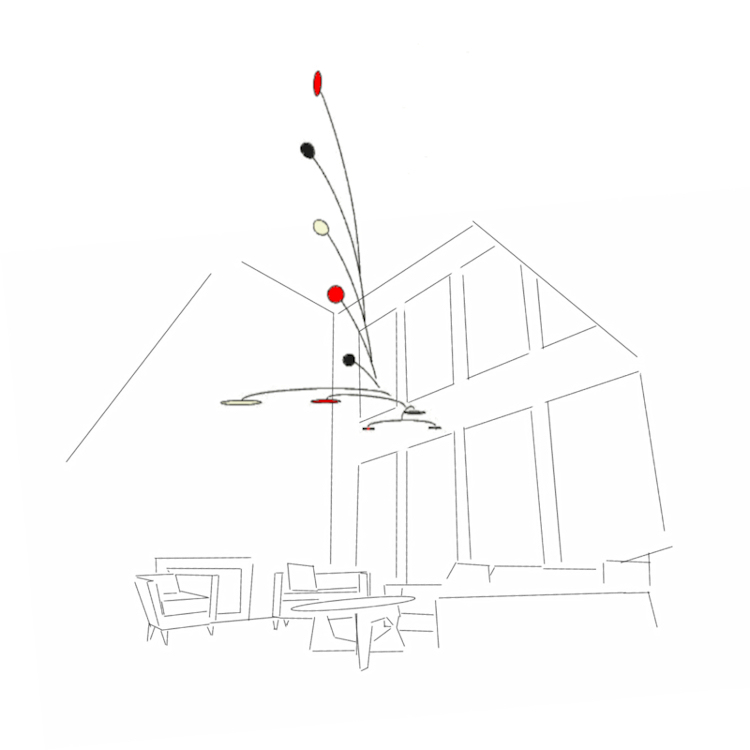
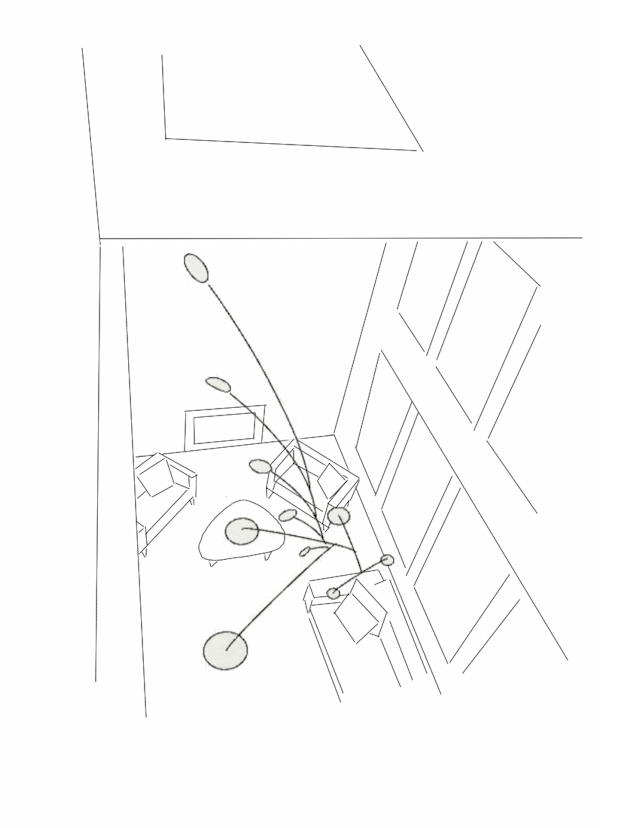
Influenced by Alexander Calder‘s style, yet it has a clear and solid identity of its own.
See more of my custom-designed and custom-made mobiles …
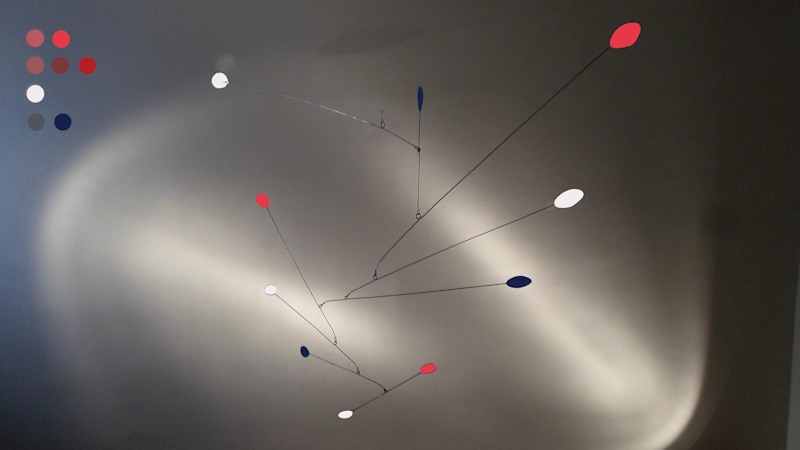
Designs for large custom mobiles for a shopping mall – Part 2 – Main Atrium
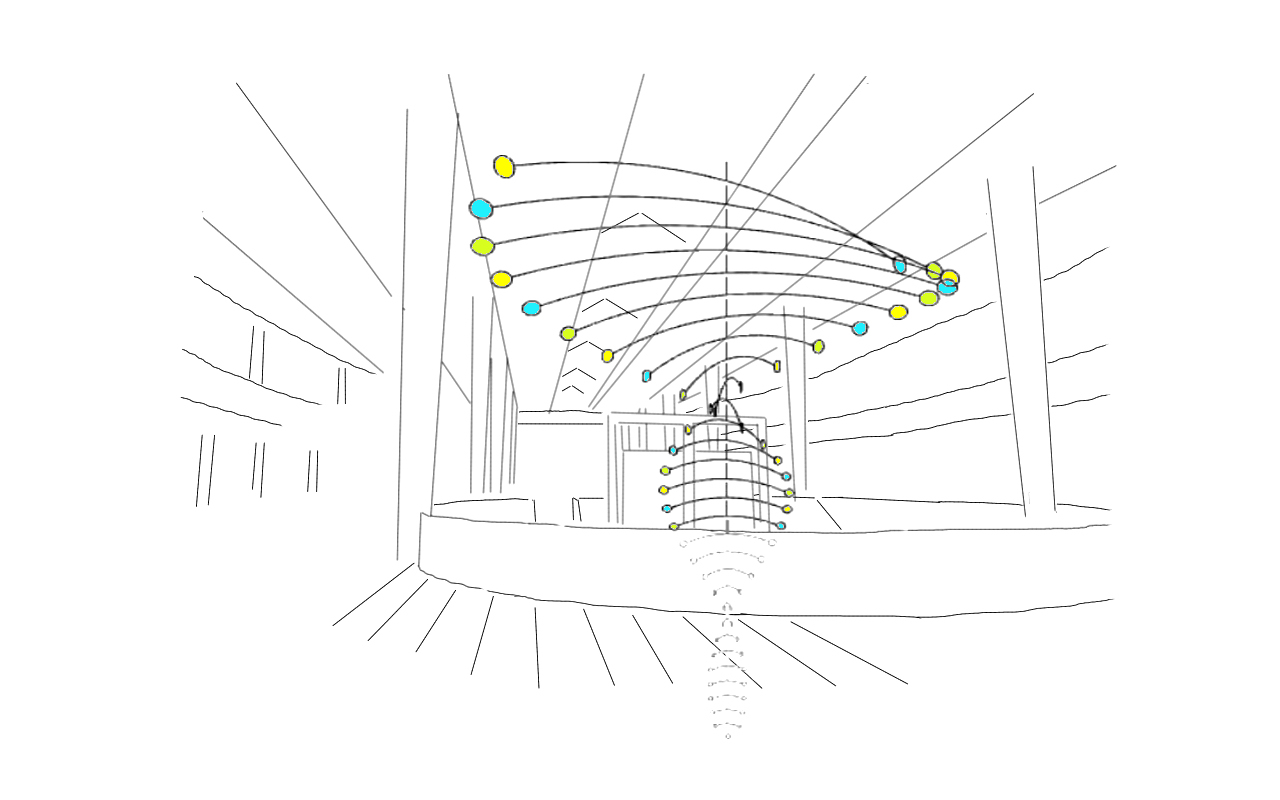
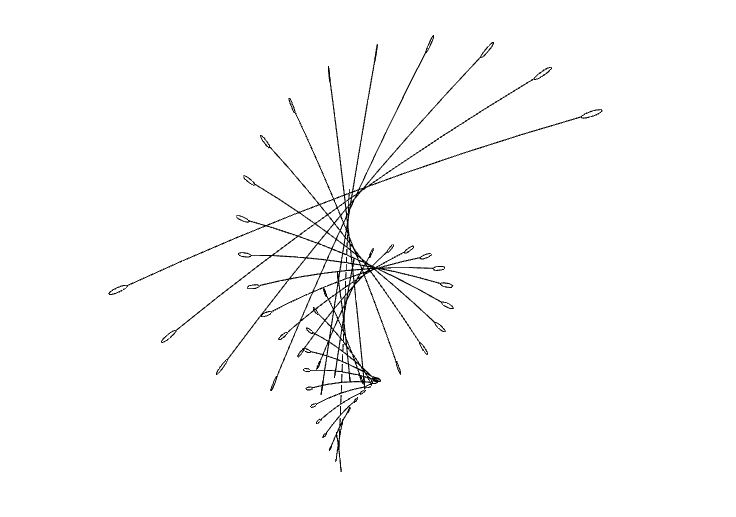
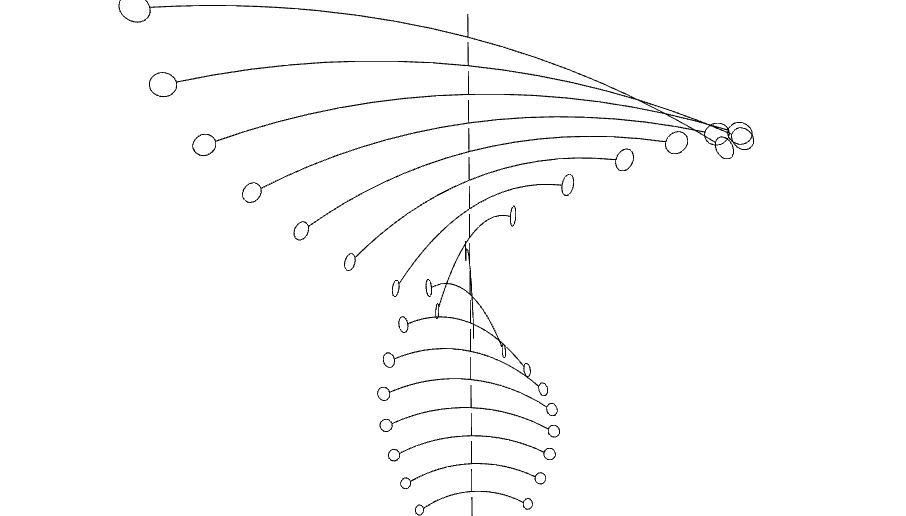
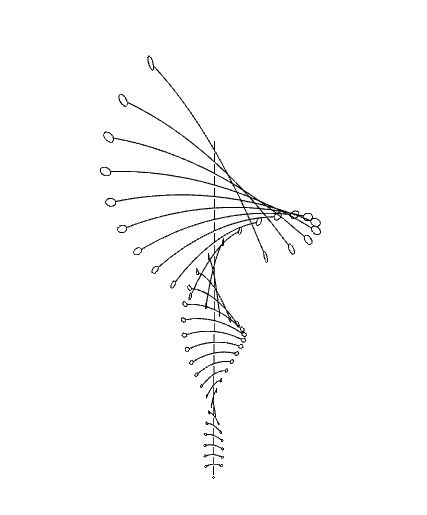
Custom design of a large scale hanging mobile for the main atrium of a shopping mall in Kazakhstan:
See more of my custom mobiles …
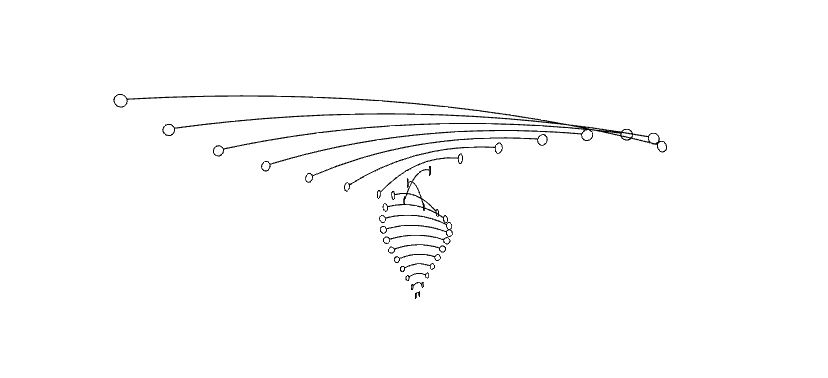
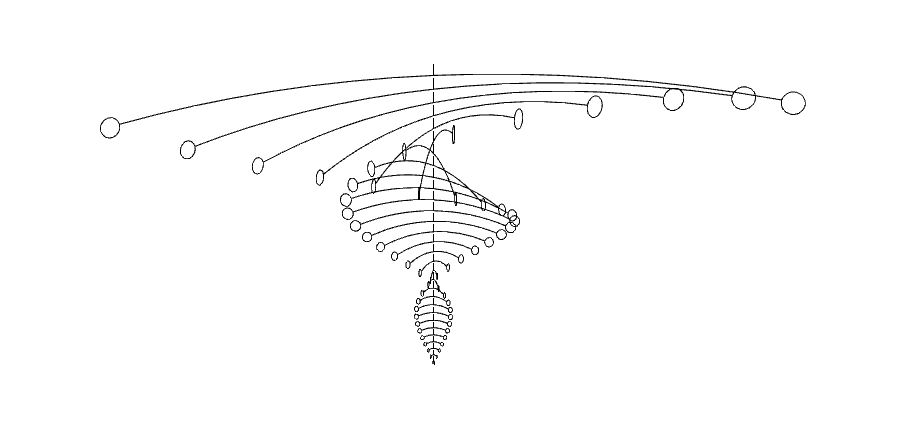
Large custom hanging mobiles designed with scripts
New designs of custom mobiles to be built in large scale out of aluminum (to keep the mobiles lightweight yet robust). I designed them using scripts similar to the ones utilized with the 3D Printed Mobiles.
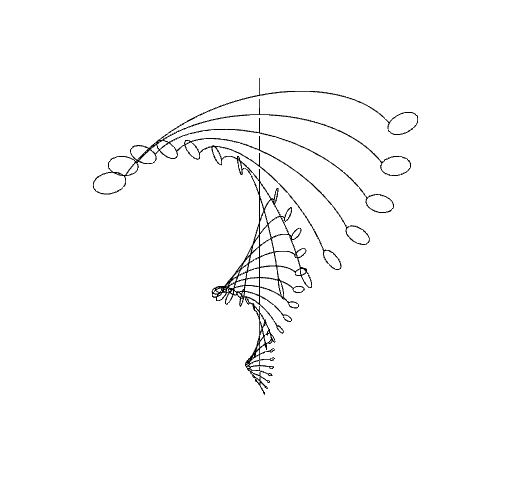
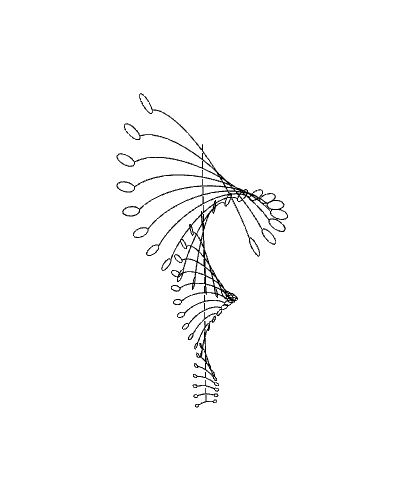
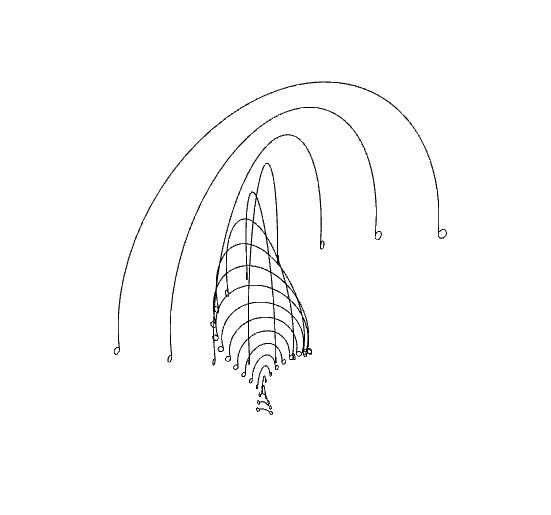
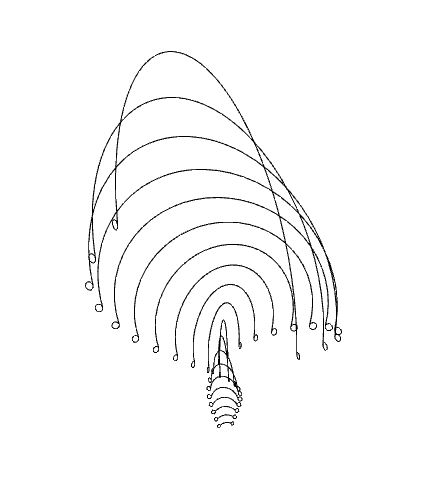
See more of my custom designed mobiles …
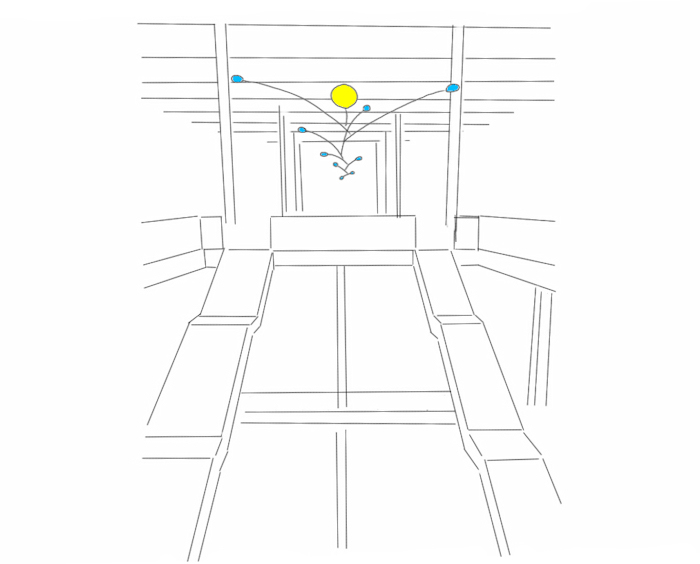
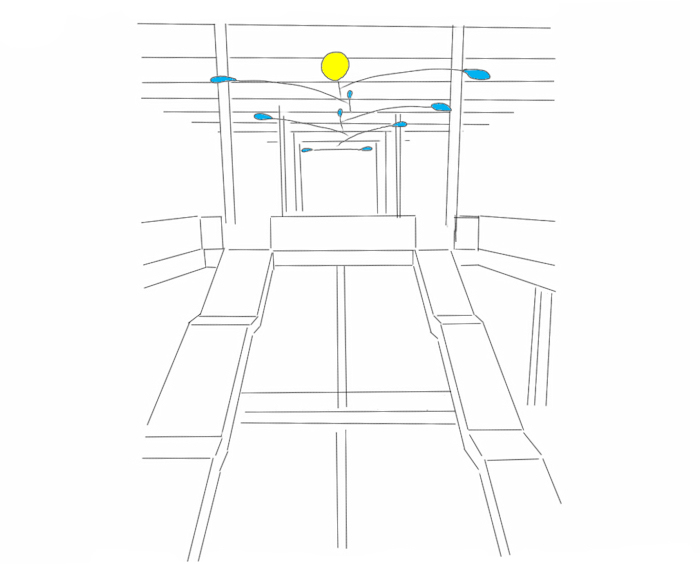
Designs for large custom mobiles for a shopping mall – Part 1 – Smaller Atrium
Designs / sketches of two large custom hanging mobiles for a shopping mall in Kazakhstan:
See more of my custom mobiles …
What is the largest kinetic sculpture / mobile in the world?
There’s an amazing kinetic sculpture titled Kinetic Rain at Changi Airport designed by the highly creative and innovative ART + COM and manufactured and installed by MKT, Olching:
Links to various videos of the installation keep floating around social media sites calling it “the largest kinetic sculpture in the world”, spanning an area of 75 square meters (810 sq ft) and a height of 7.3 meters (24 ft). While the sculpture is an amazing accomplishment, it doesn’t seem to be the world’s largest kinetic sculpture. To my knowledge, the largest kinetic sculpture in the world (and also the largest mobile sculpture) is Alexander Calder‘s White Cascade, which hangs in the Eastburn Court of the Federal Reserve Bank of Philadelphia:
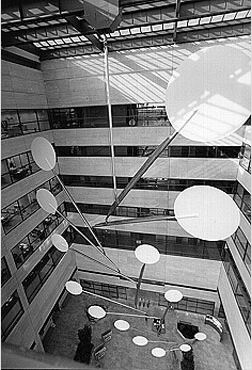
It measures approximately 100 feet (31 meters) from top to bottom, is 60 feet (18 meters) at its widest point, and weighs close to 10 tons, including the motor, surpassing Calder’s 920 pound 76-foot-long mobile (or 85 feet, depending on source) at the National Gallery of Art in Washington, DC. I’m not sure if any of his stabiles are larger, but if not, then this would also be Alexander Calder’s largest sculpture. Speaking of that large Calder mobile at the National Gallery, it is made with hollow honeycomb-type structures designed by Paul Matisse (grandson of Henri Matisse and son of Pierre Matisse) and covered with paper-thin aluminum, and aluminum and steel bars, with the stress points being strengthened with molybdenum. It weighs 930 pounds (422 kg). The previous estimates from Calder’s foundry in Biémont exceeded 5000 pounds (2268 kg). It doesn’t have a name. When Calder was asked for a title, he replied “You don’t name a baby until it is born.” But then he passed away one year before it was installed at the Gallery. The mobile sculpture has been refurbished recently.
Back to White Cascade: It took just two days to install it. The installation was carried out in two stages. In the most difficult and time-consuming part of the job, the four top-most and largest aluminum discs — still in their protective wrappings — were joined to their respective stainless steel rods, then raised one by one and linked together. The 10 lower discs and rods were linked together on the ground level, then raised into position as a unit. A crane situated on the sidewalk outside the entrance to the Bank provided the lifting power.
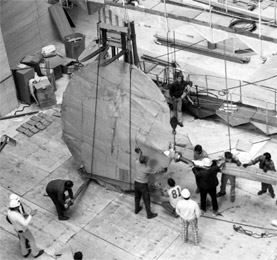
Finally, the wrappings were removed. The 14 white aluminum discs that comprise “White Cascade” range in size from 3.5 feet in diameter to 12.7 feet. The longest of the connecting stainless steel rods is 36 feet; the shortest, 9 feet. Powered by an electric motor, the mobile rotates clockwise on a radius of 32.5 feet.
Here’s a photo by H. Scott Heist of Calder in front of the mobile:
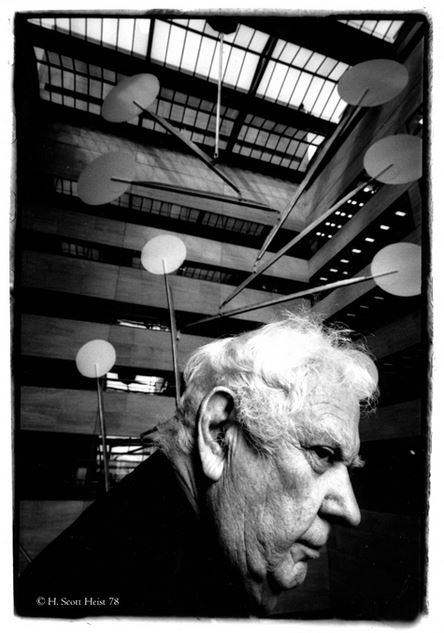
The mobile was installed in May 1976, Calder passed away less than six months later.
Do you know of a larger kinetic sculpture? Let me know if you do and I’ll add it to this post.
Current relevance as of September 2025: No newer kinetic sculptures surpassing White Cascade in size have been widely reported in searches up to this date.
Also see my list of the 5 Largest Mobiles worldwide that I’m aware of.
– Update: –
I received an email from Anthony Howe nominating his OCTO 3 sculpture as possibly the largest outdoor permanent kinetic wind sculpture. It measures 25′ h x 30′ w x 30′ d (7.6m x 9.1m x 9.1m) and weighs 7000 pounds (3200 kg):
Since receiving the email from Anthony, it seems that he has surpassed these dimensions with the cauldron he created for the 2016 Rio Olympics measuring 40 ft (12.2 meters):
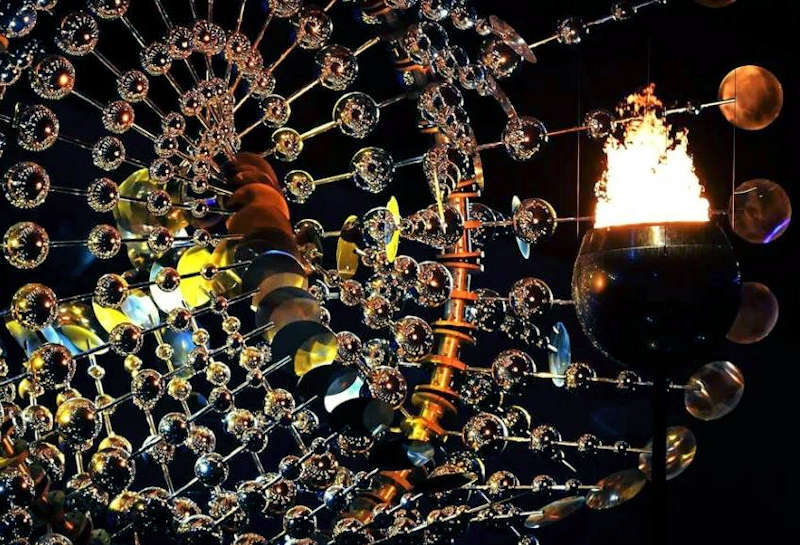
Related: Watch as Anthony Howe creates a massive, kinetic wind sculpture
– See some of my kinetic sculptures and mobiles –
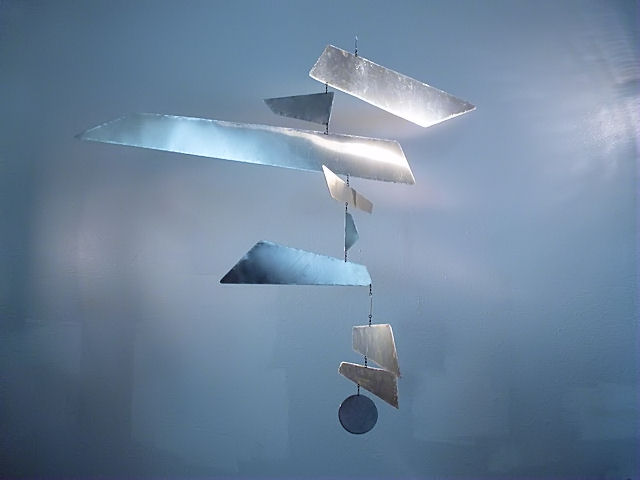
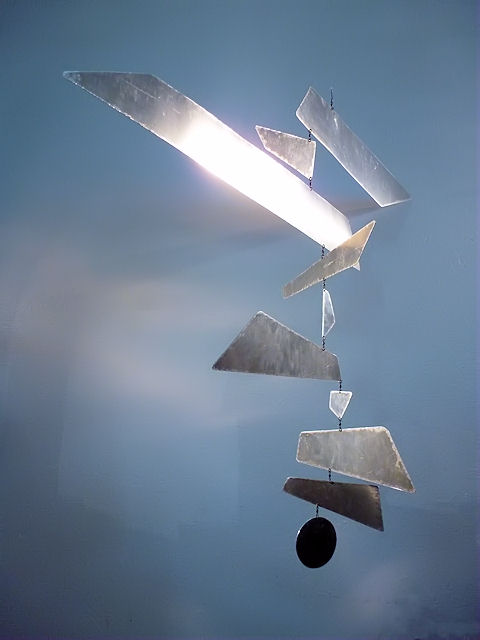
New hanging mobile – Mobile 91
New large (or at least larger) hanging mobile
MOBILE 91
[September 27th 2012]
Width: 47 in (119 cm)
Height: 37 in (94 cm)
Materials: sheet metal (aluminum), wire, swivels
Colors: unpainted
All of the parts on the mobile can rotate full circle independently from all the other parts
Suitable for indoors or outdoors (I tested it outdoors on a very windy day and it held up just fine)


– See a custom version I made of this mobile –

 Included in over 1000 Ideabooks on Houzz
How To Make Mobiles:
- Houzz Article -
- Balance Basics -
- What Wire to Use -
- FAQ Mobile Making -
- MAKE Magazine Article -